
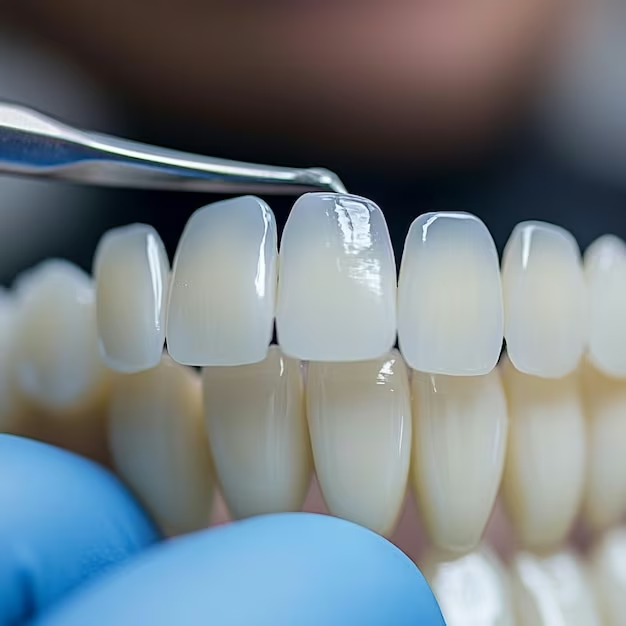
No, veneers cannot be whitened after they are bonded, because whitening gel works on natural enamel and has no effect on porcelain or composite resin. At Sola Dental Spa in Staten Island, cosmetic dentist Dr. Anne Gershkowitz, DDS plans the shade of every set of porcelain veneers before the ceramist makes them, so the brightness you choose is the brightness you keep. If a veneered smile starts to look duller than it once did, there are still good ways to bring it back. Start with how shade planning works on our dental veneers page.
Whitening treatments do not lighten veneers. A veneer holds the shade it was fabricated in. If a veneered smile looks dark, the fix is usually a professional polish, whitening the natural teeth around the veneers, or replacing an aging veneer at a lighter shade.
“I tell every veneer patient the same thing: we choose your shade before the ceramist ever touches porcelain. Whitening gel will not move that color later. So we whiten first, match second, and bond third, and the smile stays the color you picked.”
Dr. Anne Gershkowitz, DDS, Founder, Sola Dental Spa
A patient from Great Kills came in certain her decade-old veneers had stained. On examination, the veneers themselves were fine. The natural lower teeth around them had darkened with years of coffee, which made the veneers read as mismatched. We whitened her natural teeth back toward the original veneer shade, polished everything, and the smile looked uniform again without touching a single veneer.
Why doesn’t whitening work on veneers?
Whitening agents lighten teeth by moving oxygen through the microscopic pores of enamel. Glazed porcelain and cured composite are sealed materials with no pores for the gel to penetrate, so the peroxide has nothing to act on.
That sealed surface is also why porcelain resists coffee, red wine, and tobacco stains so well. According to the American Dental Association, veneers are a long-term restoration, and porcelain typically serves 10 to 15 years before replacement. The color is baked into the ceramic itself. That stability is a feature, not a flaw. It just means the shade decision belongs at the start of treatment, not after.
What can you do if your veneers look dull or dark?
First, find out what actually changed. Surface film, stained bonding edges, darkened natural teeth, and aging veneers all look similar in the mirror but have very different fixes.
A professional polish removes plaque film and surface residue that make any smile look flat. If the darkness sits at the edges of a veneer, the composite bonding line has picked up stain and can often be refreshed. If the veneers themselves have simply aged past their lifespan, replacement at a lighter shade is the honest fix. We cover the staining question in depth in Do Porcelain Veneers Stain Over Time?
| Option | Best for | What it changes |
|---|---|---|
| Professional polish | Surface film and dullness | Restores the original luster of the glaze |
| Whitening natural teeth | Darkened teeth beside veneers | Brings natural teeth back to the veneer shade |
| Refreshing bonding margins | Dark lines at veneer edges | Removes stain at the composite seam |
| Replacing aged veneers | Veneers past their lifespan | A new shade, chosen by you |
Should you whiten your teeth before getting veneers?
Yes, if you want a brighter overall smile, whiten before the veneers are made. The ceramist then matches the veneer shade to your newly whitened teeth, and everything stays uniform.
This sequencing is standard practice at Sola Dental Spa. Dr. Anne Gershkowitz finalizes shade selection only after any whitening is complete and the color has stabilized. Patients who skip this step and whiten later end up with natural teeth lighter than their veneers, which is the one mismatch that cannot be corrected with more gel.
Frequently asked questions
Can Zoom whitening lighten my veneers?
No. In-office whitening lightens the natural teeth around your veneers, but the porcelain itself will not change. That can actually be useful when natural teeth have drifted darker than the veneers beside them.
Why do my veneers look darker near the gum line?
Usually that is the bonding margin picking up stain, or a little gum recession exposing root surface above the veneer. Both are worth an exam, and both have fixes short of full replacement when caught early.
Do composite veneers stain more than porcelain?
Yes. Composite resin is slightly porous, so it absorbs coffee and wine pigment over the years. Glazed porcelain stays closest to its original shade, which is one reason we recommend it for long-term smile work.
Will a whitening toothpaste keep my veneers bright?
Be careful with it. Many whitening pastes are abrasive, and they can scratch porcelain glaze over time, which makes veneers duller, not brighter. A non-abrasive paste and regular polishing do the job better.
Who can fix a color mismatch in Staten Island?
Dr. Anne Gershkowitz handles shade corrections, margin refreshes, and veneer replacement at Sola Dental Spa. If your smile no longer looks uniform, book a consultation and we will find out what changed before recommending anything.