
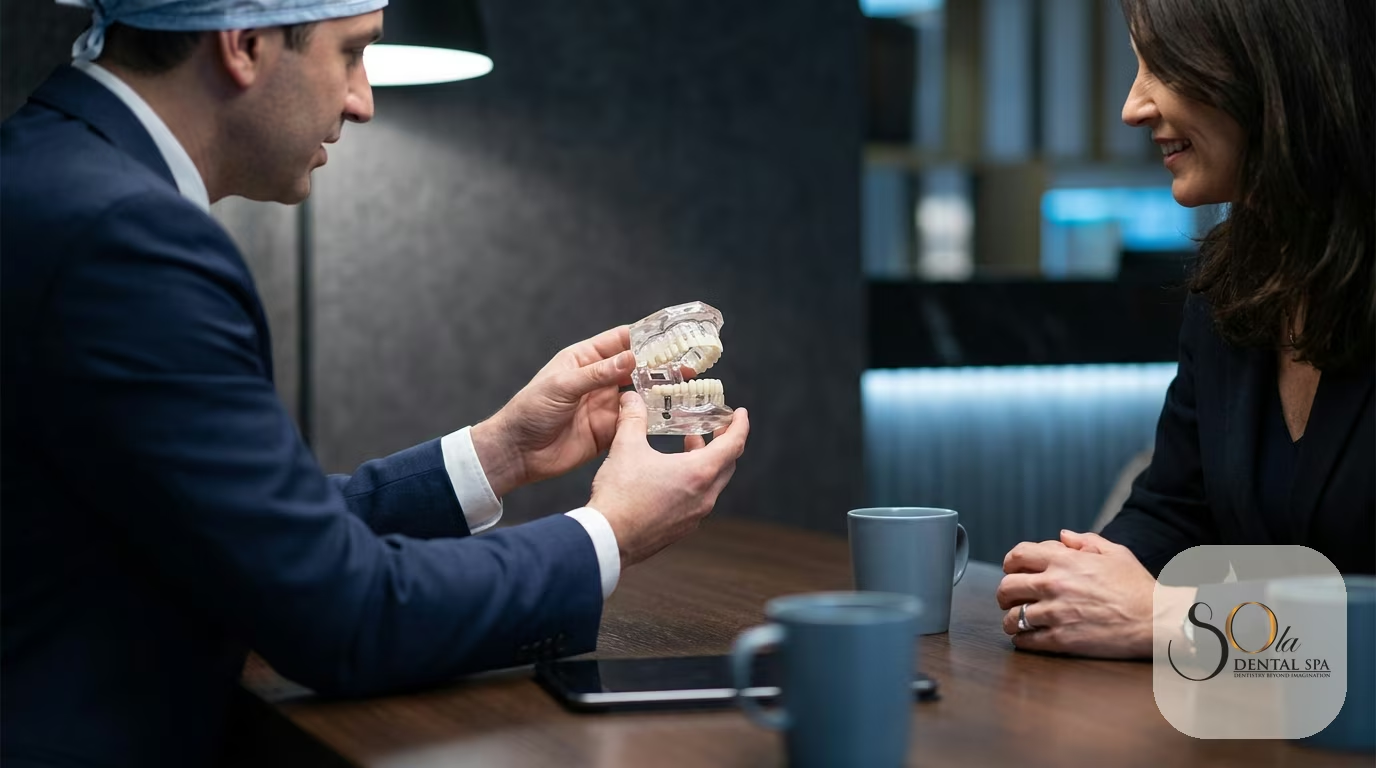
Dental implants have a high overall success rate, do not require replacing every tooth in your mouth, and are not exclusively for older patients, contrary to some of the most common myths patients hear. Understanding what is fact and what is outdated misinformation helps you make a confident, informed decision about replacing a missing tooth. At Sola Dental Spa in Staten Island, Dr. Daniel Nejat addresses the myths patients bring up most often.
Myth: Dental Implants Often Fail
Dental implants have an overall success rate of about 95 percent, according to the American Association of Oral and Maxillofacial Surgeons. Failure is uncommon and is more likely in patients with uncontrolled health conditions, heavy smoking, or insufficient jawbone density, all of which are evaluated before treatment to reduce risk.
Myth: Implant Surgery Is Extremely Painful
The implant is placed under anesthesia, so patients do not feel pain during the procedure itself. Afterward, most patients describe manageable soreness rather than severe pain, similar to what follows a tooth extraction, and it is typically controlled with standard pain relief.
Myth: Implants Look and Feel Fake
Modern implant crowns are custom-shaded and shaped to match your surrounding teeth. Because the crown is fabricated to mirror your natural tooth color and contour, the result is designed to be difficult to distinguish from a natural tooth in normal conversation or a smile.
Myth: You Need a Full Set of New Teeth
A single missing tooth can be replaced with a single implant. Implants are also used to replace several teeth or to anchor a full denture, but the number of implants placed always matches what the patient actually needs, not a fixed formula.
Myth: Implants Are Only for Older Patients
Age by itself is not a barrier to getting a dental implant. Candidacy depends primarily on jawbone development and overall oral and general health rather than age. Younger patients are generally advised to wait until jaw growth is complete before implant placement.
Myth: Implants Require a Lot of Special Maintenance
Caring for a dental implant looks a lot like caring for a natural tooth: daily brushing, flossing around the crown, and regular checkups. There is no special solution or elaborate routine required beyond good oral hygiene and keeping up with your regular dental visits, which let us catch any issues around the implant early.
How Do Implants Compare to Bridges and Dentures?
| Factor | Dental Implant | Bridge or Denture |
|---|---|---|
| Support | Stands independently in the jawbone | Relies on neighboring teeth or the gum ridge for support |
| Effect on jawbone | Stimulates the bone, helping preserve density | Does not stimulate the bone the way a natural root does |
| Effect on neighboring teeth | Neighboring teeth are not altered | A bridge requires reshaping adjacent teeth |
| Maintenance | Cleaned like a natural tooth | Removable dentures require daily cleaning and periodic adjustment |
“Patients come in with a lot of outdated information about implants, usually from a story they heard secondhand. Once we walk through their specific case, the jawbone, their health history, their goals, most of those fears turn out not to apply to them at all.”
Dr. Daniel Nejat, DMD, Board-Certified Periodontist (Diplomate, American Board of Periodontology), Sola Dental Spa
Myth: All Implants Are the Same
Implants vary by size, brand, and the type of restoration they support, and the right combination depends on the specific tooth being replaced, the quality of the surrounding bone, and the patient's bite. Dr. Nejat selects the implant system and restoration approach for each case individually rather than applying a single default option to every patient.
Myth: Implants Are Not Worth the Cost
Implants typically involve a higher upfront investment than a bridge or denture. But because they are designed to function as a standalone, long-term solution and help preserve jawbone density, many patients find the long-term value outweighs the initial cost. Our team can walk you through financing options and what your insurance may cover during a consultation.
Myth: Recovery Takes Months of Downtime
Most patients return to normal daily activities within a few days of surgery, with some dietary adjustments during the initial healing phase. The months-long timeline associated with implants refers to osseointegration, the biological process of the implant fusing with the bone, not an extended period of downtime or disability.
Frequently asked questions
Is it true that dental implants can fail years after placement?
Late failure is uncommon but possible, most often linked to gum disease around the implant or ongoing health issues. Regular checkups let us catch and address problems early.
Do dental implants set off metal detectors?
No. The small amount of titanium in a dental implant does not trigger metal detectors.
Can smokers get dental implants?
Smoking increases the risk of complications and can slow healing, but it does not automatically disqualify a patient. Dr. Nejat will discuss your specific risk factors during your consultation.
Is bone grafting always required before an implant?
No. Bone grafting is only needed when there is not enough bone at the site to support an implant, which is determined through an exam and imaging.
How do I separate implant facts from myths for my own case?
The most reliable way is a one-on-one consultation, where Dr. Nejat can evaluate your bone, health history, and goals rather than relying on general information you may have heard elsewhere.
Most concerns patients bring up about dental implants come from outdated or secondhand information rather than their own specific case. A short conversation with Dr. Nejat is usually enough to replace a general worry with a clear, personal answer. Schedule a consultation with Dr. Nejat at Sola Dental Spa in Staten Island to get accurate answers about your specific case.