
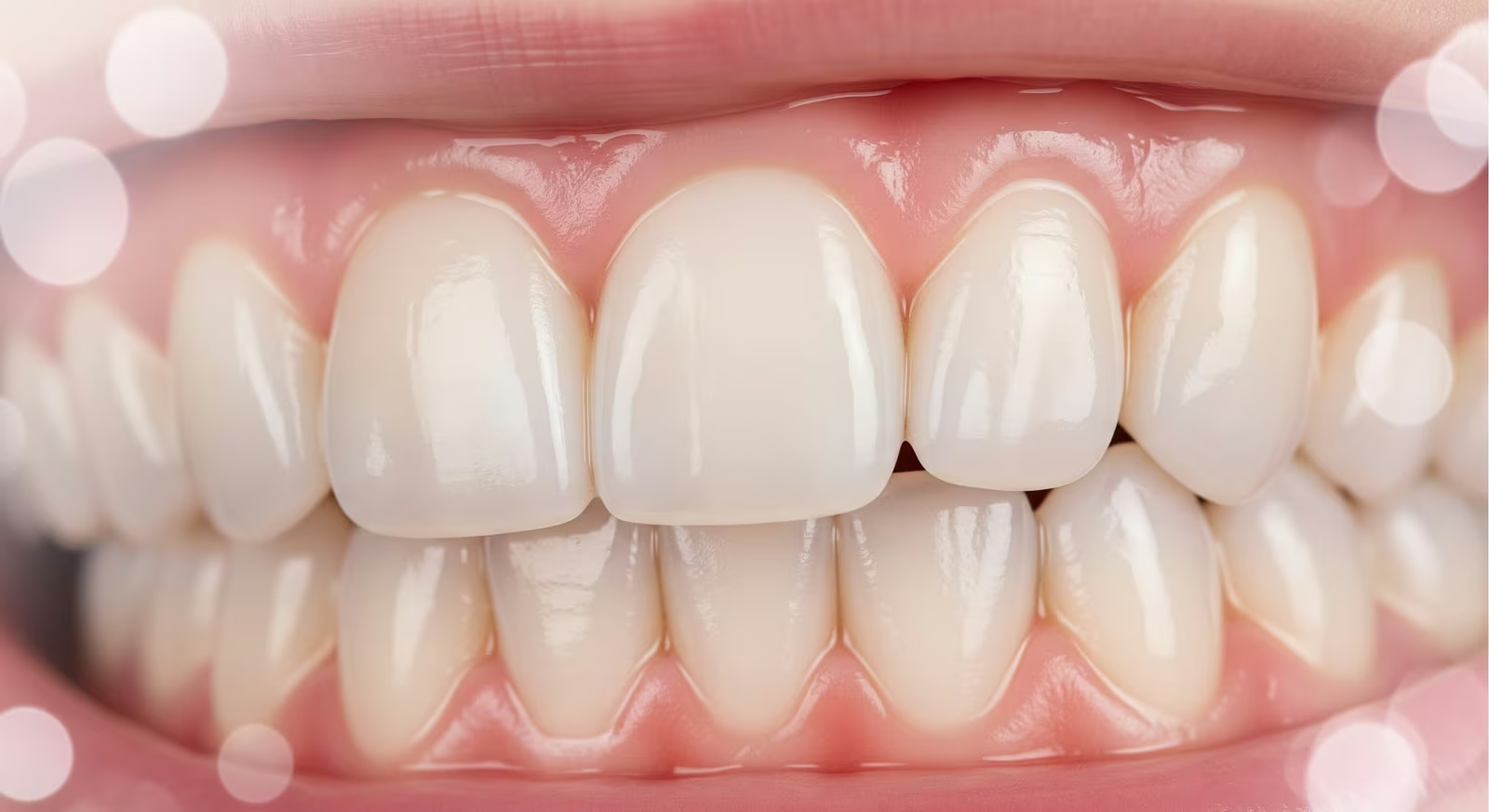
Choose a dental crown to repair a damaged tooth, and choose a veneer to improve the look of a healthy one. Both restorations can transform a smile, but they start from different problems: a crown rebuilds strength after decay, a crack, or a root canal, while a veneer is a thin cosmetic shell bonded over a tooth that is already structurally sound. At Sola Dental Spa in Staten Island, we walk patients through both options so the choice matches the actual condition of their teeth, not just the look they want.
What does a dental crown actually do?
A dental crown is a full cap that covers the entire visible tooth. It is built to restore strength as well as appearance, which makes it the right choice for teeth that have been weakened by decay, cracked, or treated with a root canal. Crowns are typically made from porcelain, ceramic, or a porcelain-fused-to-metal combination, with all-porcelain options preferred for front teeth because they blend in more naturally.
What does a veneer actually do?
A veneer is a thin shell, usually porcelain or composite resin, bonded to the front surface of a tooth to hide cosmetic imperfections. Veneers work well for stubborn staining, small chips, minor gaps, or slight crookedness. Because a veneer only covers the front surface, it preserves more of the natural tooth than a crown does, which is why it is considered a cosmetic rather than a restorative treatment.
Which looks more natural, a crown or a veneer?
Veneers are thin and translucent, which lets them mimic the light-handling properties of real enamel closely, especially on front teeth. Crowns can look just as natural when made from all-porcelain materials, but a crown with a metal core or a shade that does not match neighboring teeth can stand out. Asking specifically for an all-porcelain crown on visible teeth is the surest way to get a seamless result.
How long does each restoration last?
| Restoration | Typical Lifespan | Daily Care |
|---|---|---|
| Dental crown | 10 to 15 years, often longer with good care | Brush twice daily, floss around the margin, avoid chewing hard objects |
| Veneer | 10 to 15 years for porcelain, shorter for composite | Brush twice daily, floss daily, avoid biting hard objects |
Crowns tend to hold up best on back teeth that do heavy chewing, while veneers are built for front teeth that need a cosmetic refresh rather than structural reinforcement. Twice-yearly dental visits let your dentist catch a chipped edge or a loosening margin before it becomes a bigger repair.
What do crowns and veneers cost, and does insurance cover them?
| Treatment | Insurance Coverage | Typical Use |
|---|---|---|
| Crown | Often covered when medically necessary, such as after decay or a root canal | Structural repair |
| Veneer | Rarely covered, since it is considered cosmetic | Aesthetic improvement |
Because coverage differs so much between the two, it is worth checking your specific plan and asking about payment plans before committing to either option.
Can a tooth prepared for a crown be switched to a veneer instead?
Generally, no. A tooth prepared for a crown has had more of its structure removed than a veneer requires, so it cannot be reversed into a veneer case. If you already have a crown and want it to blend with veneers on neighboring teeth, your dentist can replace the crown with a new one matched in shade and shape.
“The right restoration depends on what the tooth actually needs structurally, not just what it needs to look like. I would rather place a crown that protects a weak tooth for years than a veneer that looks good for a season and fails underneath.”
Dr. Anne Gershkowitz, DDS, Founder, Sola Dental Spa
How should I decide between a crown and a veneer?
Choose a crown if a tooth is cracked, decayed, structurally weak, or recovering from a root canal. Choose a veneer if the tooth itself is healthy and the goal is cosmetic, such as covering stains, closing small gaps, or evening out a slightly uneven smile. A cosmetic dentist at Sola Dental Spa in Staten Island can examine your teeth, talk through your goals, and recommend the option that will hold up and look right for years.
Frequently asked questions
Does getting a crown or veneer hurt?
Both procedures use local anesthesia during tooth preparation, so patients typically feel pressure rather than pain. Mild sensitivity for a few days afterward is normal and manageable with over-the-counter pain relief.
Can I get veneers on just my front teeth?
Yes. Veneers are most commonly placed on the upper front teeth that show when you smile, and many patients choose a set of six to eight to create a balanced, even look.
Will my dental insurance help pay for either option?
Crowns are more likely to be covered when they restore function after damage. Veneers are usually classified as cosmetic and are rarely covered, so check your plan and ask about financing.
How do I know if my tooth needs a crown instead of a filling?
If decay or a crack has removed enough tooth structure that a filling would leave the tooth vulnerable to breaking, a crown is usually the safer long-term repair. Your dentist can confirm this with an exam and X-rays.
Do veneers damage the teeth underneath them?
Traditional porcelain veneers require removing a small amount of enamel, which is permanent. This is why a proper evaluation matters before moving forward, so you know exactly what the procedure involves.
Sources
If you are exploring crowns or veneers, book a consultation with Sola Dental Spa in Staten Island, or browse real patient results in our smile gallery. Related reading: How Long Do Dental Crowns Really Last?