
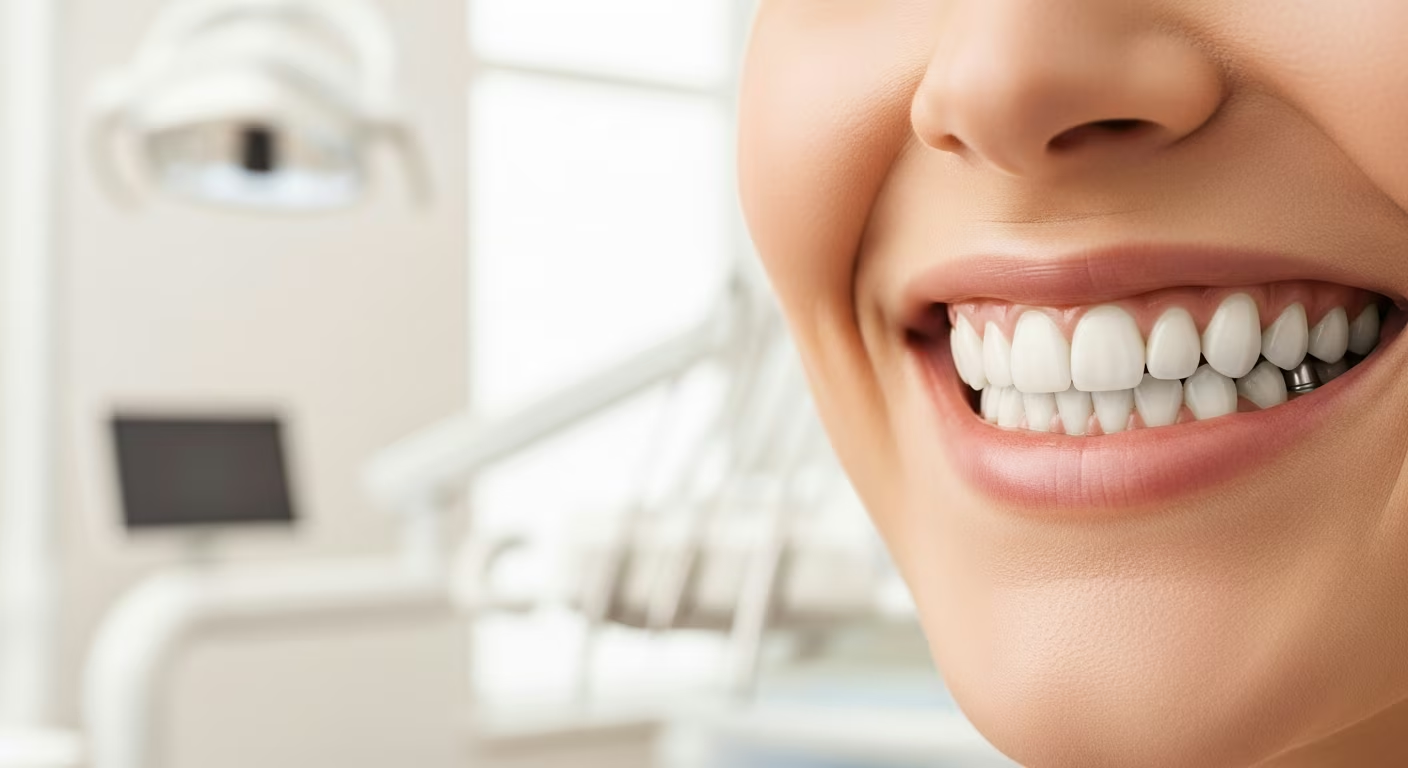
A dental implant replaces a missing tooth by anchoring a titanium or zirconium post directly into the jawbone, where it fuses with the bone to support a crown that looks and functions like a natural tooth. At Sola Dental Spa in Staten Island, implant treatment is led by Dr. Daniel Nejat, a board-certified periodontist, so the surgical and restorative planning stays in specialized hands from start to finish.
How do dental implants work?
An implant starts with the placement of a small, biocompatible post into the jawbone, in the space where the natural tooth root used to sit. Over the following months, the surrounding bone fuses to the implant surface in a process called osseointegration. That fusion is what makes an implant stable enough to support a crown that functions under normal biting force, closely mimicking how a natural tooth root anchors a tooth.
Implants are not a new technology. They have been used in dentistry for decades, but advances in imaging, planning software, and materials have made the process more precise, less invasive, and more predictable than earlier versions.
What materials are dental implants made from?
Because the implant post needs to be strong and fully compatible with the body, dentists rely on two primary materials, each with distinct advantages.
| Material | Key Properties | Considerations |
|---|---|---|
| Titanium | Strong, lightweight, biocompatible metal with a long clinical track record | Rarely, patients report a metal sensitivity |
| Zirconium | Metal-free ceramic that is strong and closely matches natural tooth color | Generally costs more and has a shorter track record than titanium |
Which material is right for a given patient depends on bone quality, aesthetic priorities, and any known sensitivities, all of which Dr. Nejat reviews during a consultation.
Will an implant look like a natural tooth?
A common concern is whether an implant-supported crown will look artificial. In practice, the crown placed on top of the implant is custom shaped and shaded to match the surrounding teeth, and once healed, it is typically very difficult to distinguish from a natural tooth. That level of integration is also why implants allow patients to eat, speak, and smile without the compromises that come with older tooth-replacement options.
“What makes an implant successful is not just the surgery, it is the planning beforehand. Bone density, gum health, and bite alignment all factor into whether an implant will hold up for years to come, which is why I evaluate each case individually rather than treating implants as one standard procedure.”
Dr. Daniel Nejat, DMD, Board-Certified Periodontist (Diplomate, American Board of Periodontology), Sola Dental Spa
How does an implant compare to a root canal or a denture?
These options solve different problems. A root canal is intended to save a natural tooth that has become infected or badly decayed, keeping the original tooth in place whenever possible. An implant is used when a tooth cannot be saved, or is already missing, and needs to be replaced with a new, standalone structure. Compared to a removable denture, an implant is fixed in place and does not rely on the surrounding teeth or gum tissue for support, which many patients find more stable and closer to how a natural tooth feels.
What should I look for in a dentist for dental implants?
Because implant placement requires surgical precision and an understanding of bone and gum biology, it is worth choosing a provider with focused training in implantology rather than general cosmetic experience alone. At Sola Dental Spa, implant cases are handled by Dr. Nejat, a board-certified periodontist with specialized surgical training. Beyond implants, our practice also offers porcelain veneers, teeth whitening, and Invisalign, so a complete smile plan can be coordinated under one roof if needed.
What does healing after implant placement involve?
After the post is placed, the jawbone needs time to fuse to the implant before a permanent crown can be attached, and that healing period varies from patient to patient depending on bone quality and overall health. During this time, we monitor the site to confirm it is integrating properly. Minor swelling or tenderness near the surgical site is normal in the days afterward and typically resolves with basic aftercare. Once healing is confirmed, an abutment and custom crown complete the process, restoring both function and appearance.
Frequently asked questions
How long do dental implants last?
With proper care and regular checkups, implants often last for decades, and many patients keep the same implant for life.
Is getting a dental implant painful?
The procedure is performed with local anesthesia, and most patients report manageable discomfort afterward, similar to a tooth extraction, that improves within a few days.
Am I a candidate for dental implants if I have bone loss?
It depends on the extent of bone loss. In some cases, a bone graft can rebuild enough density to support an implant. This is evaluated individually during a consultation.
What is the difference between titanium and zirconium implants?
Titanium has the longest clinical track record and works well for most patients, while zirconium is metal-free and may be preferred by patients with metal sensitivities or specific aesthetic priorities.
How long does the full implant process take?
Timelines vary by case, since bone healing and osseointegration take time before the final crown is placed. Dr. Nejat outlines an expected timeline based on your specific treatment plan, factoring in your bone health and whether a bone graft is needed first.