
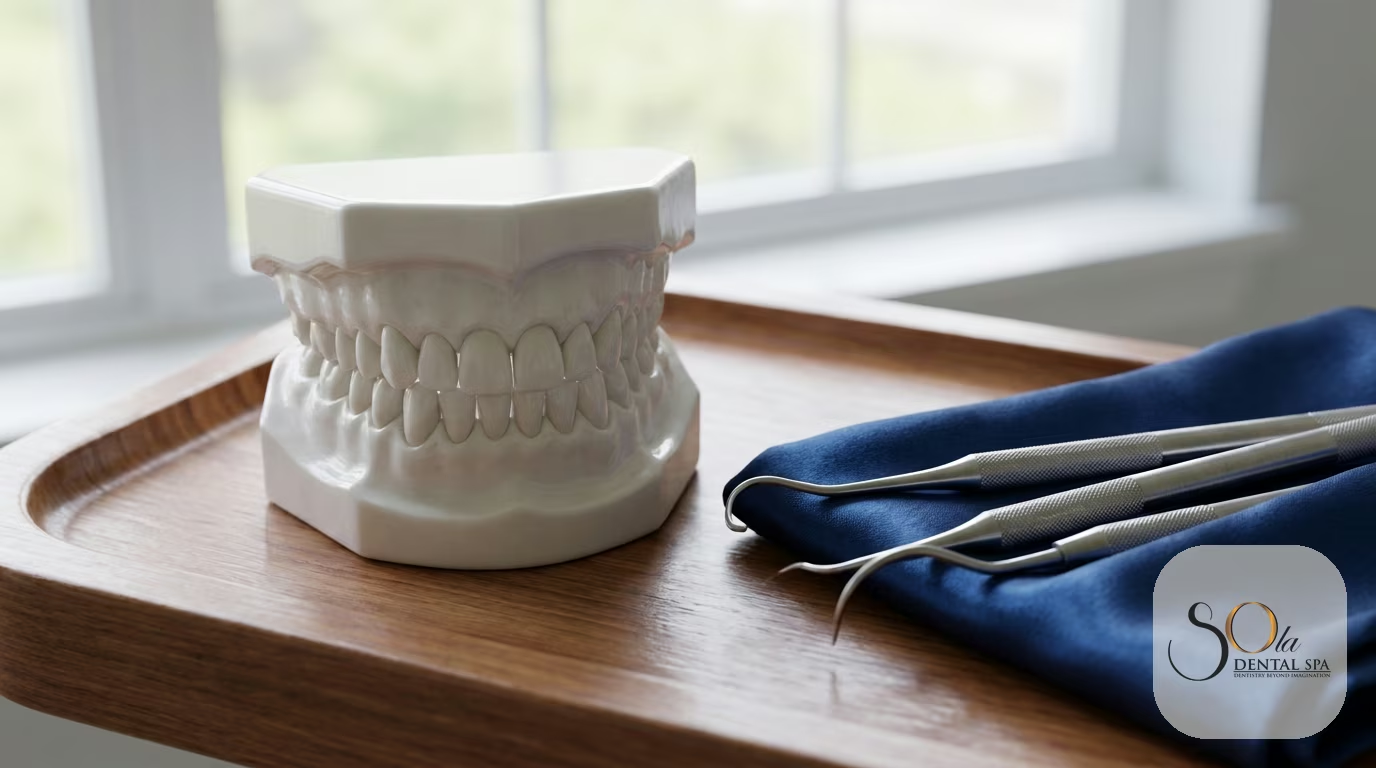
Adults have four types of teeth, and each has a job: incisors cut food, canines grip and tear it, premolars crush it, and molars grind it down for swallowing. Understanding that division of labor is more useful than it sounds, because each tooth type wears, decays, and breaks in its own predictable ways. At Sola Dental Spa in Staten Island, Dr. Anne Gershkowitz, DDS uses that map at every preventive exam, checking the chewing surfaces of molars for decay and the edges of front teeth for wear. Knowing what each tooth does helps you understand what your dentist is looking for during a routine checkup and cleaning.
A full adult mouth has 32 teeth in four types. Eight incisors bite and cut, four canines tear and guide the bite, eight premolars crush, and up to twelve molars, including wisdom teeth, do the heavy grinding. Together they also shape speech and support the face.
“I like patients to know their teeth by role, not just by name. When you understand that molars take the grinding load and front teeth are built for cutting, it suddenly makes sense why chewing ice with your incisors is a bad idea and why we watch the molar grooves so closely for decay.”
Dr. Anne Gershkowitz, DDS, Founder, Sola Dental Spa
A father from Annadale brought his son in after a hockey puck chipped a front tooth, and asked a fair question: why did the chip change how the boy pronounced certain sounds? The answer is that incisors do double duty. They cut food, and they also shape airflow for clear speech, which is why we restored the edge rather than just smoothing it.
What do incisors and canines actually do?
Your eight incisors are the flat front teeth that slice into food and help you pronounce sounds clearly. Your four canines are the pointed corners that grip and tear, and they guide your jaw into position as you close.
Incisors are thin and sharp-edged by design, ideal for cutting but not for cracking hard objects, which is why they chip first in accidents and bad habits. Canines are the longest and most deeply rooted teeth in the mouth. They act like corner posts, steering your bite as the jaws come together so the back teeth land where they should. When a canine is lost or badly worn, the whole bite tends to suffer.
What do premolars and molars do?
Premolars, between the canines and molars, crush food into smaller pieces. Molars, the broad back teeth, grind it fine. Wisdom teeth are simply third molars, and not everyone has room for them.
Molars carry most of the chewing force, and their broad surfaces are carved with grooves that trap food and plaque, which is why they decay more often than any other tooth type and why sealants are usually placed there. Wisdom teeth arrive last, often in the late teens or early twenties, and when the jaw lacks space they can come in sideways or only partially. If yours are on the move, our guide on how to know if your wisdom teeth are coming in covers the signs.
| Tooth type | How many (adult) | Main job | Common problems |
|---|---|---|---|
| Incisors | 8 | Cutting, speech support | Chips, edge wear |
| Canines | 4 | Tearing, guiding the bite | Gum recession, wear |
| Premolars | 8 | Crushing | Cracks under heavy bite |
| Molars | 12 with wisdom teeth | Grinding | Decay in grooves, impaction |
When do the different types of teeth come in?
Baby teeth start erupting around six months of age, and the permanent set arrives in stages through childhood and the teen years, finishing with the wisdom teeth.
According to the American Dental Association, people usually have 20 primary teeth, which begin erupting at about six months of age, and 32 permanent teeth that have typically all erupted by age 21, as shown in the eruption charts on MouthHealthy. The sequence matters for parents: incisors come first, molars and canines follow, and gaps in the timeline are worth mentioning at a checkup rather than worrying over at home.
Why does tooth shape matter for your overall bite?
Each tooth type positions the others. Losing one tooth shifts work onto neighbors that were not built for it, which accelerates wear, cracks, and jaw strain.
Your bite is a system, not a collection of independent parts. When a molar is lost, chewing force migrates forward onto premolars and incisors that were never designed to grind, and opposing teeth drift into the empty space. That is why dentists talk about replacing back teeth even though nobody sees them. Enamel is the armor that keeps the whole system working, and our piece on what enamel is and how to protect it explains how to keep it strong.
Frequently asked questions
Why do molars get more cavities than front teeth?
Their chewing surfaces have deep grooves that hold food and plaque where bristles struggle to reach. Sealants and careful brushing of the back teeth close that gap.
Do wisdom teeth serve any purpose?
They are third molars, and when they erupt straight with room to spare they grind food like any other molar. The trouble starts when the jaw lacks space and they come in impacted or partially erupted.
My child’s teeth are coming in out of order. Should I worry?
Eruption timing varies more than most parents expect. Bring the timeline to a checkup at our Staten Island office and we will compare it against the normal ranges rather than guessing.
Which teeth matter most for speech?
The incisors, together with the tongue and lips, shape many consonant sounds. A chipped or missing front tooth can noticeably change pronunciation, which is one more reason to restore them promptly.
Can I chew normally if I am missing a back tooth?
You can, but the load shifts to teeth that were not built for grinding, and neighbors drift into the gap over time. It is worth discussing replacement options with your dentist before those changes add up.