
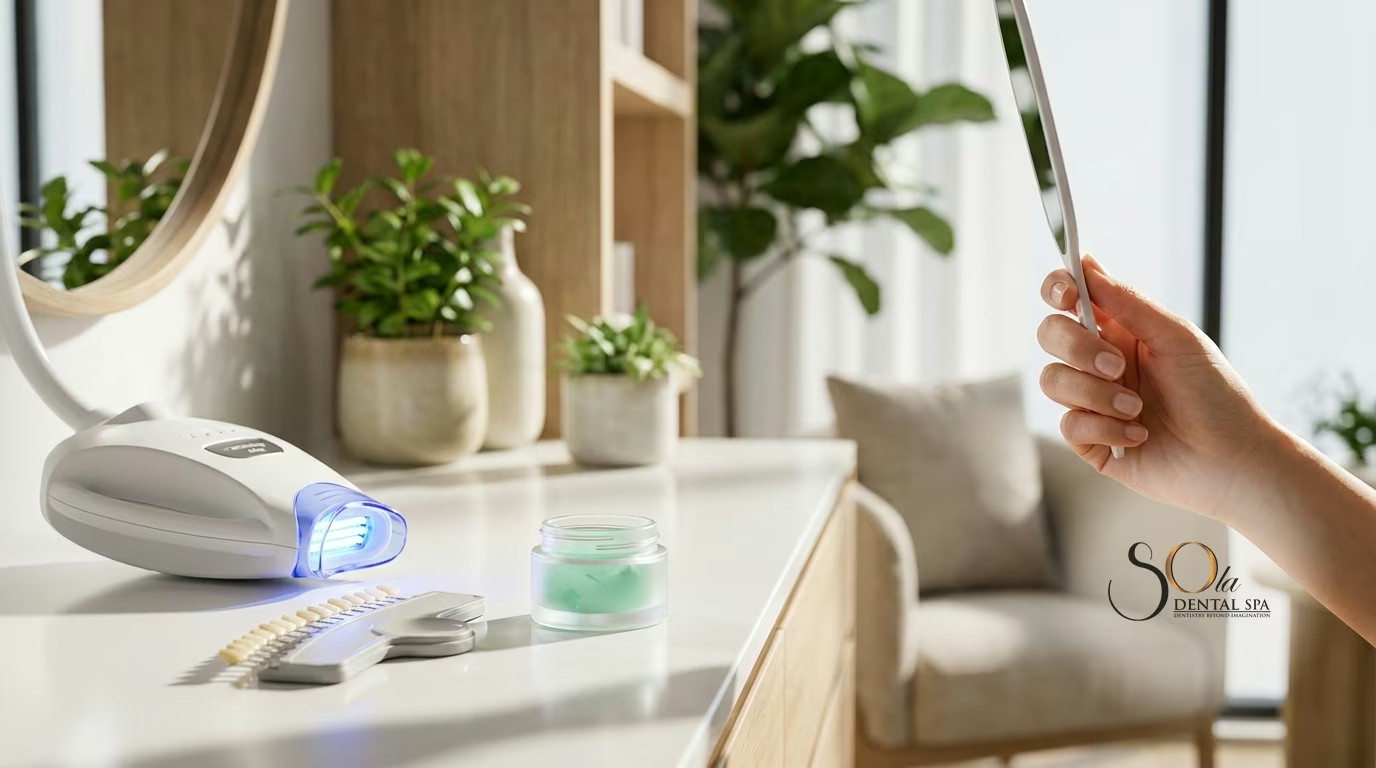
No, teeth whitening products do not weaken your teeth when used as directed, though overuse or high-concentration products can cause temporary sensitivity and, in rare cases, enamel irritation. Most whitening products use hydrogen peroxide or carbamide peroxide to break apart stain molecules within the enamel, and clinically tested formulas at appropriate concentrations do not cause lasting damage. At Sola Dental Spa in Staten Island, we walk every patient through which whitening option fits their teeth and sensitivity level before starting treatment.
"The teeth I see damaged by whitening are almost never damaged by the whitening itself. They are damaged by concentration and frequency the patient was never supervised on. Used at the right strength and for the right amount of time, whitening is one of the safest cosmetic treatments we offer."
Dr. Anne Gershkowitz, DDS, Founder, Sola Dental Spa
Does whitening damage enamel?
When used as directed, clinically tested whitening products do not permanently damage enamel. Overuse, or products with excessively high peroxide concentrations, can cause temporary sensitivity and, in some cases, enamel irritation. This is why professional guidance matters, especially for patients who already have sensitive teeth.
How does teeth whitening actually work?
Most whitening products use hydrogen peroxide or carbamide peroxide as the active bleaching agent. These compounds penetrate the enamel to break apart stain molecules, making teeth appear lighter over the course of treatment.
What are the common whitening options?
| Option | Speed | Control and customization |
|---|---|---|
| In-office whitening | Fastest, professionally monitored | Highest, concentration and time controlled by the provider |
| Take-home trays | Gradual, over one to two weeks | High, custom-fitted trays with professional-grade gel |
| Over-the-counter strips | Slowest | Lowest, fixed concentration and generic fit |
In-office whitening is the fastest and most closely monitored method, since the concentration and timing are controlled by your provider throughout the appointment. Take-home trays use a professional-grade gel in a custom-fitted tray for more gradual whitening. Over-the-counter strips use lower concentrations, so results build more slowly and the fit is less precise than a custom tray.
Which ingredients should you avoid?
Be cautious of whitening products containing chlorine dioxide, which can strip enamel, or those with abrasive microbeads that physically scratch tooth surfaces. Products without clear concentration labeling are also worth avoiding, since you cannot judge whether the strength is appropriate for regular use.
Who should be cautious with whitening?
Patients with existing tooth sensitivity, active gum disease, or visible enamel wear should talk to a dentist before starting any whitening product, since irritated tissue and thin enamel are more likely to react to peroxide. Whitening is also not recommended on teeth with active decay, since the product can reach the inner tooth through the cavity and cause pain. A quick exam before treatment catches these issues early.
How do you maintain results without overdoing it?
Spacing out touch-up treatment rather than whitening continuously gives enamel time to rest and lowers the chance of sensitivity building up. Rinsing after coffee, tea, or red wine, and keeping up routine cleanings, also helps results last longer between touch-ups. If you notice sharp, lingering sensitivity or white spotting on the enamel during treatment, that is a sign to pause and check in with your dentist rather than push through.
What should you expect during treatment?
Mild, short-lived tingling or sensitivity to cold is common during a whitening course and is not a sign of damage on its own. Results build gradually rather than appearing all at once, and how many shades your teeth lighten depends on your starting shade and the type of staining involved. Stains from coffee, tea, or tobacco respond well to standard whitening. Some internal discoloration from certain medications taken during tooth development responds more slowly and may need a different approach altogether, which is worth discussing before starting.
How does Sola Dental Spa approach whitening?
We assess your enamel and any existing sensitivity before recommending a whitening option, and we supervise concentration and timing so results come without unnecessary risk. Explore our full range of services to see how whitening fits alongside other cosmetic treatment.
Frequently asked questions
Will whitening make my teeth more sensitive?
Temporary sensitivity is common during and shortly after treatment, especially with higher-concentration products. It typically resolves within a few days and is less likely with professionally supervised whitening.
Is in-office whitening safer than at-home kits?
In-office whitening is monitored throughout the appointment, so concentration and exposure time are controlled directly. At-home kits can still be safe when used exactly as directed, but there is less oversight if a patient leaves a product on too long or uses it too often.
Can whitening damage crowns or veneers?
Whitening products do not lighten crowns, veneers, or bonding, so existing restorations can end up a different shade than newly whitened natural teeth. This is worth discussing before treatment if you have visible restorative work.
How long do whitening results last?
Results vary by diet and habits, but many patients see noticeable fading within six months to a year, faster with coffee, tea, red wine, or tobacco use. Touch-up treatment can maintain the shade over time.
Are natural or DIY whitening methods safe?
Many DIY methods lack the tested concentrations and quality control of professional products, and some, like abrasive scrubs, can wear away enamel rather than lift stains. It is worth checking with your dentist before trying one.
Sources: MouthHealthy (ADA), Teeth Whitening