
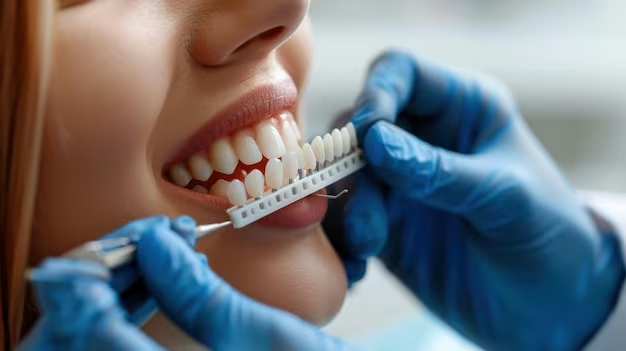
Yes, well-made veneers can look remarkably like natural teeth, and at Sola Dental Spa in Staten Island, New York, that natural result is the whole point of cosmetic veneers. The trick is matching shade, translucency, and shape to the rest of your smile so the work blends in instead of standing out. A skilled cosmetic dentist plans every detail, from the number of veneers to the material, so the final look reads as your own teeth on a good day. If you are weighing the investment, our guide on how much dental veneers cost walks through what shapes the price.
Modern porcelain veneers can closely mimic natural teeth because they reflect light the way real enamel does and are custom shaded and shaped for your mouth. The most natural results come from careful shade matching, the right material, and an experienced cosmetic dentist. A single mismatched veneer is what looks artificial, not veneers as a category.
“When patients tell me they are nervous about looking “done,” I tell them the secret is restraint. We match translucency and shade to your real teeth, build subtle texture and shape into the porcelain, and stop short of anything that looks too uniform. Done well, no one should be able to point to which teeth are veneers.”
Dr. Anne Gershkowitz, DDS, Founder, Sola Dental Spa
Many of the people who come to our Staten Island office have spent years hiding a chipped front tooth or a gray, stained smile in photos. Their worry is almost never “will this fix the problem,” it is “will it look obvious.” That concern is reasonable, and it is exactly why the planning stage matters as much as the porcelain itself.
What makes a veneer look natural?
A natural veneer copies three things from real enamel: shade, translucency, and surface texture. Natural teeth are not flat white, they let light pass through at the edges and carry tiny variations across the surface, and good veneers do the same.
Real teeth are slightly see-through, especially near the biting edge, so the way light moves through them changes with the room you are in. Porcelain can reproduce that quality, which is why it tends to look more lifelike than flatter, more opaque options. The goal is not the brightest possible white, it is a shade that looks believable next to the teeth around it.
Shape and texture matter just as much. Teeth have subtle ridges, contours, and edges that catch light, and skipping that detail is what makes work look fake. During planning, you and your dentist choose the shade and contour together so the result fits your face rather than a generic template.
Why is matching a single veneer so hard?
Matching one veneer to your other natural teeth is one of the hardest jobs in cosmetic dentistry, because that lone veneer has to mimic the exact translucency and color of teeth it sits beside. This is why dentists often suggest treating several front teeth together for the most even result.
If your natural teeth are more translucent than the veneer, a seamless match can be genuinely difficult, and any small mismatch shows. A single veneer that is even slightly off in shade or shine can stand out against its neighbors, which is the opposite of what most people want.
Treating two to four of the upper front teeth together often produces a more harmonious look, because the dentist controls color and shine across the whole zone you see when you smile. That uniformity, not the individual veneer, is usually what reads as natural.
Which materials look the most like real teeth?
Porcelain options such as feldspathic porcelain and lithium disilicate (often sold as E.max) are prized for lifelike translucency and durability. Composite resin can look good and is more conservative, but it tends to be less translucent and more prone to staining over time.
Porcelain reflects light much like natural enamel and resists staining well, which is why it is so often chosen for the front teeth. Thinner porcelain styles can keep more of that translucent quality while needing only light preparation. Composite, shaped tooth by tooth in the chair, is quicker and gentler on enamel, but it generally does not hold its color or shine as long.
There is no single “best” material for everyone. The right choice depends on your existing teeth, how much enamel you want to preserve, and how you want the smile to age. That is a conversation worth having with your dentist before anything is prepared.
| Feature | Porcelain veneers | Composite veneers |
|---|---|---|
| Light and translucency | Closely mimics natural enamel | Good, usually less translucent |
| Stain resistance | High | Lower, can discolor over time |
| Typical lifespan | About 10 to 15 years with care | About 5 to 10 years with care |
| Tooth preparation | Some enamel reshaped | Often more conservative |
Does the dentist make the difference?
Yes. The same porcelain can look beautiful or obvious depending on who plans and places it. Shade selection, tooth shape, and how the veneer meets the gum all come down to the skill and eye of the cosmetic dentist.
Technology helps, from digital shade tools to careful impressions, but the judgment behind it is what creates a result that blends in. At Sola Dental, planning the look is a shared step, and you have a say in shade and contour before anything is final. If you want to understand the comfort side of the visit, our piece on whether porcelain veneers hurt covers what the process actually feels like.
Frequently asked questions
Can people tell if I have veneers?
When veneers are well matched in shade, translucency, and shape, most people will simply think you have a nice smile rather than spot the dental work. Veneers tend to look obvious only when one is mismatched or when the color is brighter than the surrounding teeth.
How long do natural-looking veneers last?
Porcelain veneers commonly last around 10 to 15 years with good care, while composite veneers tend to last closer to 5 to 10 years. Daily brushing and flossing, routine dental visits, and avoiding habits like biting hard objects all help them keep their look.
Will my veneers stain like real teeth?
Porcelain resists staining well, which is part of why it stays looking natural over the years. Composite resin is more prone to picking up color from coffee, tea, and red wine, so it may need more attention to stay bright.
Should I get one veneer or several?
It depends on your goals and your existing teeth. Matching a single veneer to its neighbors is one of the harder tasks in cosmetic dentistry, so treating several front teeth together often gives a more even, natural result. Your dentist can advise based on your smile.
Do natural-looking veneers cost more?
Price depends on the material, the number of teeth, and the case rather than on “natural” as a feature, since a natural look is the goal of cosmetic veneers in general. You can read more in our guide on how much dental veneers cost.