
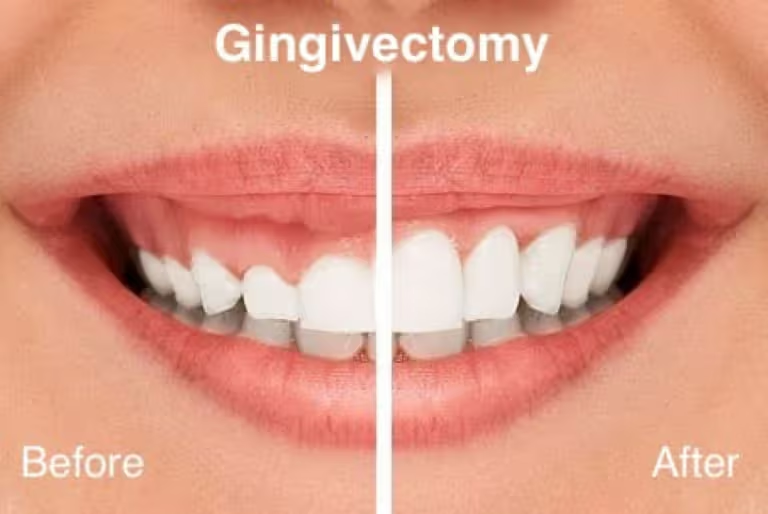
Gum surgery recovery is most uncomfortable for the first two to three days, with steady improvement through the end of week two. A gingivectomy or gum graft removes or reshapes gum tissue to correct overgrowth, recession, or asymmetry, and the surgical site needs structured care at home to heal well. At Sola Dental Spa in Staten Island, patients leave the appointment with a written aftercare plan so nothing is left to guesswork.
Understanding the timeline in advance reduces anxiety and helps you tell normal healing from a warning sign. The guidance below applies to gingivectomy, gum contouring, and gum graft procedures. For patients considering gum recontouring as part of a broader smile change, our periodontal and cosmetic services are coordinated under one roof.
What to expect in the first two weeks
Recovery follows a fairly predictable arc. The first two to three days are the most uncomfortable. Swelling and bruising of the soft tissue are normal protective responses; they typically peak at 48 to 72 hours and resolve within one to two weeks. Mild bleeding in the first 24 hours is expected, and a slight metallic taste often comes with it. Pain is real but manageable, and the analgesics recommended by your periodontist are usually sufficient. The degree of discomfort tracks the extent of the procedure: minor contouring recovers faster than a connective-tissue graft taken from the palate.
| Timeframe | Expected | Contact your periodontist |
|---|---|---|
| Hours 1 to 24 | Bleeding that slows with gauze pressure, numbness fading, mild soreness | Bleeding that does not slow within 30 minutes of pressure |
| Days 2 to 3 | Swelling peaks, bruising visible, pain managed with analgesics | Rapidly increasing swelling, fever |
| Days 4 to 7 | Swelling resolving, sensitivity decreasing | Pain worsening after day four, graft tissue looks white or detached |
| Week 2 | Most discomfort resolved, tissue maturing | Open wound edges, persistent bleeding, foul taste |
What can I eat after gum surgery?
A soft-food diet matters for the first two weeks. Chewing on or near the surgical site before the tissue heals can disrupt graft integration, reopen the incision, or push food into a healing wound. For the first 48 to 72 hours, favor foods that require no chewing: smoothies, broths, yogurt, soft scrambled eggs, mashed sweet potato, and blended soups. After day three, most patients can move to foods soft enough to mash with a fork, such as ripe banana, soft pasta, steamed fish, and avocado.
Avoid hard, crunchy, sticky, or chewy foods for the full two weeks, and chew on the side opposite the surgical site. Hot drinks, including coffee and tea, are best avoided for the first three to five days, since heat increases blood flow to the area and can promote bleeding.
Oral hygiene near the surgical site
Keeping the rest of the mouth clean stays important, but the surgical site itself needs a different approach. For the first 48 to 72 hours, do not brush or floss the operated area at all; use only the antimicrobial rinse your periodontist prescribed, on the schedule given. After three days, resume gentle brushing of teeth away from the surgical area with a soft brush. When you return to brushing near the graft, use light strokes parallel to the gumline with no scrubbing pressure. Electric and sonic toothbrushes should stay away from the site for the full two-week period, since their vibration can disrupt healing tissue.
"The outcomes I see after gum surgery are almost entirely determined by what happens in the first two weeks at home. Patients who rest, stick to the soft diet, and keep the surgical site clean heal faster and with less discomfort than those who try to return to full activity on day two. The procedure takes about an hour. The recovery protocol takes fourteen days. Both matter equally."
Dr. Daniel Nejat, DMD, Board-Certified Periodontist (Diplomate, American Board of Periodontology), Sola Dental Spa
How we approach gum surgery at Sola Dental Spa
At Sola Dental Spa, periodontal procedures including gingivectomies, gum grafts, and recontouring are performed by Dr. Daniel Nejat, a board-certified periodontist. Dr. Nejat coordinates with Dr. Gershkowitz when periodontal treatment is part of a larger cosmetic or restorative plan, so the surgical and aesthetic outcomes line up. Every patient leaves with a written aftercare protocol and a direct contact number for the recovery period.
Frequently asked questions
How long does pain last after a gingivectomy?
For most patients, the notable discomfort peaks in the first two to three days and resolves substantially by the end of the first week. By the two-week mark the area usually feels close to normal. Pain that increases rather than decreases after day three is worth a call, since that pattern is not typical of normal healing.
Can I brush my teeth after gum surgery?
You can, and should, brush teeth away from the surgical site starting the day after. For the site itself, avoid brushing for the first 48 to 72 hours and use your prescribed rinse instead. After three days, brush near the area with a very soft brush and minimal pressure.
When can I eat normally after a gum graft?
A strict soft diet is recommended for the first two weeks. Most patients return to a normal diet after the two-week follow-up confirms the graft is integrating. Chewing near the site before that risks disrupting the graft and lengthening recovery.
Is swelling after gum surgery normal?
Yes, in the first several days. Swelling and bruising typically peak around 48 to 72 hours and then steadily improve. Swelling that keeps increasing past day three, or is paired with fever, should be reported.
How soon can I return to exercise after gum surgery?
Keep physical exertion minimal for the first three days, since an elevated heart rate increases blood flow to the site and raises the risk of bleeding or graft displacement. Light activity such as walking is generally fine after that. Return to more strenuous exercise only after your periodontist confirms healing is on track.
Source: American Academy of Periodontology, Gum Graft Surgery