
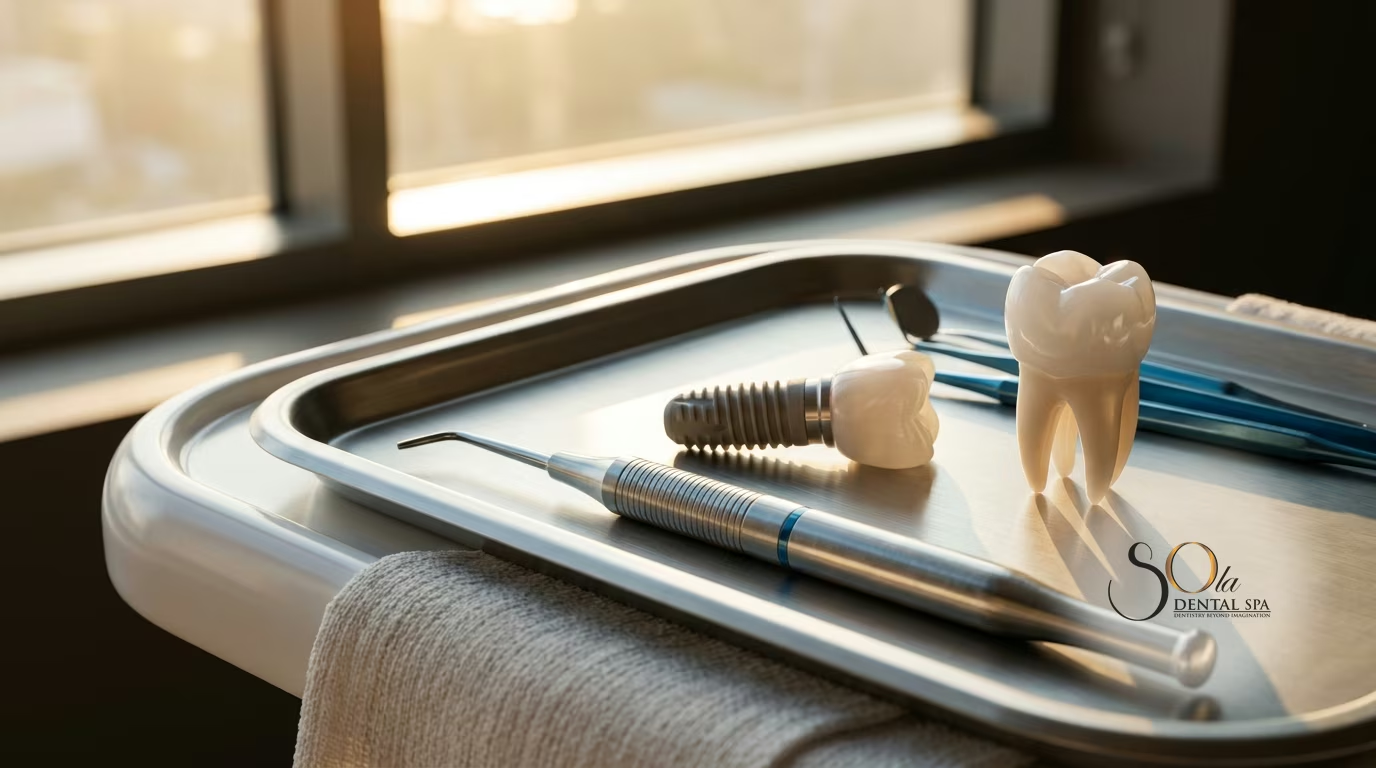
Whether to try to save a struggling natural tooth or replace it with a dental implant depends on how much bone and gum support the tooth still has, not on a blanket rule favoring one option over the other. A tooth with a poor long-term prognosis, meaning it is likely to fail again within months or a few years even after treatment, is often better replaced. A tooth with a reasonable chance of lasting is usually worth trying to save first. At Sola Dental Spa in Staten Island, we walk through both paths honestly before recommending one.
How do dentists decide a tooth is not worth saving?
A tooth is generally considered to have a poor prognosis when it has lost enough supporting bone and gum tissue that long-term healing is unlikely, even after treatment such as a root canal or additional gum therapy. An experienced dentist evaluates this with imaging and a clinical exam rather than guessing, and will lay out both the save-the-tooth and replace-the-tooth paths so you can weigh them.
What does trying to save the tooth involve?
Saving a natural tooth might mean a root canal, a crown, gum treatment, or some combination of the three. Cost varies widely depending on what is needed, and there is no guarantee the tooth will last, particularly if the underlying bone or gum damage is significant. The upside is keeping your own tooth root and avoiding surgery.
What does replacing it with an implant involve?
An implant replaces the tooth root itself with a titanium post that fuses to the jawbone, topped with a custom crown. It is typically a more predictable long-term outcome once healed, with a fixed, close-to-final cost known upfront rather than the open-ended cost of a tooth that might need repeated treatment.
How do the two options compare directly?
| Factor | Healing a natural tooth | Dental implant |
|---|---|---|
| Cost | Variable, and can rise if further treatment is needed after initial healing | Generally a fixed cost known before treatment starts |
| Time and predictability | May involve several appointments over time with an uncertain long-term outcome | A more predictable process once integration is confirmed |
| Appearance | Can be improved with a crown or veneer after healing, though results vary | Blends closely with surrounding natural teeth when placed by an experienced dentist |
| Where it matters most | Often prioritized for front teeth, where preserving the natural tooth matters cosmetically | Often recommended for back teeth carrying heavier chewing force, or when a tooth's prognosis is already poor |
Does tooth location change the decision?
Yes. For visible front teeth, many dentists lean toward trying to preserve the natural tooth first, since an implant is treated more as a fallback for these highly visible teeth. For back teeth, which carry more chewing force and are less visible, an implant is often recommended more readily, especially when the natural tooth's prognosis is already weak.
"There is no default answer here. We look at how much bone and gum support is left, where the tooth sits in your mouth, and what you value most, whether that is keeping your own tooth or having a more predictable long-term result. Then we lay out both paths honestly."
Dr. Daniel Nejat, DMD, Board-Certified Periodontist (Diplomate, American Board of Periodontology)
What should you ask at your consultation?
Ask directly what your tooth's specific prognosis is, what treatment would be required to save it, and what the realistic long-term outlook is for each path. A dentist who has experience in both restorative and implant work, rather than one who defaults to a single approach, is best positioned to give you an unbiased answer. Learn more about your options on our dental implants page.
Frequently asked questions
Is it always better to save a natural tooth?
Not always. If the tooth has a poor long-term prognosis, repeated treatment can cost more over time than replacing it once with an implant.
How long does an implant take to fully heal?
Healing time varies by patient and site, generally spanning weeks to a few months before the final crown is placed. Your dentist will confirm readiness with imaging.
Can a tooth that needs a root canal still fail later?
Yes, particularly if there is significant bone or gum loss around it already. This is part of why a full evaluation matters before deciding between a root canal and extraction with an implant.
Do implants look different from natural teeth?
Not when placed and matched well. The visible crown is custom-shaded to match your surrounding teeth.
What happens if I do nothing?
A failing tooth left untreated typically gets worse, and delaying can also affect the jawbone and neighboring teeth. Getting an evaluation sooner keeps more options open.
Sources: American Academy of Periodontology, Dental Implants