
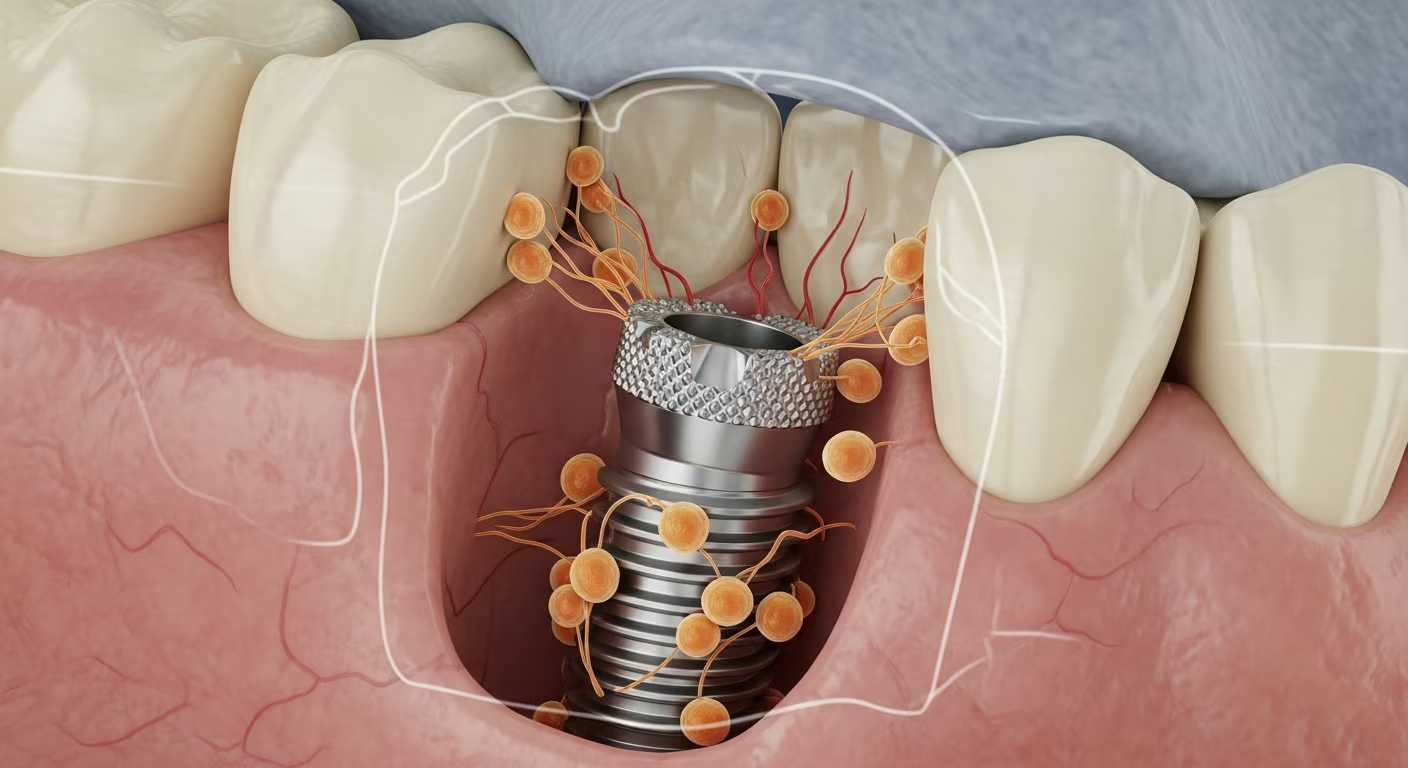
Dentists judge whether an implant is likely to integrate by evaluating jawbone volume and density, distance from nerves and sinuses, the implant's surface treatment, and the patient's overall healing capacity before surgery ever begins. Osseointegration, the process where bone fuses to the implant surface, depends on getting each of those factors right. At Sola Dental Spa in Staten Island, our team evaluates all of them with imaging and a health history before recommending implant placement.
What is osseointegration?
Osseointegration is the biological process where the jawbone grows directly against and fuses to the surface of a titanium implant, creating a stable, load-bearing connection similar to a natural tooth root. It typically takes weeks to months to complete, which is why implants heal before the final crown is attached.
Why does bone volume matter so much?
An implant needs to be fully surrounded by healthy bone to gain stability. If there is not enough bone volume or density at the site, either from long-term tooth loss or prior gum disease, integration is less predictable. In these cases a bone graft is often done first to build up the site before the implant is placed. See our dental implants page for more on the full process.
Why do dentists worry about nerves and sinuses?
In the upper jaw, implants placed too close to the sinus cavity can fail or cause complications. In the lower jaw, the same is true near the nerve that runs through the jawbone. Careful imaging before surgery, not guesswork, is what keeps placement safe and sets the implant up to integrate properly.
Does the implant surface itself make a difference?
Yes. Modern titanium implants are treated at a microscopic level to create a rougher surface that bone can grow into more readily than a smooth surface. Manufacturers continue to refine these surface treatments because a better bone-to-implant contact area means a more stable, more predictable result.
What about the crown and abutment on top?
The abutment and crown transmit your bite force down into the implant. If they are not fitted and adjusted correctly, uneven force on the connection point can cause problems even after the implant itself has integrated well. This is a detail worth asking your dentist about directly.
Do overall health factors matter?
Yes. Healthy blood flow to the surgical site is what delivers the oxygen and nutrients bone needs to heal and fuse to the implant. This is a major reason smoking is treated as a risk factor for implant failure. Reduced blood flow from smoking slows healing and can compromise integration, which is why most practices, including ours, discuss smoking cessation as part of implant planning.
Key factors that influence implant integration
| Category | Factor | Why it matters |
|---|---|---|
| Local conditions | Jawbone volume and density | Sufficient surrounding bone is necessary for initial stability and long-term integration. |
| Local conditions | Proximity to nerves and sinuses | Careful imaging prevents complications and supports safe, effective placement. |
| Implant design | Surface treatment | A textured surface encourages faster, stronger bone-to-implant contact. |
| Implant design | Abutment and crown fit | Proper fit distributes chewing force evenly and reduces stress on the implant. |
| Patient health | Blood flow and smoking status | Healthy circulation supplies the healing site; smoking slows healing and raises failure risk. |
"We are looking at the same handful of factors on every implant case: bone volume, proximity to the sinus or nerve, and the patient's healing capacity. When all three line up, integration is very predictable."
Dr. Daniel Nejat, DMD, Board-Certified Periodontist (Diplomate, American Board of Periodontology)
What can you do to support integration after surgery?
Follow the post-surgical instructions closely, avoid smoking during healing if you smoke at all, keep the surgical site clean, and attend every follow-up appointment so your dentist can monitor healing. Most integration problems are caught early at a checkup, well before they become symptomatic.
Frequently asked questions
How long does osseointegration take?
It generally takes several weeks to a few months, depending on bone quality and the specific implant site. Your dentist will confirm healing with imaging before attaching the final crown.
Can an implant fail to integrate?
Yes, though it is uncommon with proper planning. Insufficient bone, infection, or excessive early loading on the implant are the most common causes.
Does smoking really affect implants that much?
Yes. Reduced blood flow from smoking is one of the most consistently cited risk factors for slower healing and implant complications.
Do I need a bone graft before I can get an implant?
Only if imaging shows insufficient bone volume at the site. Not every patient needs one, and your dentist will tell you after an evaluation.
How will I know if my implant is integrating properly?
Your dentist checks stability and takes imaging at scheduled follow-ups. Persistent pain, swelling, or looseness between appointments should be reported right away rather than waiting for the next visit.
Sources: American Academy of Periodontology, Dental Implants