
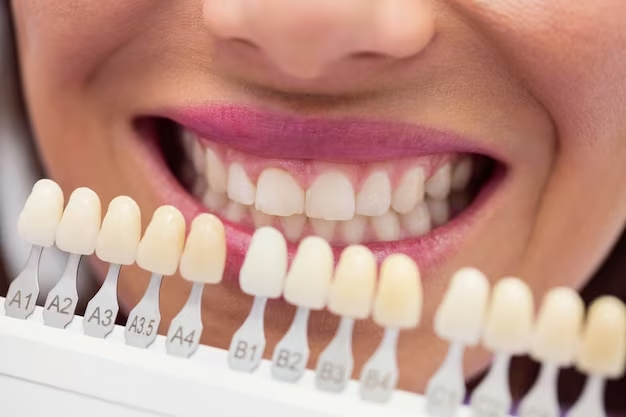
Cosmetic dentistry shapes a smile makeover by supplying the individual tools, veneers, whitening, bonding, crowns, and gum contouring, while smile design decides how those tools combine into one coherent result built around your face. At Sola Dental Spa in Staten Island, Dr. Anne Gershkowitz, DDS approaches every makeover as a single design project rather than a shopping list of procedures, because teeth treated one at a time rarely add up to a smile that looks planned. The full expression of this approach is our Hollywood Smile transformation.
A smile makeover is a designed combination of cosmetic procedures, sequenced deliberately: health first, then structure, then color and shape, then the gum frame. The design is drawn from your facial proportions and approved by you before treatment begins.
“A makeover fails when it is assembled instead of designed. Eight beautiful veneers with the wrong proportions for the face read as dentistry; the right proportions read as genetics. I spend more time on the design photographs than most people expect, because the shape of the final smile is decided there, not in the laboratory.”
Dr. Anne Gershkowitz, DDS, Founder, Sola Dental Spa
A patient from Richmond Valley came to us convinced she needed a full set of veneers. The photographs told a different story: her tooth shapes were good, but staining, one chipped incisor, and an uneven gumline were doing all the damage. Her makeover ended up being professional whitening, a single bonded repair, laser gum recontouring, and two veneers, a far smaller plan than she had priced elsewhere. Design is also how you avoid overtreatment.
What actually counts as a smile makeover?
Any planned combination of two or more cosmetic procedures aimed at one designed outcome, rather than a single fix done in isolation.
The term covers a wide range. On the small end, whitening plus bonding to repair a chipped edge is a makeover if the two are planned together against the same end picture. On the large end, a full arch of porcelain veneers with gum recontouring rebuilds the entire visible smile. What separates a makeover from a series of appointments is the design step: photographs, a scan, and a proposal you can see before anything starts. Our overview of what procedures are included in a smile makeover breaks down the menu in detail.
Which procedures do the heavy lifting?
Veneers set shape and symmetry, whitening sets the brightness baseline, bonding handles small repairs, crowns restore structurally compromised teeth, and gum contouring corrects the frame.
Each tool has a distinct job. Whitening changes color but not shape. Bonding adds material for small chips and gaps at modest cost, with a shorter lifespan than porcelain. Veneers change shape, size, and color at once, which is why they anchor most dramatic transformations; the American Dental Association notes veneer treatment is not reversible because enamel is removed, which is exactly why the design and preview step matters so much. Crowns take over when a tooth is too damaged for a veneer, and laser gum contouring balances the tissue line that frames everything. The role of veneers specifically is covered in our piece on porcelain veneers for smile makeovers.
How does digital smile design plan the result?
Calibrated photographs and a 3D scan feed a digital design of your proposed smile, reviewed with you on screen and often test driven as a mockup on your real teeth.
Design starts with the face, not the teeth: lip line at rest and full smile, facial midline, and the proportions between tooth length and display. The proposed design is drawn against those references, then reviewed with you, adjusted, and for most veneer cases transferred to a trial mockup you can wear briefly and evaluate in normal light. Only after you approve the design does irreversible work begin. That sequence, design, preview, approve, treat, is the discipline that separates a planned smile from an assembled one.
How do you keep a makeover looking new?
Normal hygiene, a night guard if you grind, sensible habits with staining drinks, and regular professional maintenance visits.
Porcelain resists stain but the cement lines and any bonded composite do not, so coffee and red wine habits show up at the margins first. Grinding is the bigger threat: a night guard is inexpensive insurance for porcelain edges. Whitening results fade gradually and are refreshed periodically, which is planned into the maintenance schedule rather than treated as a failure. A well maintained makeover ages gracefully, and the maintenance visits are also where small chips or wear get caught while the fix is still small.
| Procedure | What it changes | Typical role in a makeover |
|---|---|---|
| Professional whitening | Color only | Sets the brightness baseline first |
| Bonding | Small chips, gaps, edges | Minor repairs and refinements |
| Porcelain veneers | Shape, size, color together | The anchor of dramatic transformations |
| Crowns | Full tooth structure | Rebuilds compromised teeth to match |
| Gum contouring | The tissue frame | Balances symmetry and tooth display |
Frequently asked questions
Do I need every procedure to get a real result?
No, and a good design often shrinks the plan. As with our Richmond Valley patient above, photographs sometimes show that whitening, one repair, and a gumline adjustment accomplish what a full arch of veneers was quoted to do elsewhere.
What does a smile makeover cost at Sola Dental Spa?
It depends entirely on which tools your design calls for, so fees are reviewed at consultation once the plan is drawn. Comparing quotes only makes sense when the underlying plans are the same, which is another argument for designing first.
Will my new smile look fake?
Not if it is designed against your face. Artificial looking results usually come from one size proportions and over uniform color. Translucency layering in modern porcelain and design work against your lip line are what keep the result believable to people who see you every day in Staten Island, not just in photographs.
Where does whitening fit if I am getting veneers too?
Whitening comes first. Porcelain does not change color afterward, so we set your natural teeth to the target shade and then match the restorations to it. Doing it in reverse locks you into the old shade.
How long does a full makeover take from design to finish?
It varies with the plan, since gum healing, laboratory work, and staging each add their own timeline. The design consultation produces a schedule along with the plan, so you know the sequence before committing.