
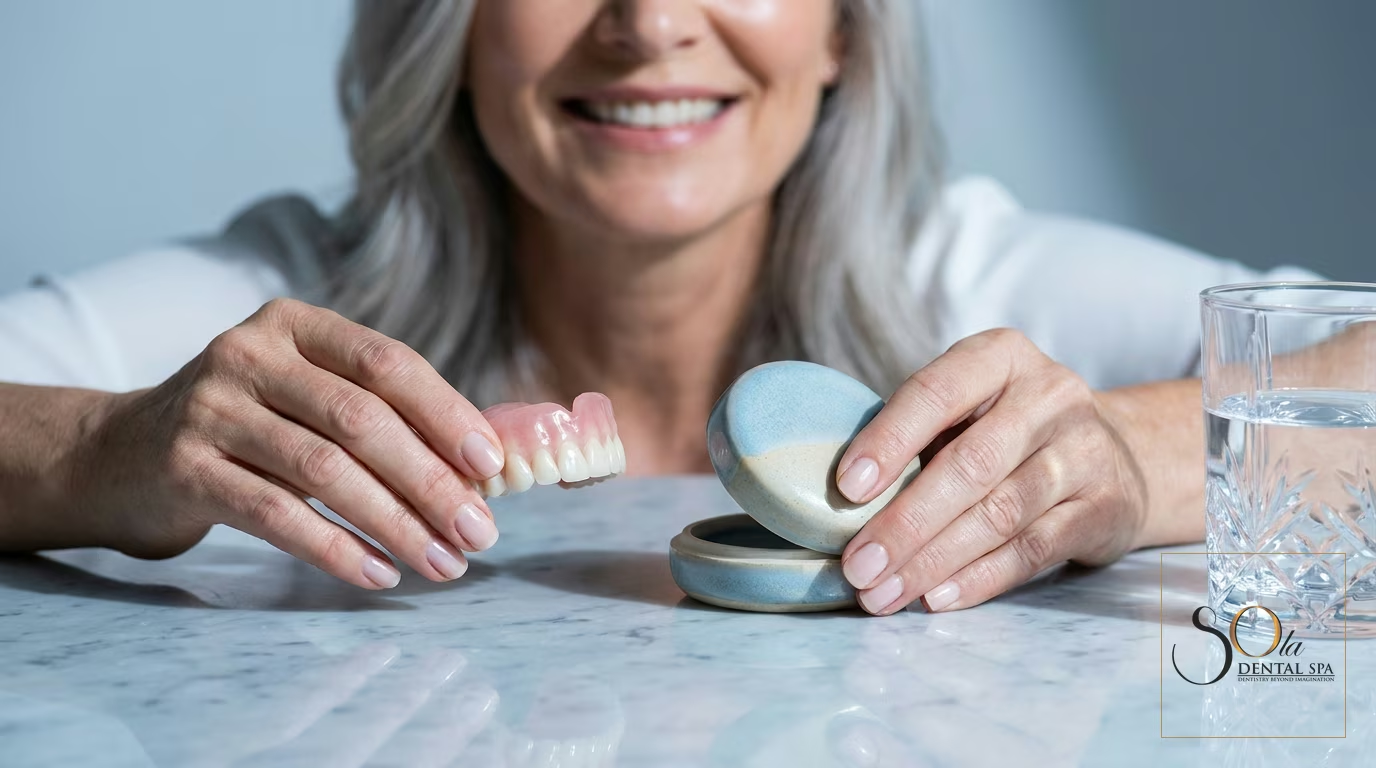
Most dentures need to be replaced roughly every five to ten years, not because the appliance itself wears out on a fixed schedule, but because your mouth keeps changing underneath it. At Sola Dental Spa in Staten Island, Dr. Anne Gershkowitz, DDS, our founder, tells denture patients that a good fit is a moving target, since the gums and jawbone gradually change shape once natural teeth are gone. A denture that fit perfectly on day one will slowly loosen, and that is normal. Denture care and adjustment are part of the services we offer.
Plan on new dentures every five to ten years, and adjustments or relines sooner as your mouth changes. The appliance can wear or stain, but the bigger reason is that your gums and jawbone reshape over time, so the fit drifts. Regular checkups catch that before it becomes a problem.
“People expect dentures to be a one-time purchase, and I understand why. But your mouth is not static. Once teeth are gone, the ridge that holds the denture slowly changes shape, so even a perfect denture eventually stops fitting. Replacing them on time is not upselling, it is keeping you comfortable and eating well.”
Dr. Anne Gershkowitz, DDS, Founder, Sola Dental Spa
A patient from New Dorp had worn the same full denture for nearly fifteen years, held in with more and more adhesive, because he assumed replacing it was a luxury. His gums had changed so much that the denture barely matched them anymore, which is why it kept slipping. A new set fit his current mouth, and he was amazed how much easier eating became. He had simply lived with a bad fit far longer than he needed to.
Why do dentures need replacing at all?
Two reasons. The denture itself can wear, stain, or crack over years of use, and more importantly, the gums and jawbone beneath it reshape once teeth are gone, so the fit gradually loosens.
When natural teeth are lost, the jawbone that supported them slowly resorbs, and the gum ridge changes shape. The American Dental Association notes that follow-up appointments are generally needed after a denture is inserted so the fit can be checked and adjusted, and advises contacting your dentist if dentures stop fitting well or become damaged. That changing foundation, more than the plastic itself, is why replacement is eventually necessary.
What are the signs it is time for new dentures?
Looseness that adhesive no longer fixes, sore spots, difficulty chewing, a change in your bite, visible cracks or worn teeth, or clicking when you speak. Any of these means it is time to be evaluated.
A denture that slips despite adhesive is the most common signal, and it usually means your gums have changed shape. Sometimes the fix is a reline rather than a full replacement, which is why an exam matters. If your current set has simply loosened over time, our guide to fixing loose dentures explains what can and cannot be adjusted before a replacement is warranted.
Can a reline extend the life of my dentures?
Often, yes. A reline resurfaces the fitting side of the denture to match your current gums, which can restore comfort for a while. But relines have limits, and eventually a full replacement gives a better result.
Relining buys time and comfort between replacements, but it does not renew worn teeth or a cracked base. Think of it as maintenance rather than a substitute for eventual replacement. If you are still adjusting to dentures in general, our overview of what to expect during your first month with dentures sets realistic expectations for the fit from the start.
| Timeframe | What usually happens | Typical action |
|---|---|---|
| First year | Fit is checked and fine-tuned | Adjustments |
| Two to four years | Gums begin to change shape | Possible reline |
| Five to ten years | Fit and materials have drifted | Replacement |
| Any time | Cracks, breaks, or sudden misfit | See your dentist promptly |
Frequently asked questions
My dentures still look fine. Do I really need to replace them?
Possibly, even if they look intact. The reason to replace is usually fit, not appearance. If your gums have changed shape, a denture that looks perfect can still fit poorly, so how it feels and functions matters more than how it looks.
Is a reline the same as a replacement?
No. A reline resurfaces the fitting side to match your current gums and can restore comfort for a time. A replacement is a whole new denture. Relines are great for extending fit, but they do not renew worn teeth or a cracked base.
Can ill-fitting dentures cause other problems?
Yes. Loose dentures can create sore spots, make eating and speaking harder, and lead people to rely on excessive adhesive. Persistent irritation is worth having checked, since a proper fit is both more comfortable and healthier for your tissues.
Do implant-supported dentures last longer?
Implants provide a more stable foundation and can reduce some of the bone loss that loosens conventional dentures, but the appliance portion still needs periodic care and eventual replacement. It is a fit question we are happy to discuss at our Staten Island office.
How can I make my dentures last as long as possible?
Clean them daily, handle them carefully, store them properly when not worn, and keep your regular checkups so we can catch fit changes early. Good care will not stop your gums from changing, but it protects the denture itself in the meantime.