
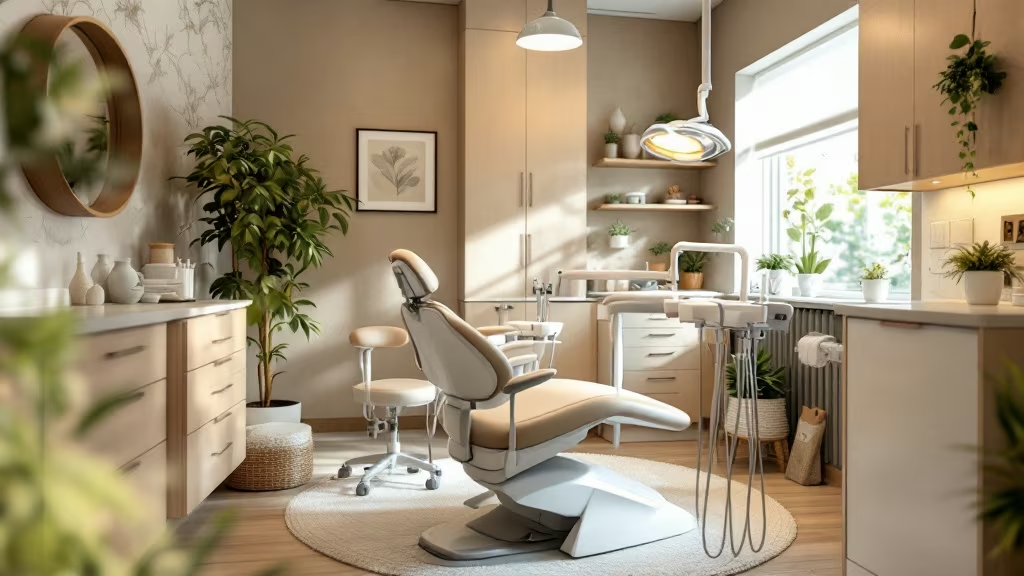
You can manage dental anxiety during a procedure by telling your dental team how you feel, agreeing on a signal to pause, distracting yourself with music or a handheld object, and using slow, counted breathing to stay calm. At Sola Dental Spa in Staten Island, Dr. Anne Gershkowitz, DDS treats the anxiety as seriously as the tooth, because a patient who feels in control and informed gets through treatment far more comfortably. These are practical, in-the-moment tools you can use during any appointment, and they work best with a team that expects to use them. See how comfort fits into the care we provide at Sola Dental Spa.
During a procedure, speak up about your anxiety, agree on a hand signal so you can pause anytime, distract yourself with headphones or a stress ball, and use counted breathing and a body scan to release tension. Small steps, repeated, keep the nervous system from spiraling.
“The chair is where anxiety peaks, so that is where the tools have to work. I tell patients to keep their stop signal ready, breathe on a count, and let the music carry them. When they know they can pause any second, the procedure stops feeling like something happening to them and starts feeling like something we are doing together.”
Dr. Anne Gershkowitz, DDS, Founder, Sola Dental Spa
A patient from Grasmere used to grip the armrests through every filling. This time we agreed on a hand signal before we started, she wore headphones, and she counted her breaths during each pause. Halfway through she realized she had let go of the armrests entirely. Nothing about the procedure changed; the way she rode through it did.
How do I speak up once the procedure has started?
Tell the team before and during. The American Dental Association advises sharing your anxiety and any discomfort, even with local anesthetic, so the dentist knows how to communicate with you and keep you comfortable.
The American Dental Association is clear that patients should not stay silent through discomfort. If you feel pain even after numbing, say so, because the team can adjust. Many people get embarrassed about their pain tolerance or do not want to interrupt, but talking about pain before it starts lets your dentist plan around it. During the procedure, a quick word or your agreed signal is all it takes to be heard.
Why does a pause signal matter mid-procedure?
It hands you the brakes. Knowing you can stop the moment you need to is one of the most powerful anxiety reducers, because the fear of being unable to stop is often the worst part.
The ADA recommends agreeing on a signal, like raising your hand, to tell the dentist you need a break during an exam or procedure. Set it up before the first instrument comes near you, so it is ready when tension rises. A short break to breathe, swallow, or just reset is often all a patient needs to continue, and the knowledge that the break is always available tends to keep anxiety from building in the first place.
What can I do with my mind and body in the chair?
Distract and relax. Headphones, a stress ball, and picturing a calm place pull focus away from the procedure, while counted breaths and a head-to-toe body scan physically lower tension.
The ADA suggests wearing headphones to mask the sound of the drill, occupying your hands with a stress ball or fidget object, and imagining yourself somewhere relaxing like a beach or garden. For the body, it recommends counting your breaths, inhaling and exhaling for the same number of counts five times, and doing a body scan that relaxes muscles one part at a time from your forehead down. You can run these quietly during any pause. If dental fear has kept you away for a long time, our companion piece on alternatives to sedation for dental anxiety covers how to plan a comfortable return, and putting care off usually makes the next visit harder.
| Moment | What to do | Why it works |
|---|---|---|
| Before it starts | Agree on a signal, put on headphones | Sets up control and distraction in advance |
| As tension rises | Use your signal for a short break | Prevents the spiral before it builds |
| During a pause | Count five slow breaths, scan your muscles | Physically lowers heart rate and tension |
| If you feel pain | Say so right away | Lets the team add comfort measures |
Frequently asked questions
What if I panic in the middle of a procedure?
Use your signal and take a break. That is exactly what it is for. We stop, you breathe and reset, and we continue only when you are ready. There is no rush and no judgment.
Is it okay to ask the dentist to explain what is happening as they go?
Yes, and many anxious patients find it helps. The ADA notes that knowing what is going to happen removes the fear of the unknown. Just tell us you would like a running explanation.
Can I listen to my own music during the procedure?
Please do. Headphones with your own playlist or an audiobook are one of the ADA's recommended distractions, and they are especially good at covering the sound of the drill.
Will telling you I am in pain slow everything down?
Not in a way that matters. A brief pause to add comfort is always worth it. The ADA specifically encourages patients to report pain rather than push through, so speak up.
I get anxious just in the waiting room in Staten Island. Any tips?
Start the breathing early. The ADA suggests counting five slow breaths while you wait. Arrive a few minutes early, put your headphones on, and begin settling before you are even called back.