
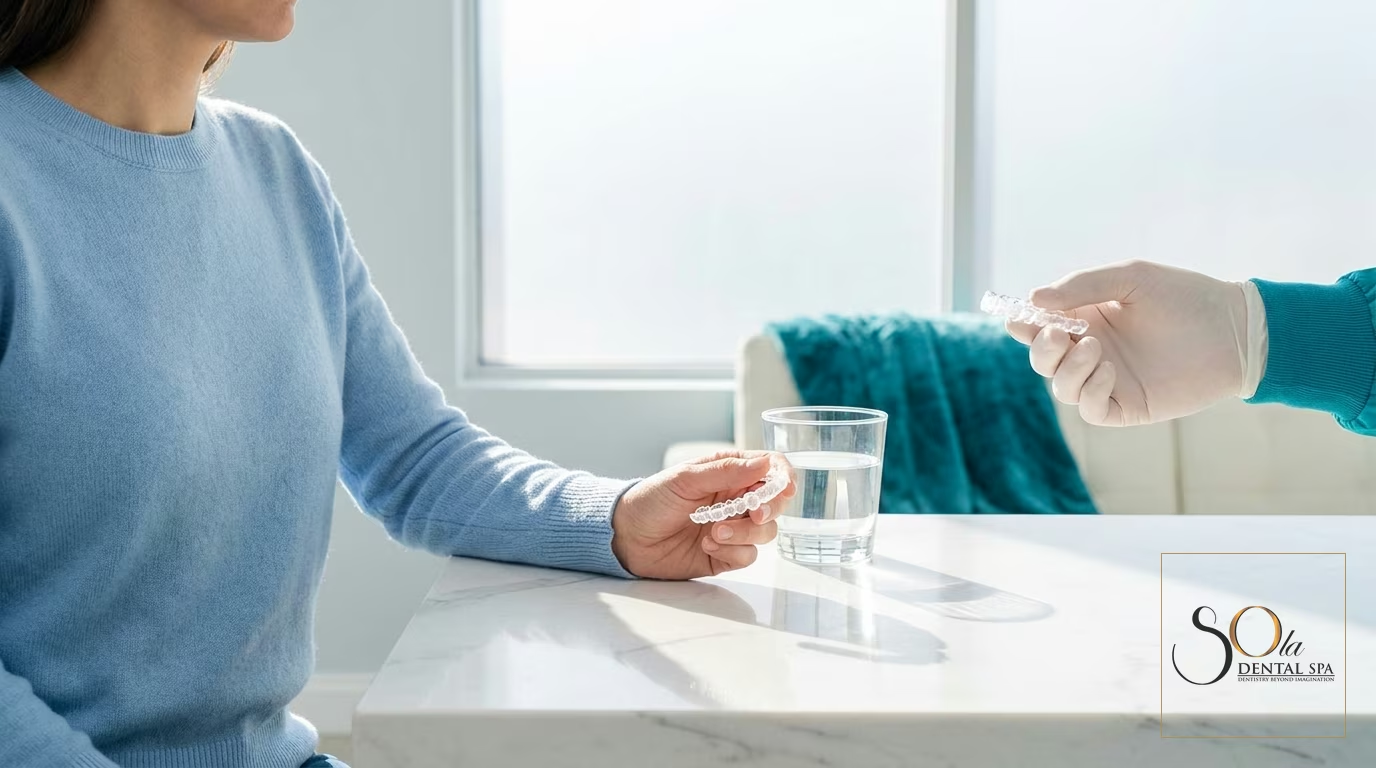
You cannot truly rush how teeth move through bone, but you can keep your orthodontic treatment on its shortest realistic track by wearing your appliances as directed, keeping every appointment, and protecting your teeth and gums along the way. At Sola Dental Spa in Staten Island, orthodontic care with braces and Invisalign is led by Dr. Anne Gershkowitz, DDS, and the single biggest cause of a longer treatment we see is not biology, it is missed wear time and skipped visits. The honest framing is this: the goal is not to speed up your teeth, it is to remove the delays that stretch treatment out. If you are early in the process, our look at what to expect after getting braces pairs well with this, and you can see where orthodontics fits within everything we offer.
Wear elastics and aligners for the full hours prescribed, never miss adjustment or aligner-change appointments, keep your teeth and gums healthy, and avoid breaking brackets. These habits do not accelerate biology, but they prevent the setbacks that add months.
“Patients always ask how to go faster, and my honest answer is that the fastest path is simply the one without detours. Every broken bracket, every skipped aligner day, every gap in wear time adds up. Do the boring things consistently and your treatment finishes on schedule, which for most people is faster than they feared.”
Dr. Anne Gershkowitz, DDS, Founder, Sola Dental Spa
A college student from Great Kills was determined to finish before graduation. She did not chase gimmicks. She wore her elastics exactly as prescribed, changed her aligners on time to the day, and never once showed up with a broken bracket. Her treatment came in right on the estimate we set at the start, which for her felt fast precisely because nothing went wrong.
Can you really make teeth move faster?
Not meaningfully on your own. Teeth move through bone at a biological pace that healthy habits support but cannot override. What you can control is avoiding the delays that make treatment longer than it needs to be.
It is worth being clear about this, because the internet is full of shortcuts that do not work and some that cause harm. Teeth remodel the bone around them as they move, and that process takes the time it takes. The productive question is not how to force it, but how to avoid interrupting it. That reframing is what actually keeps people on their shortest timeline.
How does wearing your appliances affect the timeline?
Enormously. Aligners and elastics only work while they are in your mouth. Falling short on daily wear time is the most common reason treatment runs long, and it is entirely within your control.
Clear aligners typically need to be worn most of the day and night, removed mainly for eating and cleaning. Elastics work the same way, applying steady force only while worn. Every hour short of the prescription is progress not made, and those hours accumulate into extra weeks. This is the highest-leverage habit in all of orthodontics, and it costs nothing but consistency.
Why do appointments and healthy gums matter so much?
Adjustments keep teeth moving, and healthy gums and teeth keep treatment from being paused. A cavity or gum inflammation can force a delay while it is treated, and a missed appointment stalls progress entirely.
Each visit moves your plan forward, whether that is a wire adjustment or clearance to advance your aligners. Miss one and the whole sequence waits. Oral health matters just as much, because the American Dental Association notes that plaque building up around brackets can permanently stain or damage teeth, and problems like that can interrupt treatment. Keeping your mouth healthy keeps your plan on track, which is the same reasoning behind steady preventive care throughout.
| What you do | Effect on timeline |
|---|---|
| Wear aligners and elastics as prescribed | Keeps progress steady, the biggest single factor |
| Attend every scheduled appointment | Prevents stalls between stages of movement |
| Avoid hard and sticky foods | Protects brackets, avoiding setbacks and repairs |
| Maintain excellent oral hygiene | Prevents cavities or gum issues that pause treatment |
| Skip wear time or miss visits | Adds weeks or months to the plan |
Frequently asked questions
Do the accelerated devices advertised online actually work?
Some at-home vibration or acceleration gadgets are marketed heavily, but the evidence behind dramatic claims is limited. Before spending money on one, ask us whether it makes sense for your specific case rather than assuming it will shorten things.
Does wearing my elastics more than prescribed speed things up?
No, and it can cause harm. The prescription is calibrated to your plan, and overdoing it can move teeth in unintended ways or damage roots. Wear exactly what you are told, no more and no less.
Will Invisalign finish faster than braces?
It depends entirely on your case, not on the appliance. Simple corrections can go quickly with either, and complex ones take time regardless. The appliance that fits your situation, worn faithfully, is the fastest one for you.
Can I do anything at home to help treatment along?
Yes, and it is unglamorous. Wear your appliances the full hours, keep your teeth and gums spotless, avoid foods that break brackets, and never skip an appointment. Those four habits do more than any gadget.
What slows orthodontic treatment down the most?
Inconsistent wear time and missed appointments, by a wide margin. Broken brackets and untreated cavities are next. Almost everything that lengthens treatment is a preventable interruption rather than a matter of biology.