
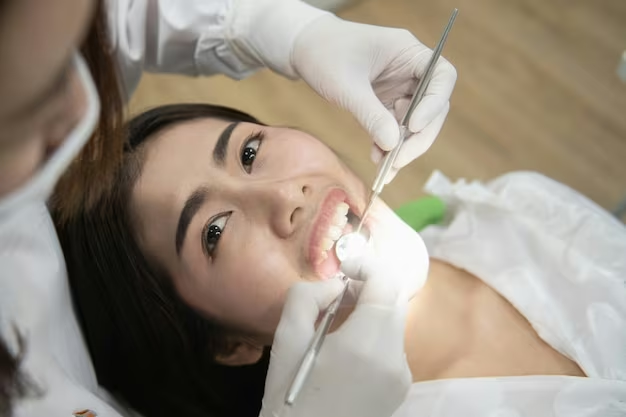
Professional whitening lightens teeth faster and further than over-the-counter products because it uses stronger peroxide applied under a dentist's supervision, while OTC kits trade that strength for convenience and a lower price. At Sola Dental Spa in Staten Island, Dr. Anne Gershkowitz, DDS supervises whitening so the gel targets stain molecules with your gums protected, which is the piece no store shelf can match. Both routes rely on the same active chemistry, so the real differences are concentration, speed, and oversight. The best way to choose is to start with a whitening consultation as part of cosmetic care at Sola Dental Spa.
Professional whitening uses higher concentration peroxide applied by a dentist with your gums protected, so most patients see a clear change quickly. Over-the-counter strips, gels, and toothpastes use weaker formulas that work more slowly and suit modest goals. Both can be safe and effective; they are not the same tool.
“The honest comparison is not good versus bad, it is strong and supervised versus mild and unsupervised. In the chair I can protect the gums, dial the concentration to your teeth, and adjust if anything gets reactive. A box on a shelf cannot look at your mouth first, and that is the real difference.”
Dr. Anne Gershkowitz, DDS, Founder, Sola Dental Spa
A patient from New Dorp had used drugstore strips on and off for a year with a little progress and a lot of frustration. She wanted results before a family wedding, so we did a supervised in office session with a gum barrier and calibrated gel. She left several shades brighter that afternoon, then used the strips she already owned to maintain the result. The strips were never the enemy; they were just the wrong tool for a deadline.
How does professional whitening actually differ from OTC?
The core difference is peroxide concentration and who is watching. Professional gels are considerably stronger and applied with soft tissue protected, while consumer products use lower doses you apply yourself.
Whitening works by chemistry, not scrubbing. Hydrogen peroxide and carbamide peroxide diffuse into the tooth and break apart the colored compounds that make teeth look dull. The American Dental Association notes that products supplied or applied by dentists are considered professional strength, while over-the-counter whiteners typically contain lower concentrations of the same agents. That concentration gap is exactly why supervision matters at the high end and why store products are milder by design.
Which one works faster?
Professional whitening is dramatically faster. Independent research the ADA cites found an OTC method needed about 16 days to reach the shade a take-home tray system hit in seven days and an in-office procedure reached in a single day.
If you have an event on the calendar, speed is the deciding factor. The same active ingredient at a higher concentration simply moves faster, and doing it in office means the whole change can happen in about an hour with the result visible immediately. Over-the-counter products get to a similar place for many people, but the timeline is measured in weeks of consistent daily use, and consistency is where a lot of home whitening quietly stalls.
Are over-the-counter whiteners safe to use?
Reputable OTC products used exactly as directed are generally safe for healthy mouths, especially those carrying the ADA Seal of Acceptance. The catch is that no one examined your teeth first.
The most common side effects of any peroxide whitening, professional or store bought, are temporary tooth sensitivity and gum irritation, both usually mild and short lived. Where OTC products get into trouble is when they are used over untreated cavities, exposed roots, or gum disease, or when someone reaches for abrasive charcoal scrubs and acidic kitchen tricks instead. Look for the ADA Seal of Acceptance, which means the whitening claim was tested for safety and effectiveness. For more on that, see our guide on whether whitening can damage enamel.
| Factor | Professional whitening | Over-the-counter products |
|---|---|---|
| Peroxide strength | Highest, professionally applied | Lower dose |
| Time to result | One session or a short tray course | Two weeks or more |
| Supervision | Full, gums protected | None |
| Exam first | Always | Not included |
| Best for | Big change, fast, or sensitive cases | Modest goals, maintenance |
Frequently asked questions
Is professional whitening worth the extra cost over drugstore strips?
If you want a change people notice or you have sensitive teeth, yes. The concentration gap is real and the supervision means the plan fits your mouth. Strips still earn their keep for maintenance and small touch-ups.
Can I use OTC strips to maintain a professional result?
Often, yes. Many of our Staten Island patients set their shade in office and then use strips or trays occasionally to hold it. We will map out a maintenance rhythm so you are not overusing peroxide without a reason.
Do whitening toothpastes actually whiten?
Mostly they remove surface stains through mild abrasion, and some carry a little peroxide. They help maintain brightness but will not change the underlying shade the way bleaching gel does.
Are the whitening kiosks at the mall on Richmond Avenue a good idea?
We steer patients away from unregulated whitening by non-dentists. Without an exam and gum protection, you are taking on the risks of strong gel with none of the safeguards. A supervised session is the safer path.
Will whitening make my teeth permanently sensitive?
No. Sensitivity from whitening is temporary and typically fades within a few days. We plan around it with desensitizing toothpaste and fluoride, and we adjust the protocol if your teeth run sensitive to begin with.