
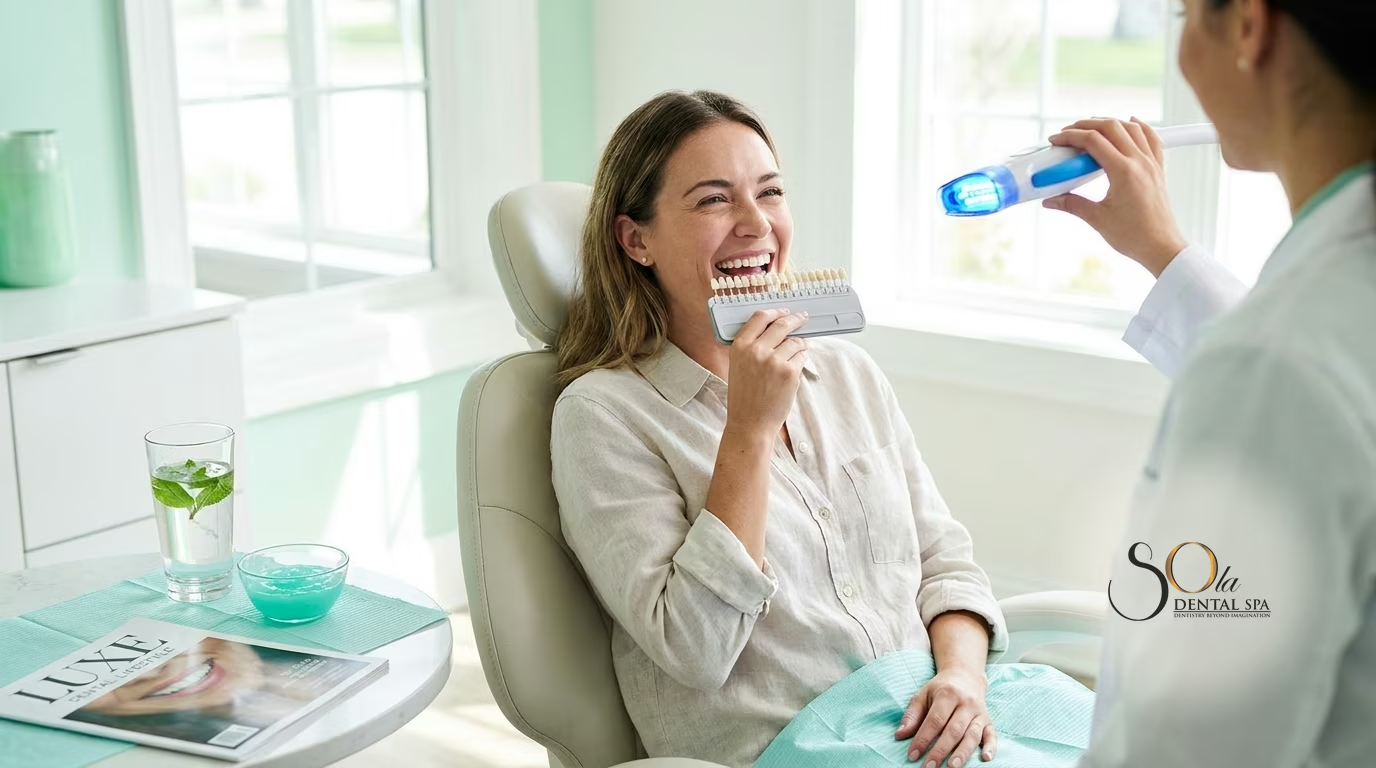
Sensitive teeth can still be whitened safely, usually with a lower-concentration or desensitizing formula used under a dentist's guidance rather than a high-strength over-the-counter product. Sola Dental Spa in Staten Island starts every whitening consultation for a sensitive patient with an exam to rule out decay or gum recession as the underlying cause. The options below range from professional in-office treatment to at-home approaches designed for sensitive teeth.
Why Whitening Can Trigger Sensitivity
Tooth sensitivity during whitening usually traces back to enamel wear or gum recession that exposes the more sensitive layer of the tooth underneath. A whitening product that is too strong for that exposed area, or used too frequently, can make the sensitivity worse. A dental exam before starting any whitening plan helps identify whether decay, a cracked tooth, or gum recession is contributing, since each of those needs to be addressed before whitening rather than masked by a desensitizing toothpaste.
Professional Whitening Options
Professional supervision gives a dentist the ability to tailor the treatment and concentration to a patient's sensitivity level, which is the main advantage over a generic over-the-counter product.
- In-office whitening: uses a protective gel and a professional-grade bleaching agent applied under monitored conditions, which can reduce irritation compared to an unsupervised product.
- Custom take-home trays: fit more precisely than generic trays, which limits gel overflow onto the gums, and typically use a lower concentration than in-office treatment to manage sensitivity.
Products with desensitizing ingredients such as potassium nitrate can also be used alongside professional whitening to reduce discomfort.
At-Home Options for Sensitive Teeth
Patients who prefer to whiten at home should look for low-peroxide formulations designed for sensitive teeth, and pair them with a desensitizing toothpaste before and after treatment. A custom tray from your dentist's office will generally cause less gum irritation than a one-size-fits-all strip or tray purchased over the counter.
| Approach | How it helps sensitivity | Best for |
|---|---|---|
| In-office whitening | Monitored application and protective gel limit gum exposure | Patients who want the fastest, most controlled results |
| Custom take-home trays | Precise fit reduces gel overflow onto gums | Patients who prefer whitening on their own schedule |
| Low-peroxide at-home products | Lower bleaching concentration reduces irritation | Mild sensitivity or a gentler introduction to whitening |
| Desensitizing toothpaste | Blocks nerve signals with ingredients like potassium nitrate | Use before, during, and after any whitening plan |
Who Should Talk to a Dentist Before Whitening at Home
Anyone with significant gum recession, visible tooth wear, existing dental work on front teeth, or sensitivity severe enough to affect eating or drinking should have a dental exam before starting an at-home whitening kit on their own. Existing crowns, veneers, or fillings will not change shade the way natural enamel does, which can leave a mismatched result if whitening is done without a plan for those teeth. A short consultation before you begin can prevent a result you are not happy with later.
Even patients without a history of sensitivity can develop it temporarily during a whitening course, so the same precautions, a dental exam first and a formula matched to your needs, apply broadly rather than only to patients who already know they are sensitive.
“Sensitivity is not a reason to avoid whitening, it’s a reason to whiten under supervision. Once we know why a patient is sensitive, we can pick a strength and a schedule that gets a brighter smile without the discomfort.”
Dr. Anne Gershkowitz, DDS, Founder, Sola Dental Spa
Managing Sensitivity After Whitening
Use a sensitivity toothpaste for about 48 hours after treatment, brush gently with a soft-bristled brush, and avoid very hot, cold, acidic, or sugary foods and drinks while your teeth settle. A desensitizing gel or pen, if included with your whitening kit, can be applied directly to sensitive areas for relief. If sensitivity has not improved within a couple of days, or if it was significant to begin with, contact your dentist rather than continuing on your own.
Preventing Sensitivity Before It Starts
Good oral hygiene, including fluoride toothpaste, helps keep enamel strong before you ever start a whitening plan. Choosing a low-peroxide or sensitivity-formulated product, and spacing out whitening sessions rather than whitening too frequently, both reduce the odds of discomfort. Most importantly, a conversation with your dentist before starting lets you rule out an underlying cause of sensitivity that whitening alone will not fix.
Frequently asked questions
Can I whiten my teeth if I already have sensitive teeth?
In most cases yes, especially under a dentist's guidance with a formula and concentration matched to your sensitivity level. A dental exam first helps rule out a cause, like gum recession or a cracked tooth, that needs separate treatment.
Is in-office whitening gentler than at-home kits?
It can be, since the process is monitored and uses a protective gel to limit gum exposure. Some patients do just as well with a custom take-home tray fitted by their dentist.
How long should I wait between whitening sessions if I have sensitive teeth?
Your dentist can recommend a schedule based on how your teeth respond, but spacing sessions further apart and using desensitizing toothpaste in between both help manage discomfort.
Will whitening make my sensitivity permanent?
Typical whitening-related sensitivity is temporary and resolves within a few days of finishing treatment. Persistent sensitivity should be evaluated, since it may point to an unrelated issue.
What can I do if my teeth feel sensitive right after whitening?
Use a sensitivity toothpaste, avoid hot, cold, and acidic foods for a couple of days, and apply a desensitizing gel if one was provided with your treatment. Contact your dentist if discomfort does not improve.