
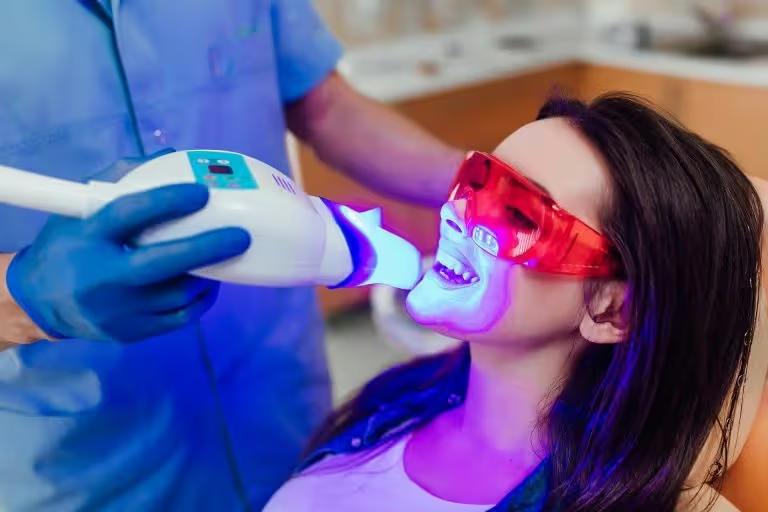
The first 48 hours after Zoom teeth whitening matter most: avoid hot, dark, or acidic foods and drinks, switch to a soft toothbrush, and expect any temperature sensitivity to fade within a few days. Zoom is a professional in office treatment that uses a hydrogen peroxide gel activated by an LED lamp, and enamel stays temporarily more porous right after treatment. At Sola Dental Spa in Staten Island, we walk every patient through this window before they leave the chair, because a few simple habits protect results that otherwise last one to three years.
"The procedure takes about an hour, but what happens in the first two days afterward is what I spend the most time talking through with patients. Enamel is temporarily more porous right after Zoom because the gel opens the surface slightly. That is what lets the whitening work, and it is exactly why dark pigments from coffee, wine, or berries absorb more easily during that window. Protecting that window is simple once you know what you are protecting against."
Dr. Anne Gershkowitz, DDS, Founder, Sola Dental Spa
A patient came in for her Zoom appointment last spring, a bride to be three weeks from her wedding. She left with a noticeably brighter smile, then called two days later worried it was fading. She had gone back to morning coffee without a straw and eaten a tomato based pasta the same evening. We walked through a reset, and by her wedding the results were restored. The lesson she took away was simple: the 48 hour window is not optional.
What to avoid right after Zoom whitening
For at least 48 hours, the priority is avoiding anything that would stain a white shirt. This is sometimes called the white diet, and the practical list is manageable with a little planning.
| Category | Avoid for 48 hours | Generally safe |
|---|---|---|
| Hot drinks | Coffee, black tea, chai | Water, cooled herbal tea, milk |
| Alcohol | Red wine, dark beer, colored spirits | Clear spirits, white wine in moderation after 48 hours |
| Fruit and juice | Berries, beets, pomegranate, citrus juice | Banana, pear, white grape |
| Sauces | Tomato, soy, balsamic, curry, mustard | White cream sauces, light vinaigrette |
| Other | Dark chocolate, dyed candy, tobacco | White rice, chicken, fish, eggs, mild cheese |
Temperature sensitivity is also elevated immediately after treatment. Avoid very hot or very cold foods and drinks for the first 24 to 48 hours, both to limit staining and because post-whitening sensitivity can be sharp. Room temperature foods are easier on the teeth during this window.
Do teeth keep whitening after the appointment?
Yes, and patients are often surprised by this. After Zoom, the enamel continues to brighten for roughly 10 to 14 days as the peroxide reaction completes and the enamel rehydrates. The color you see immediately after is not the final result. Most patients see their settled color at about the two week mark, slightly lighter than day one. Following the white diet guidance loosely through this period extends the benefit.
How to brush and care for teeth after Zoom
Aftercare brushing is about being gentler than usual, not skipping brushing. Enamel is not damaged by the procedure, but gum tissue can be temporarily more sensitive.
- Replace your toothbrush on the day of your appointment.
- Use a soft-bristle brush for the first two weeks.
- Use a toothpaste for sensitive teeth, ideally with potassium nitrate, for the first week.
- Avoid high-abrasive whitening toothpastes for the first two weeks.
- Rinse with water after meals during the first 48 hours, without vigorous swishing.
You do not need to brush after every meal. Two to three times daily with a soft brush and the right toothpaste is enough.
How long do Zoom results last?
With proper aftercare, Zoom results typically hold for one to three years before a touch-up is warranted. The range reflects diet, tobacco use, and enamel density. Heavy coffee or red wine drinkers who skip the straw fade faster; patients who follow the initial white diet, maintain good hygiene, and keep their six-month cleanings tend to sustain results longer. A take-home touch-up kit with custom trays can extend results between visits.
How we approach whitening at Sola Dental Spa
At Sola Dental Spa, Zoom whitening is part of a broader approach to smile design, not a standalone retail service. Before treatment, Dr. Anne Gershkowitz reviews your enamel and any existing restorations, because porcelain crowns, veneers, and composite bonding do not respond to whitening gel and can create a shade mismatch. We discuss realistic expectations and a maintenance plan, and during treatment patients are welcome to use our noise-canceling headphones. For patients planning a fuller smile update, our services page shows how whitening fits alongside veneers and bonding.
Frequently asked questions
How soon after Zoom whitening can I drink coffee?
Wait at least 48 hours, and when you return to it, use a straw and rinse with water afterward. Extending the avoidance to 72 hours lowers the staining risk further as the enamel stabilizes.
Is sensitivity after Zoom normal?
Yes. Transient sensitivity is common after any professional whitening and usually resolves within 24 to 72 hours. A potassium nitrate toothpaste before and after treatment reduces it. If sensitivity is severe or lasts beyond 72 hours, contact the office.
Can I whiten if I have crowns or veneers?
Whitening gel does not change porcelain or composite. If you have visible crowns or veneers on front teeth, whitening the surrounding natural teeth can create a mismatch, which is why Dr. Gershkowitz evaluates this before treatment and plans the sequence accordingly.
Can I use whitening toothpaste after Zoom?
Not right away. High-abrasive whitening toothpastes can irritate sensitive gum tissue in the first two weeks. Stick with a gentle, sensitivity-formula toothpaste until that window passes, then a standard whitening toothpaste is fine for maintenance.
How do I make Zoom results last as long as possible?
Follow the 48-hour white diet, keep your six-month cleanings, and ask about a take-home touch-up kit with custom trays. Patients who combine all three tend to be on the longer end of the one-to-three-year range.