
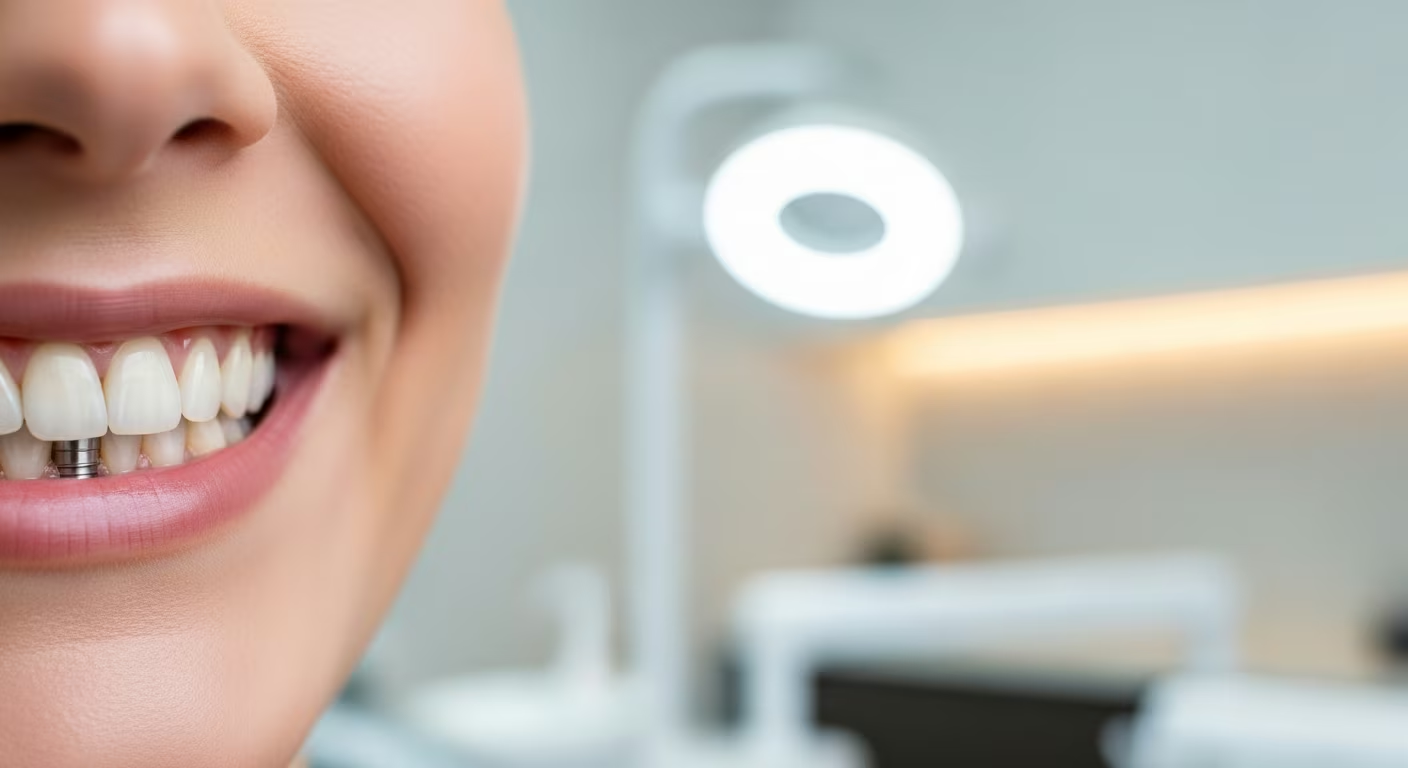
The two main types of dental implant procedures are endosteal implants, placed directly into the jawbone, and subperiosteal implants, which sit on top of the jawbone beneath the gum tissue. At Sola Dental Spa in Staten Island, Dr. Daniel Nejat evaluates each patient's bone density, oral health, and goals before recommending which approach, or which combination of implants and restorations, fits their situation best. Understanding the difference between the two helps you ask better questions during your consultation.
What Is the Difference Between Endosteal and Subperiosteal Implants?
Endosteal implants are the most common type of dental implant and the first option most dentists consider for patients with adequate jawbone. A small screw-shaped post, typically titanium, is surgically placed directly into the jawbone, where it acts as an artificial tooth root. Once the bone has fused to the post, an abutment is attached, followed by a custom crown, bridge, or denture.
Subperiosteal implants are the alternative for patients who do not have enough jawbone height or density for an endosteal implant and prefer not to undergo bone grafting first. Instead of anchoring into the bone, a custom metal framework rests on top of the jawbone, under the gum, with posts extending through the gum tissue to hold the prosthetic teeth in place. This approach is less common and is generally reserved for patients who cannot wear conventional dentures and are not candidates for grafting.
| Implant Type | How It Works | Best Suited For |
|---|---|---|
| Endosteal implants | Titanium post placed directly into the jawbone | Patients with sufficient, healthy jawbone |
| Subperiosteal implants | Metal framework rests on the jawbone under the gum | Patients with limited bone who prefer to avoid grafting |
What Determines Candidacy for Dental Implants?
- Overall health: your body needs to be able to heal from a surgical procedure, so certain chronic conditions may need to be managed first.
- Oral health: active gum disease needs to be treated before implant placement, since it can compromise the implant's success.
- Jawbone density: enough bone volume is needed to anchor the implant securely; if bone volume is limited, grafting may be an option.
- Commitment to aftercare: daily hygiene and regular checkups are part of what keeps an implant successful long term.
“Choosing the right implant type starts with a careful look at each patient's bone and gum health, not a default recommendation. That evaluation is what lets us predict how the implant will perform for years, not just how it looks the day it is placed.”
Dr. Daniel Nejat, DMD, Board-Certified Periodontist (Diplomate, American Board of Periodontology), Sola Dental Spa
These criteria are not a formality. A dentist who places implants without confirming bone density or resolving active gum disease first is setting the restoration up to fail. Sola Dental Spa builds every implant plan around a full evaluation rather than moving straight to surgery, so any gaps in candidacy are addressed before treatment begins, not discovered afterward.
How Do Dental Implants Compare to Porcelain Veneers?
Dental implants and porcelain veneers solve different problems and are not interchangeable. Implants replace a missing tooth entirely, root and crown, restoring function as well as appearance. Veneers cover the front surface of an existing tooth to correct chips, discoloration, or minor misalignment, but they require a healthy tooth underneath. Some patients benefit from both: implants where teeth are missing, veneers to refine the appearance of the teeth that remain. A consultation is the best way to determine which combination fits your mouth.
What Are the Options for Replacing One Tooth or a Full Arch?
Implant treatment scales to the extent of tooth loss:
- Single tooth replacement: one implant topped with a custom crown replaces a single missing tooth without altering the neighboring teeth.
- Multiple teeth replacement: implant-supported bridges can replace several adjacent missing teeth without relying on the surrounding healthy teeth for support.
- Full arch replacement: implant-supported dentures, removable or fixed, or a full bridge anchored by multiple implants, can replace an entire arch with more stability than conventional dentures.
Whatever the extent of tooth loss, your dental team maps out a plan based on your bone structure, remaining teeth, and long-term goals, not a standard package applied to every patient.
What Happens at an Implant Consultation?
A consultation typically includes a review of your dental and medical history, an oral exam, and imaging to assess your jawbone. From there, your dentist walks through which implant type applies to your case, what preparatory work, if any, is needed, and a realistic timeline. If you are considering implants, reach out to Sola Dental Spa to schedule an evaluation.
Frequently asked questions
Are endosteal implants better than subperiosteal implants?
Endosteal implants are generally preferred when there is enough healthy jawbone, since they tend to offer strong, long-term stability. Subperiosteal implants exist specifically for patients who are not good candidates for the endosteal approach, so which is better depends on your individual bone structure.
Do I need a bone graft before getting an implant?
Only if your jawbone does not have enough density or volume to support an endosteal implant. Your dentist will determine this during your evaluation using imaging of your jaw.
Can I get an implant if I already wear dentures?
Yes. Implant-supported dentures and bridges are common options for patients who currently wear conventional dentures and want more stability and chewing function.
How long does it take to complete implant treatment?
Timelines vary based on the number of implants, whether bone grafting is needed, and how your body heals, so your dentist will give you a timeline specific to your treatment plan rather than a general estimate.
Is a consultation required before scheduling implant surgery?
Yes. A consultation lets your dentist assess your bone density, oral health, and goals before recommending a specific implant type and treatment plan.