
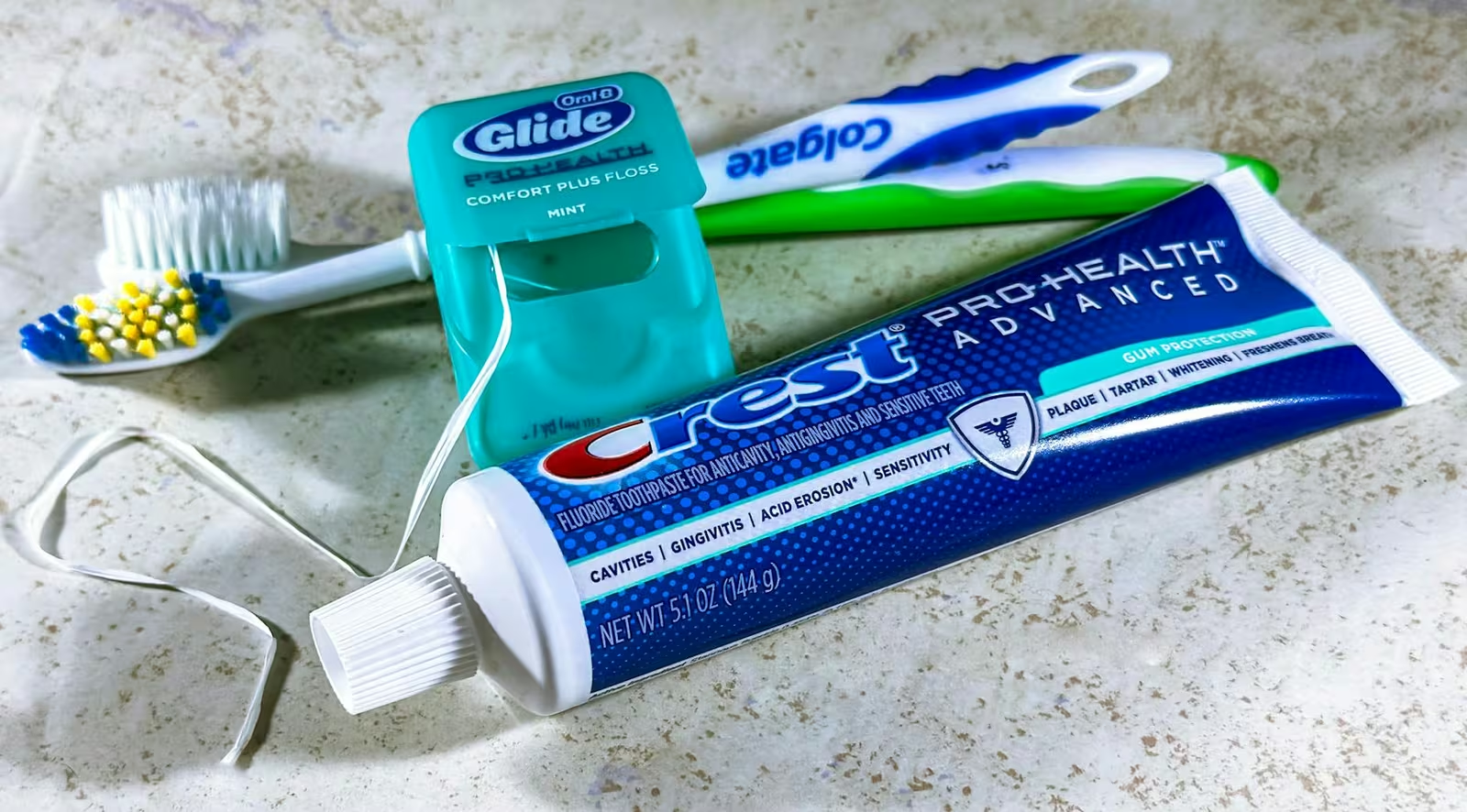
Over-the-counter teeth whitening kits are worth it for mild surface staining, but they generally work slower and less predictably than professional whitening at Sola Dental Spa. Dr. Anne Gershkowitz, DDS, sees plenty of Staten Island patients who try drugstore strips or trays first and come in later once they want a bigger, faster, or more even result. Both approaches use similar peroxide-based bleaching agents, but the concentration, fit, and supervision differ enough to change what you can expect. For a professional comparison of your options, our services page outlines what an in-office or take-home whitening plan looks like.
OTC whitening kits can lighten teeth a shade or two over several weeks and work best on mild, surface-level staining, while professional whitening uses stronger, dentist-supervised formulas for faster and more even results.
"Drugstore strips are not a scam, they genuinely lighten teeth for a lot of people. The tradeoff is that a one-size-fits-all strip does not fit every mouth evenly, and the concentration is capped for safety without supervision. For deeper staining or a faster timeline, a professional option usually gets you there with less trial and error."
Dr. Anne Gershkowitz, DDS, Founder, Sola Dental Spa
A patient from Great Kills used drugstore strips faithfully for a month before her daughter's wedding and was disappointed that her canines stayed noticeably darker than her front teeth. A single in-office whitening session evened out the shade in one visit, something the strips alone were not built to do.
How do OTC whitening kits actually work?
Most kits use a low concentration of hydrogen or carbamide peroxide in a strip, gel pen, or one-size tray that sits on the teeth for a set number of minutes each day.
The peroxide breaks apart stain molecules on and just beneath the enamel surface, which is why OTC kits tend to help most with stains from coffee, tea, wine, or tobacco rather than deeper, internal discoloration. Because the concentration is kept low for safety without a dentist present, results build slowly over one to several weeks rather than in a single sitting.
What are the downsides of drugstore whitening kits?
Uneven fit can lead to uneven whitening, and some users experience temporary sensitivity or gum irritation from gel touching soft tissue.
Generic strips and trays are not molded to your teeth, so peroxide can pool unevenly or miss areas entirely, leading to a patchy result. Gel that seeps past the tray edge can irritate the gums, and some people find their teeth become temporarily sensitive to hot or cold during treatment. None of this is dangerous when kits are used as directed, but it does explain why results are less predictable than an office visit.
When is an OTC kit a reasonable choice?
OTC kits make the most sense for mild, recent surface staining and for maintaining results between professional whitening visits.
If your teeth are only lightly stained and you are not in a rush, a drugstore kit used consistently can produce a noticeable, if modest, improvement. Many patients also use OTC touch-up strips a few months after a professional whitening session to extend the results, which is a reasonable way to combine both approaches.
| OTC whitening kits | Professional whitening | |
|---|---|---|
| Typical timeline | One to several weeks | One office visit or a short take-home course |
| Evenness of result | Can be uneven with generic trays | Custom-fit for even coverage |
| Best for | Mild staining, maintenance | Deeper staining, faster or dramatic results |
Patients who are unsure which route fits their goals can also read our comparison of professional teeth whitening versus over-the-counter products for a deeper look at how the two approaches stack up.
Frequently asked questions
Are whitening strips safe to use regularly?
Used as directed and not more often than the package recommends, most people tolerate OTC strips well. If you notice ongoing sensitivity, it is worth checking in with your dentist.
Why do my front teeth whiten more than my canines with strips?
Strips are shaped for average tooth arches and often do not seat tightly around curved or crowded teeth, so peroxide contact time varies across your smile.
Can I switch from OTC strips to professional whitening later?
Yes, there is no issue moving to an in-office treatment after using drugstore products, and many Staten Island patients do exactly that when they want a more even, faster result.
Do whitening toothpastes work the same way as strips?
Not quite. Whitening toothpastes mostly remove surface stains through mild abrasives rather than bleaching the tooth itself, so they tend to produce a smaller change.
How long do OTC whitening results typically last?
Results vary by diet and habits, but many people see fading within a few months, especially with coffee, tea, or tobacco use, which is why touch-up strips are common.