
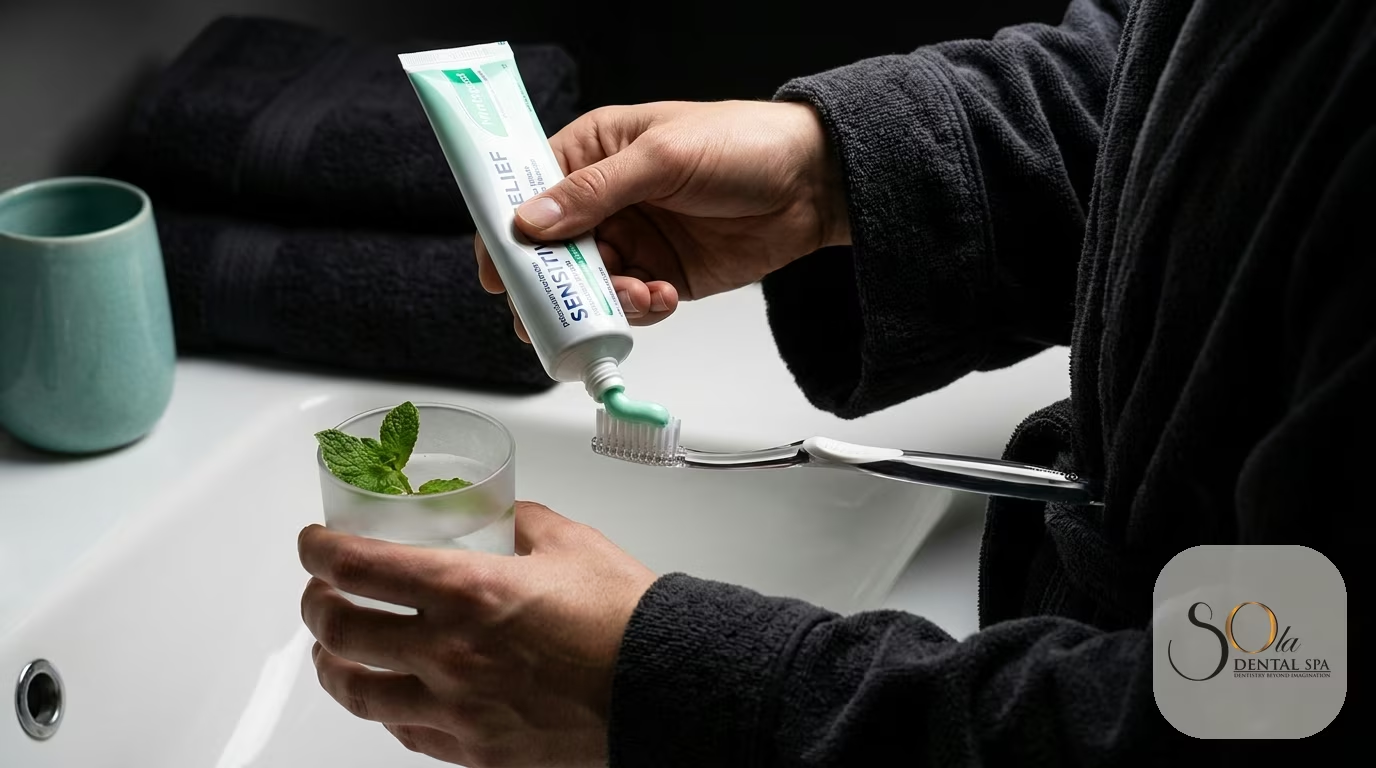
The best toothpaste for sensitive teeth is one that contains potassium nitrate, stannous fluoride, or hydroxyapatite, used twice a day for at least a few weeks. At Sola Dental Spa in Staten Island, Dr. Anne Gershkowitz, DDS treats tooth sensitivity almost daily, and the honest answer is that the ingredient matters more than the brand on the box. A desensitizing toothpaste can quiet the zing from ice water or coffee, but it cannot fix a cavity, a cracked tooth, or receding gums, which is why persistent sensitivity deserves an exam. You can see how we evaluate and treat sensitivity as part of general care at Sola Dental Spa.
Pick a toothpaste with potassium nitrate, stannous fluoride, or hydroxyapatite, brush twice daily with a soft brush, and expect two to four weeks before full relief. If sensitivity is sharp, localized to one tooth, or getting worse, it is a diagnostic clue, not a toothpaste problem.
“When a patient tells me a whole arch tingles with cold, a desensitizing toothpaste usually helps. When they can point at one tooth, I want an X-ray, because single tooth sensitivity is how cracks, decay, and failing fillings introduce themselves. The toothpaste aisle cannot tell those two stories apart, but an exam can.”
Dr. Anne Gershkowitz, DDS, Founder, Sola Dental Spa
A patient from Tottenville spent almost a year switching sensitivity toothpastes, three different brands, before coming in. Every product had “worked a little.” The actual problem was a hairline crack in a lower molar that eventually needed a crown. The toothpastes were not failing; they were muffling a symptom that was trying to say something. That case is why what follows covers both what to buy and when to stop shopping and book an exam.
Why do teeth become sensitive in the first place?
Sensitivity happens when the dentin layer under your enamel becomes exposed, letting hot, cold, sweet, and acid reach microscopic channels that connect to the nerve.
Enamel protects the crown of the tooth and a layer called cementum protects the root. Underneath both is dentin, a material threaded with tiny fluid filled tubules that run toward the nerve. When enamel wears down or gums recede, those tubules are open to the world, and temperature or acidity moves the fluid enough to fire the nerve. The American Dental Association lists worn enamel, exposed roots, decay, fractured teeth, worn fillings, and gum disease among the common causes, which is exactly why the same symptom can be trivial in one mouth and urgent in another.
Which ingredients actually calm sensitivity?
Potassium nitrate calms the nerve itself, stannous fluoride and hydroxyapatite physically seal the exposed tubules, and everyday fluoride strengthens the enamel that is left.
The two strategies are nerve calming and tunnel plugging. Potassium nitrate soaks into the tooth and makes the nerve less excitable, which is why it needs repeated use before you feel the difference. Stannous fluoride forms a mineral barrier over exposed dentin while also fighting decay and gingivitis. Hydroxyapatite, the newer option, is the same mineral your enamel is made of and works by bonding into the exposed surface. Whichever mechanism you choose, look for a product carrying the ADA Seal of Acceptance, which verifies the sensitivity claim was tested rather than just printed.
How long does a desensitizing toothpaste take to work?
Expect noticeable relief in about two weeks and full effect around four weeks. It only keeps working if you keep using it.
The ADA notes that desensitizing pastes usually require several applications before the sensitivity is reduced, and that matches what we hear chairside. Consistency is the whole game: twice a day, a soft bristled brush, gentle pressure, and no aggressive rinsing afterward so the active ingredient stays on the teeth longer. A common mistake is scrubbing harder at sensitive spots, which wears the exposed root surface faster and makes everything worse. If whitening is part of your routine, be aware that peroxide products can amplify sensitivity while you are trying to fix it; our article on whether whitening products weaken teeth covers how to balance the two.
When is sensitivity a sign of something bigger?
See a dentist when sensitivity is limited to one tooth, lingers after the trigger is gone, wakes you at night, or keeps worsening despite four weeks of proper toothpaste use.
Generalized, mild, cold triggered sensitivity across many teeth is usually a dentin exposure story that toothpaste manages well. The red flags are different: pain that lingers for more than a few seconds after cold, spontaneous throbbing, pain on biting, or sensitivity concentrated in a single tooth. Those patterns suggest decay, a crack, a failing restoration, or an inflamed nerve, and each has its own fix. Caught early, the fix is small; ignored, it can progress to where root canal treatment is the answer, and our guide to root canal costs explains what that involves.
| Ingredient | How it works | Best for |
|---|---|---|
| Potassium nitrate | Calms the nerve response inside the tooth | Generalized cold and sweet sensitivity |
| Stannous fluoride | Seals exposed dentin tubules, fights decay | Sensitivity plus cavity or gum concerns |
| Hydroxyapatite | Bonds mineral into exposed surfaces | Enamel wear, patients avoiding strong flavors |
| Sodium fluoride | Strengthens remaining enamel | Everyday prevention alongside the above |
Frequently asked questions
Which brand should I buy?
Any major brand whose sensitivity formula carries the ADA Seal and one of the proven ingredients will work. Match the ingredient to your situation using the table above, and ask us at your next cleaning which fits your specific pattern of sensitivity.
Can I use whitening toothpaste if my teeth are sensitive?
Carefully. Many whitening pastes are more abrasive and can heighten sensitivity. If a brighter smile matters to you, professional whitening with a sensitivity protocol is a gentler route than doubling down in the toothpaste aisle.
Why does my sensitivity come back when I stop the toothpaste?
Because the underlying dentin exposure is still there. The paste manages the symptom. If you want a permanent fix, the cause, whether recession, wear, or grinding, has to be addressed directly.
Is sudden sensitivity in one tooth an emergency?
It is an appointment, not an emergency room visit, but do not sit on it for months. Single tooth sensitivity is the most common early sign of a crack or cavity we see at our Richmond Avenue practice.
Can the dentist do anything stronger than toothpaste?
Yes. In office options include fluoride varnish, desensitizing agents sealed onto exposed roots, bonding over worn areas, night guards for grinders, and gum grafting for significant recession. Treatment depends on the cause we find at the exam.