
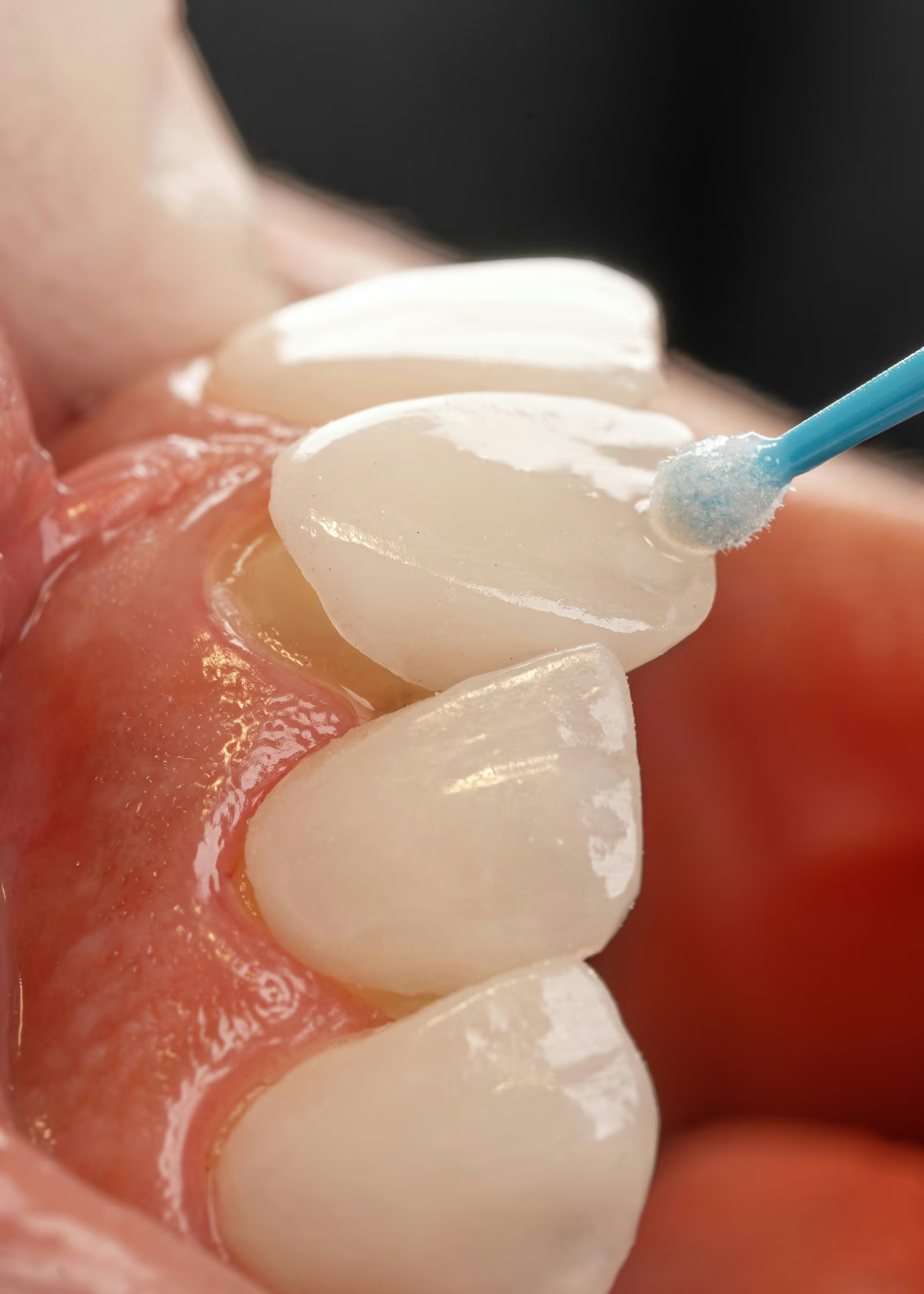
Porcelain veneers transform a smile by correcting color, shape, symmetry, and minor spacing in one coordinated treatment, which is why they anchor more smile transformations than any other single procedure. At Sola Dental Spa in Staten Island, cosmetic dentist Dr. Anne Gershkowitz, DDS designs each veneer case around the patient’s face, features, and goals through a staged process that begins with conversation, not drilling. The full treatment picture lives on our dental veneers page.
Veneers are thin porcelain facings bonded to the front of teeth. Because each one is individually designed, a set can simultaneously brighten color, rebuild worn edges, even out asymmetry, and close small gaps, producing a transformation that still looks like you.
“A transformation is not about making teeth white and straight. It is about proportion. When the length of the front teeth suits the lips, and the shade suits the skin, people say you look rested, or younger, or happier. They almost never say you got your teeth done. That is the goal.”
Dr. Anne Gershkowitz, DDS, Founder, Sola Dental Spa
One of our patients, a restaurant manager from Annadale, had spent years smiling with her lips closed in photographs. Tetracycline staining from childhood had left her teeth a gray that no whitening gel could touch, and one front tooth sat slightly rotated. Eight porcelain veneers across her upper arch resolved the color and the rotation in a single plan. At her follow-up she told us the strangest part was relearning how to smile for a camera.
What can veneers actually change?
Color that whitening cannot fix, chips and worn edges, mild rotation and unevenness, small gaps, and short or disproportionate teeth. They do not treat decay, gum disease, or significant misalignment.
The American Dental Association describes veneers as a treatment for chipped, stained, misshapen, or slightly crooked front teeth, and that list maps closely to what walks through our door. Deep intrinsic stains are the classic case, since porcelain covers what bleaching gels cannot reach. Gap closure is another frequent win, covered in detail in can veneers fix gaps in your teeth. What veneers cannot do is substitute for orthodontics or periodontal care, and an honest exam sorts that out before any porcelain is ordered.
How is a veneer transformation planned?
Photographs, impressions, and a design conversation come first. You review the proposed shapes before preparation begins, and temporaries let you road-test the look before the final porcelain is bonded.
Design is where a transformation succeeds or fails. We study how much tooth shows when you talk, where your smile line falls, and how broad your smile is relative to your face. The temporaries stage is a genuine rehearsal: you wear the proposed design, live with it, and report back. Adjustments happen in wax and resin, where changes are easy, rather than in fired porcelain, where they are not. Nothing about that stage is rushed, and no porcelain is ordered until you have approved the design with your own eyes in daylight, not just under operatory lights.
What does the staged process feel like?
Comfortable and unhurried. Preparation happens under local anesthetic, temporaries protect the teeth while the porcelain is crafted, and bonding day is pressure and light, not drilling.
Patients consistently report that the anticipation was worse than any appointment. Preparation removes a conservative layer of enamel under full anesthetic. The laboratory phase is where the artistry compounds, as each veneer is layered to mimic the translucency of natural enamel. The result should be indistinguishable from a naturally excellent tooth, a standard we test against in do veneers look like natural teeth.
| Concern | How veneers address it |
|---|---|
| Deep staining | Porcelain masks discoloration whitening cannot lift |
| Chips and worn edges | Porcelain rebuilds length and edge definition |
| Small gaps | Veneer width closes spacing without braces |
| Mild unevenness | Individual shaping restores symmetry |
| Short teeth | Added length rebalances the smile line |
Frequently asked questions
How many veneers do I need for a full transformation?
It depends on how many teeth show when you smile broadly. Some patients treat four front teeth, many treat eight, and wide smiles sometimes involve ten. The exam answers it precisely.
Can I whiten my other teeth to match new veneers?
Yes, and the sequence matters: whiten first, then match the porcelain to the new brighter shade. Porcelain itself does not respond to whitening gel afterward.
Will people in my life be able to tell?
They will notice something improved. Done well, they will guess a haircut or a vacation before they guess dentistry. Natural proportion is the entire design philosophy at Sola Dental Spa.
What if only one tooth bothers me?
A single veneer is a legitimate treatment, and matching one tooth to its neighbors is some of the most exacting shade work in dentistry. It is work we take on regularly.
How long will the transformation last?
Porcelain veneers typically serve 10 to 15 years and often longer with a night guard and sensible habits. Longevity planning is part of the initial design conversation, not an afterthought.