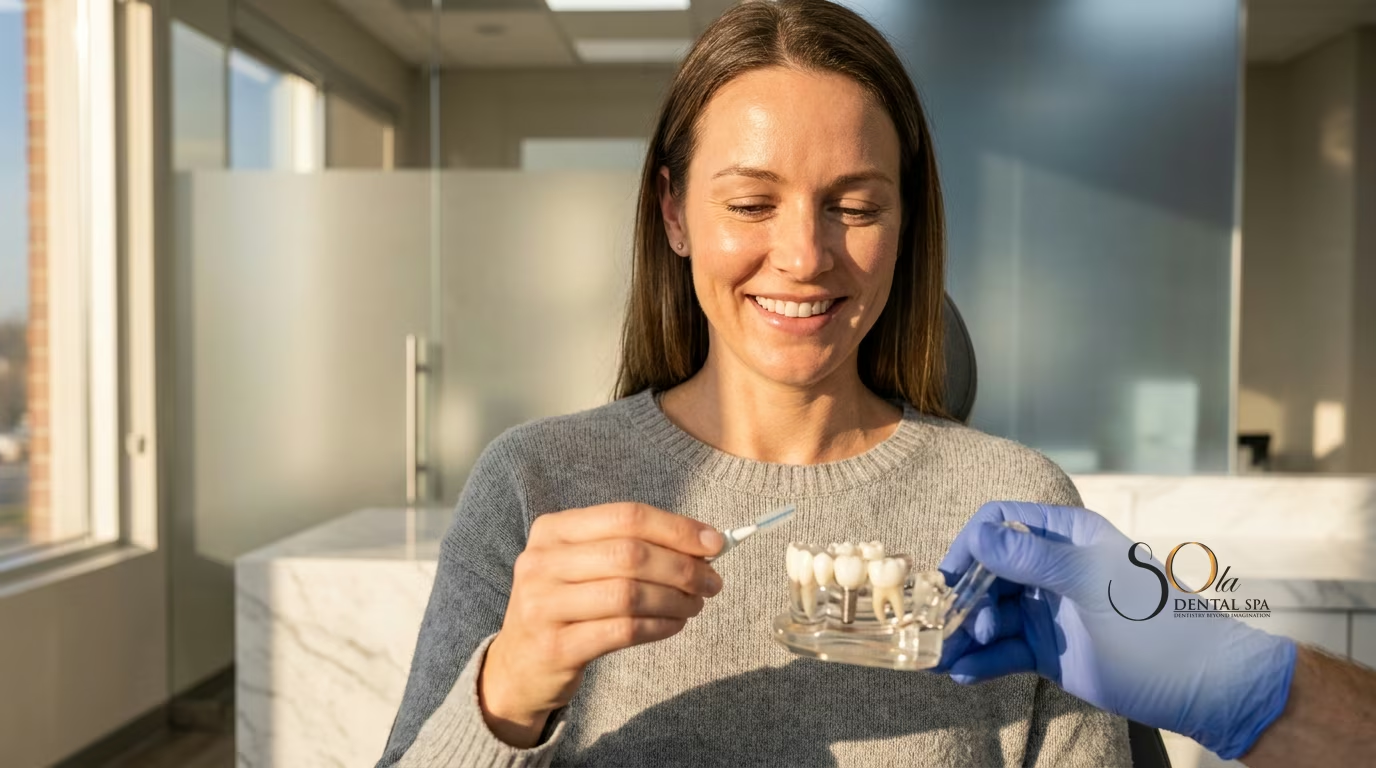
A permanent solution. Dental implants restore your smile for decades.
Honest, clinician-written guidance on cosmetic dentistry, implants, and caring for your smile, from the team at Sola Dental Spa, Staten Island.
What the process actually feels like, why most patients need little or no anesthesia, and how Dr. Gershkowitz keeps two visits comfortable.
A smile makeover reshapes teeth cosmetically in weeks, while traditional braces physically move teeth over one to three years. Here is how to tell which approach fits your goals.
Fillings handle small cavities and crowns rebuild badly damaged teeth. The right choice depends on how much healthy tooth structure remains. Here is how a dentist decides.
Gingivitis is the reversible stage of gum disease, and dentists treat it with a professional cleaning followed by a disciplined home care routine. Here is exactly how that process works.
Flossing clears the plaque between teeth that brushing alone leaves behind, and that plaque is exactly what causes gum disease. Here is how a daily habit protects your gums.
An educational look at the benefits of oral surgery for jaw alignment, covering what corrective jaw surgery treats, its functional benefits, and who performs it.
What a family dentist is and does, how they differ from other dentists, and why the convenience and continuity of one practice for all ages helps families stay healthy.
Clear emergency steps for a knocked-out tooth, from handling it by the crown and keeping it moist to getting to the dentist quickly for the best chance of saving it.
An evidence-based look at strengthening weak teeth through remineralization, covering fluoride, diet, hydration, and daily hygiene rather than quick fixes.
A practical guide to caring for dental implants, covering daily brushing and cleaning between teeth, habits to avoid, and why regular checkups keep implants lasting.
Why modern dental implants look and feel like natural teeth, from custom shade-matched crowns to gum shaping and the stable fused post beneath.
At-home aligner kits skip the exam and supervision that keep tooth movement safe. Here is what the shortcut leaves out and why it matters for your teeth.
How dentists diagnose gum disease using probing and x-rays, the stages from gingivitis to periodontitis, and the treatments matched to each stage.
Most orthodontic treatment takes one to three years, followed by retainers. Here is what shapes the timeline and why cases vary so much.
A clear recovery guide for after oral surgery, covering the first 24 hours, gentle cleaning, soft foods, and the warning signs that mean you should call your dental team.
A dentist is often the first to spot teeth grinding and can protect your teeth with a custom night guard while helping you address the underlying cause.
Dentures typically last five to ten years before they need replacing, because your mouth changes over time. Here are the signs it is time for new ones.
Untreated gum disease is a leading cause of adult tooth loss. Here is how it destroys the support around teeth and how to stop it before that point.
After any dental procedure, gum care is what protects the work. Here is how to prevent gum disease during healing and keep the result long term.
Yes, many people can straighten their teeth without traditional braces. Clear aligners are the leading option, but the right choice depends on your case.
Many teeth headed for extraction can be saved with earlier treatment. Here is when a tooth can be preserved and when removal is the healthier choice.
No, retainers are built to hold teeth where orthodontic treatment left them, not to move teeth into new positions. Straightening takes an active appliance such as braces or clear aligners, planned and supervised by a dentist.
Leaving misaligned teeth uncorrected can contribute to tooth decay, gum disease, abnormal enamel wear, and jaw strain over time, because crowded teeth are harder to clean and bites distribute force unevenly. An evaluation tells you whether yours is cosmetic or clinical.
Yes, you can keep wisdom teeth that erupted fully, function in your bite, and stay clean and disease free. The trade is a real monitoring routine, because the risk picture changes with age and position.
Untreated gum disease does not stay still. Here is what it does over months and years, from bone loss to tooth loss, and why acting early changes the outcome.
You can eat the same day as wisdom teeth surgery, starting with soft, cool foods once the numbness wears off. The menu widens over the first week, and the two hard rules are no straws and nothing that requires real chewing near the sites.
Smoking is one of the strongest risk factors for gum disease, and it masks the warning signs. Here is how it works, and why quitting helps your gums at any age.
An impacted wisdom tooth is not an automatic emergency, and many stay quiet for years under monitoring. The real risks are gum infection, decay, damage to the neighboring molar, and occasionally cysts, which is why imaging and follow-up matter.
Diet does not replace brushing, but it shapes gum health more than most people realize. Here is how nutrition helps prevent gum disease, and what to put on your plate.
Braces move your teeth, but retainers keep them there. Here is why the retention phase is not optional and how to protect the result you worked for.
If your wisdom teeth erupted fully and stay cleanable, nothing bad automatically happens when you keep them, as long as they are monitored. Trapped or partially erupted teeth are the ones that can quietly develop decay, gum infection, or cysts over time.
There is no shortcut around how teeth move, but plenty of ways to avoid adding time. Here is how to keep orthodontic treatment on its fastest realistic track.
No, removing all four wisdom teeth is not automatic. Surgeons often recommend one combined procedure when several teeth show problems, but healthy, cleanable wisdom teeth can be monitored instead. The decision is made tooth by tooth, from imaging.
Oral surgery is routine and generally safe, but real risks exist. Here is an honest look at what they are, how likely they are, and how careful care keeps them low.
Most people are back to daily life within two to three days of wisdom teeth removal and feel close to normal by week two, while the sockets themselves take up to six weeks to fully close. Here is the stage by stage timeline and what actually speeds it up.
The first days with braces bring soreness and small adjustments. Here is a realistic look at what to expect and how to stay comfortable through treatment.
Gingivitis is the reversible stage of gum disease. Here is how a professional cleaning plus disciplined home care can return early inflammation to full health.
Dental bridges wear out, but they are fully replaceable. Here are the warning signs of a failing bridge and the options for what comes next.
An extracted tooth can almost always be replaced with a dental implant, even years later. Timing and bone health decide how the process unfolds.
Crown materials trade strength against appearance. Here is how your dentist matches porcelain, zirconia, and metal options to the tooth that needs coverage.
A dental bridge lasts longest when you clean under it daily and protect its anchor teeth. Here is the routine that keeps bridges healthy.
Dental anxiety is common and manageable. Here is how a dentist trained in patient comfort turns a dreaded appointment into a calm one.
Persistent bad breath usually has a treatable dental cause. Here is when to book an exam and what your dentist will actually do about it.
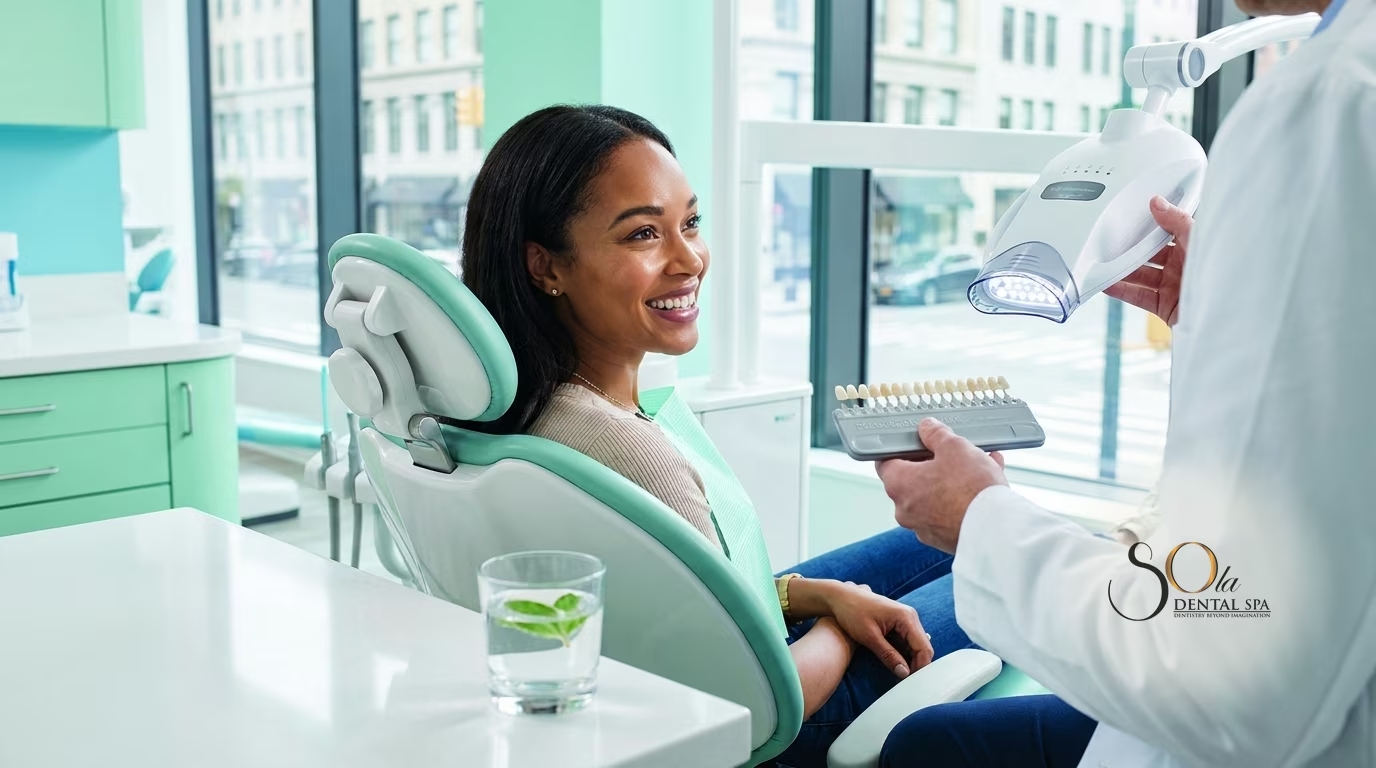
Whitening at a dental clinic brings advantages a store kit cannot: an exam first, stronger professionally applied gel, gum protection, faster results, and a plan tailored to your teeth and sensitivity.
Dental implants are not maintenance-free. They require daily brushing and flossing and regular professional visits to prevent peri-implant disease and keep the surrounding gum and bone healthy for the long term.
Tooth sensitivity is usually exposed dentin letting heat, cold, and sweetness reach the nerve. Causes range from worn enamel and receding gums to cavities and cracks. Treatment depends on the cause, and persistent or single-tooth sensitivity deserves an exam.
New dentures can feel loose or awkward for the first few weeks while your muscles adapt. Minor soreness and extra saliva are normal and usually fade. Follow-up adjustments, good hygiene, and patience make the first month go smoothly.
You can manage anxiety in the chair by speaking up, agreeing on a signal to pause, distracting yourself with music or a fidget object, and using counted breathing and a body scan. A supportive dental team makes each of these work better.
Sedation is not the only path through dental anxiety. Communication, agreed signals, distraction, and mindfulness techniques help many patients get comfortable care without medication, and they pair well with a supportive dental team.
Dental X-rays use very low doses of radiation and are considered safe for children when a dentist judges they are needed. Modern equipment, careful positioning, and taking images only when useful keep exposure minimal.
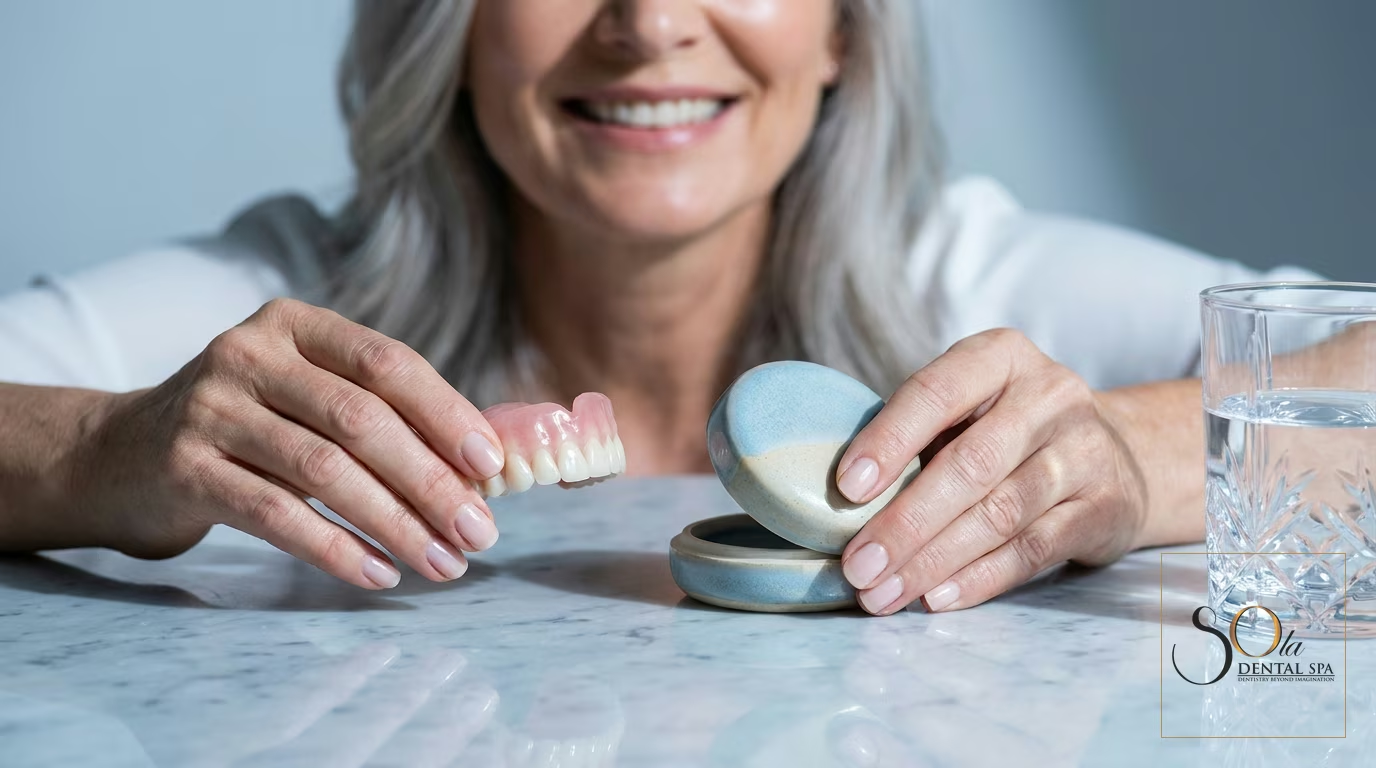
Denture teeth cannot be bleached the way natural enamel can. Sola Dental Spa explains how daily cleaning, soaking, and professional polishing remove stains, and when replacement is the better call.