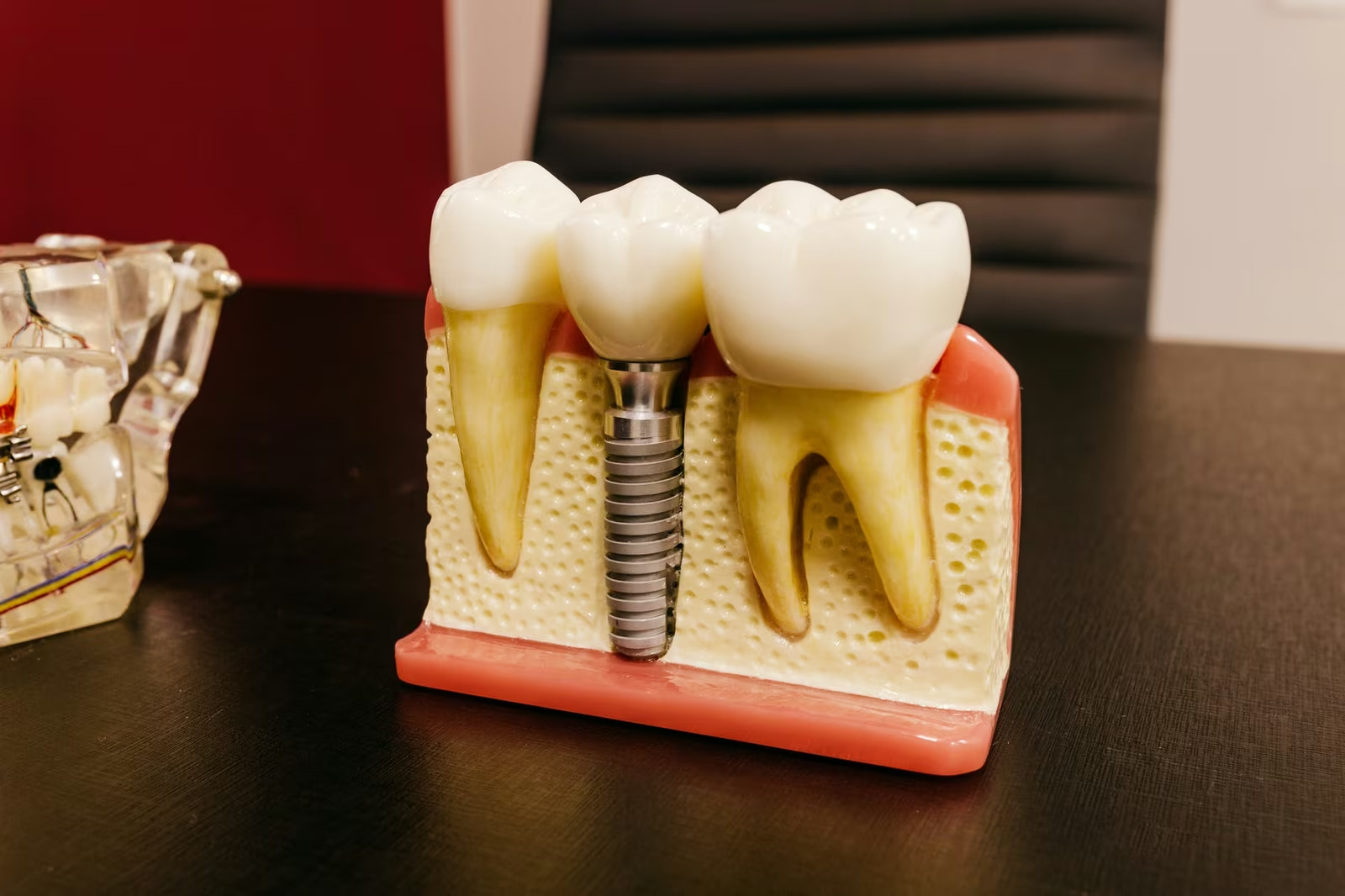
A permanent solution. Dental implants restore your smile for decades.
Honest, clinician-written guidance on cosmetic dentistry, implants, and caring for your smile, from the team at Sola Dental Spa, Staten Island.
What the process actually feels like, why most patients need little or no anesthesia, and how Dr. Gershkowitz keeps two visits comfortable.
Professional whitening lightens teeth faster and further under a dentist's supervision, while over-the-counter products offer convenience and a lower price for more modest goals. Both use peroxide; they differ in strength, speed, and oversight.
Loose dentures usually mean the jaw ridge has changed shape. Sola Dental Spa explains adjustments, relines, rebases, remakes, and implant stabilization, and when each fix makes sense.
An honest look at whitening strips, what they can realistically do for mild surface stains, where they fall short, and when supervised whitening makes more sense.
Why jawbone density and volume are the foundation of dental implant success, how bone is evaluated before surgery, and what grafting can do when bone is thin.
A clear guide to the four types of teeth, incisors, canines, premolars, and molars, what each one does for chewing and speech, and how to protect them.
The real causes of tooth staining, how surface stains differ from internal discoloration, and the daily habits and professional options that keep teeth bright.
Practical habits that keep whitened teeth bright, from the first 48 hours after treatment to daily routines, food choices, and sensible touch-up timing.
Most cavities trace back to a handful of causes: plaque and frequent sugar, weak brushing habits, dry mouth, and skipped checkups. Each one has a practical fix.
In-office whitening delivers the fastest, most controlled result, while at-home options trade speed for convenience. Here is how the two paths actually compare.
Whitening sensitivity is common, temporary, and largely preventable. A little preparation before treatment and a few smart habits afterward make all the difference.
How to whiten sensitive teeth comfortably, why sensitivity happens during bleaching, and the gentler supervised protocols that keep the process comfortable.
Step-by-step guidance for a crown that has come off, from saving and cleaning it to protecting the exposed tooth until your dentist can recement or replace it.
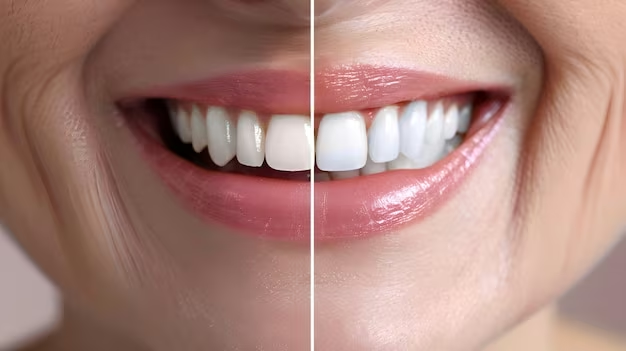
A realistic look at teeth whitening before and after results, why starting shade and stain type matter, and how professional treatment compares with store products.
Charcoal toothpaste can polish away some surface stains, but there is no good evidence it whitens teeth, and its abrasiveness can work against you over time.
Used as directed, professional whitening lightens teeth without harming enamel. The real risks come from overuse, abrasive scrubs, and skipping the exam first.
For the first day or two after whitening, pale and low acid foods protect your new shade while pigmented foods can undo it. Here is the simple white diet playbook.
Tooth decay can be reversed, but only in its earliest stage, before the enamel surface breaks. Here is where that line sits and how to stay on the right side of it.
How digital imaging, rotary instruments, and modern anesthesia transformed root canal treatment from a dreaded procedure into a quiet, predictable one.
How long each type of dental filling typically lasts, what shortens or extends that lifespan, and the warning signs that a filling needs attention.
What tooth enamel is made of, why it cannot regenerate, the foods and habits that erode it, and the daily routine that protects it for good.
When monitoring, root canal therapy, or periodontal deep cleaning can replace oral surgery, and when surgery is still the option that protects the most tooth and bone.
Why bad breath starts on the tongue and gums, the daily routine that actually prevents it, and the signs it is pointing to gum disease or a medical cause.
Dr. Daniel Nejat, board-certified periodontist, explains when severe gum disease needs surgery and how flap surgery, grafting, and regeneration each work.
A board-certified periodontist’s day-by-day guide to healing faster after oral surgery, from protecting the blood clot to knowing when to call the office.
A practical checklist for verifying a dentist’s license, education, board certification, and memberships before you book, using New York’s public records.
A smile makeover is not one procedure but a designed combination: veneers, whitening, bonding, and gum contouring sequenced against a plan built from your face. Cosmetic dentistry supplies the tools; smile design decides how they are used.
With modern local anesthesia, most patients feel pressure and vibration rather than pain during a root canal. The severe pain people remember is usually the infected tooth before treatment, and mild soreness for a few days afterward is normal.
Dental training covers anxiety recognition, communication protocols like tell-show-do, stop signals, and sedation credentials. The difference you feel chairside comes from how deliberately a practice applies that training.
The classic signs are dull pressure at the back of the jaw, tender or swollen gum behind the last molar, and a white edge of tooth breaking through, usually between ages 17 and 21. An exam with imaging tells you whether they have room.
Look for potassium nitrate, stannous fluoride, or hydroxyapatite, use it twice daily, and give it a few weeks to work. Sensitivity that persists or worsens is a symptom worth diagnosing, not just soothing.
The core difference is ownership: corporate clinics answer to a business structure built on patient volume, while a private practice is owned by the dentist who treats you. That shapes continuity, time per visit, and how treatment decisions get made.
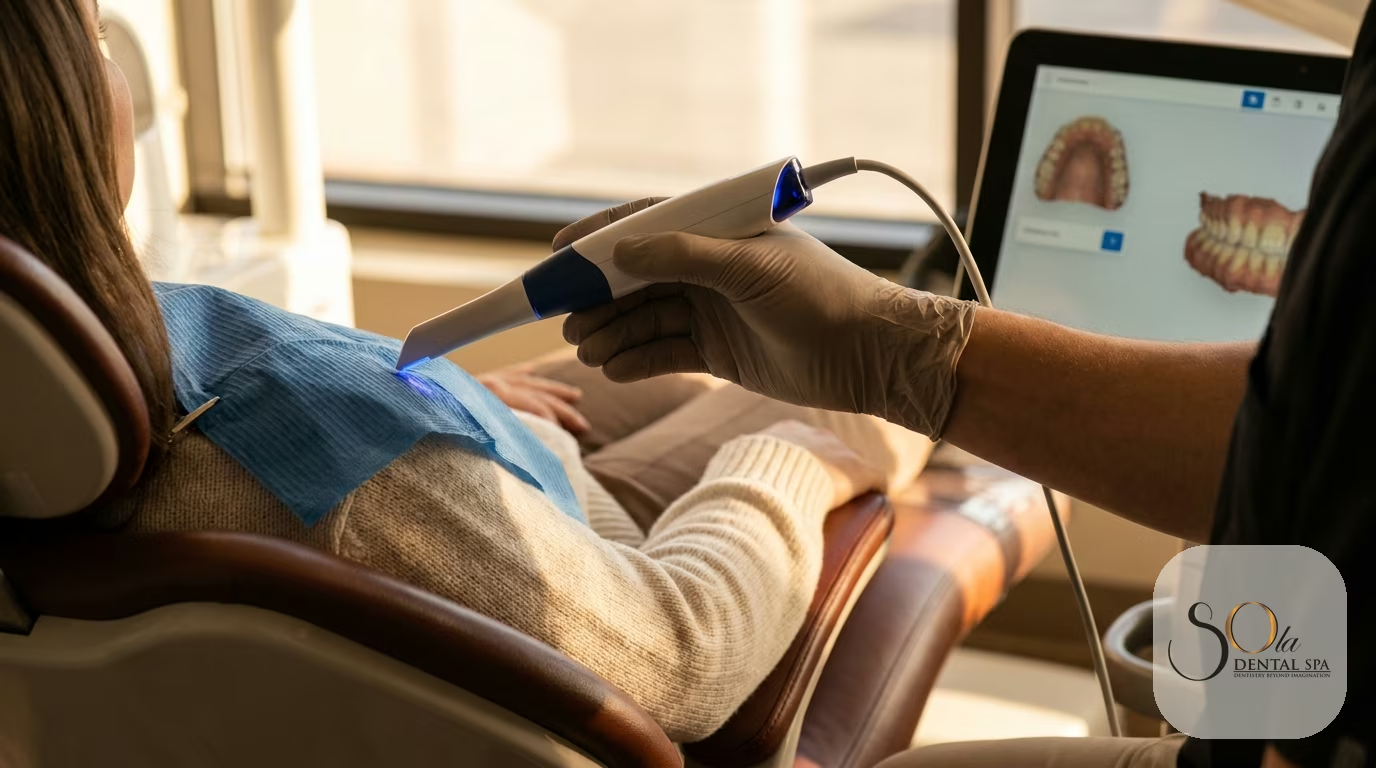
Intraoral scanners, 3D imaging, milled ceramics, laser dentistry, and digital smile design have changed how cosmetic cases are planned and delivered. The biggest wins are precision and the ability to preview results before treatment starts.
Temporary crowns need about two weeks of careful chewing and gentle flossing. Permanent crowns settle within a few days once the bite is right, and good aftercare protects the margin where crown meets tooth.
A walk-through of the three-visit veneer procedure, from digital smile design to final bonding, at Sola Dental Spa in Staten Island.
A plain-English overview of what porcelain veneers are, who is a good candidate, and how the process works at Sola Dental Spa.
A plain-English guide to choosing between a dental crown and a veneer, with cost, durability, and natural-look comparisons.
Porcelain veneers typically last 10 to 15 years and composite 4 to 8. Sola Dental Spa explains what actually drives that lifespan and how to protect it.
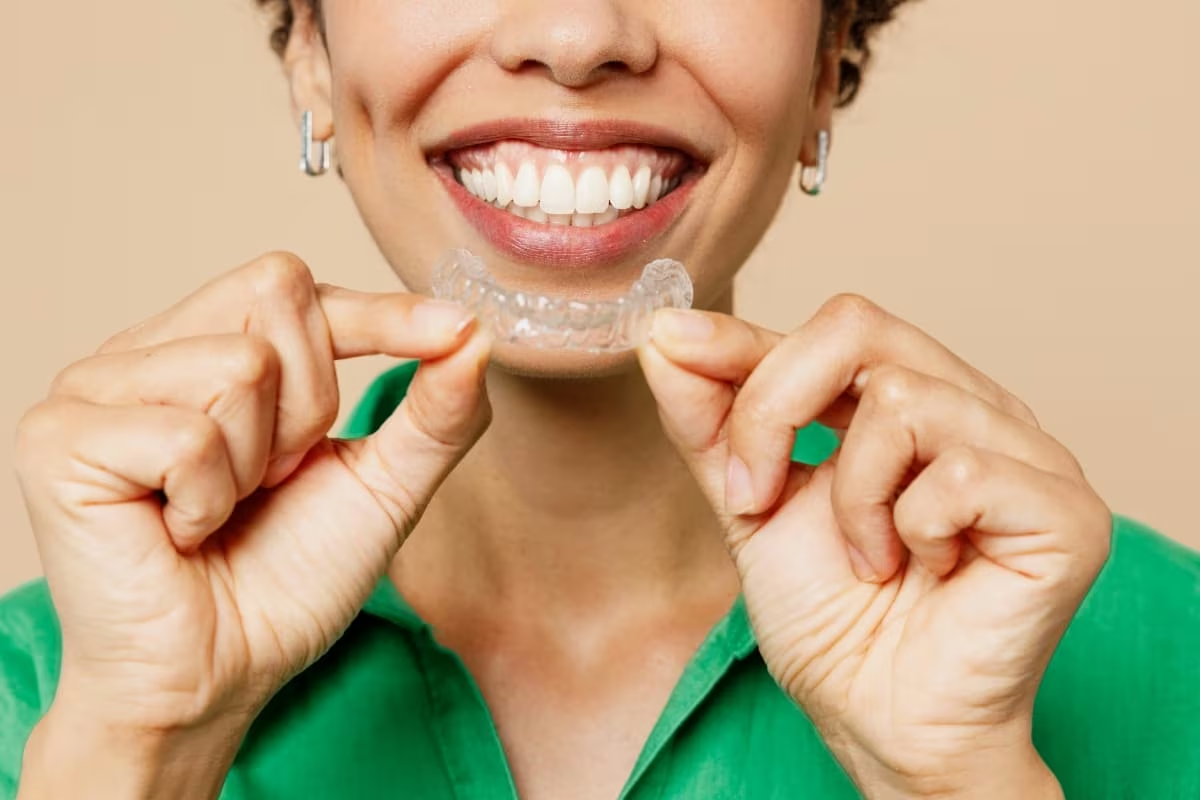
Invisalign suits mild to moderate misalignment with removable, discreet aligners, while traditional braces handle complex bite issues more predictably.
Soft tissue healing takes about a week, but full bone integration takes months. Sola Dental Spa explains what actually speeds up implant recovery.
Dental implants replace missing teeth with a permanent, natural-feeling foundation. See the real benefits, plus FAQs from Sola Dental Spa in Staten Island.
Dental implants move through five staged steps, from consultation to final crown. See what each step involves, plus FAQs from Sola Dental Spa in Staten Island.
What pain to actually expect during and after dental implant surgery, how long it lasts, and how to manage it, explained by Sola Dental Spa in Staten Island.
Missing teeth affect more than a smile. See how dental implants restore function and confidence, explained by Sola Dental Spa in Staten Island.
Dental implants preserve jawbone density and restore full chewing function in ways bridges and dentures cannot. Here is how they compare on lifespan, comfort, and care.
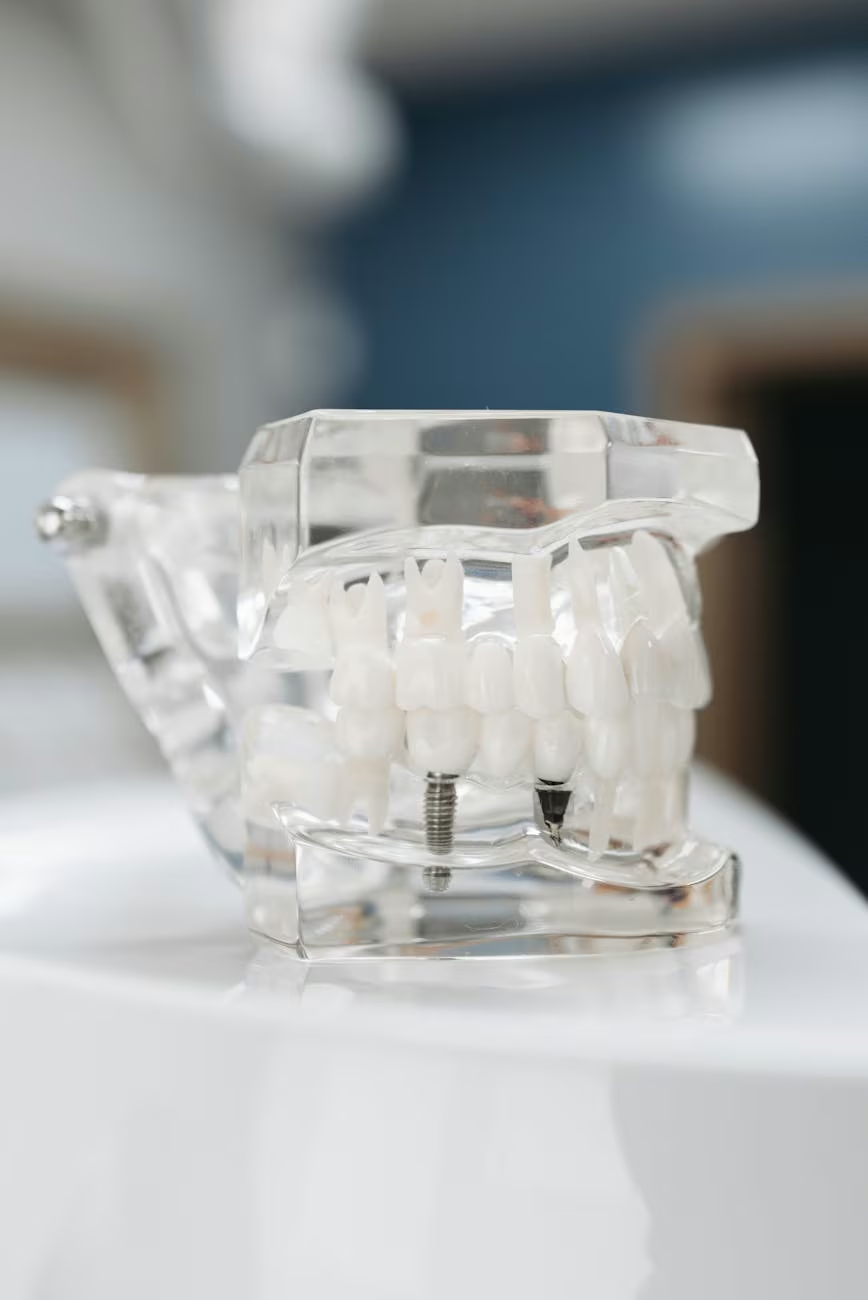
Dental implants replace missing teeth with a titanium or zirconium post fused to the jawbone. Dr. Nejat at Sola Dental Spa explains how the process works.
What the dental implant procedure involves, from planning through recovery, plus candidacy factors. Sola Dental Spa in Staten Island explains each step.
Weighing a dental bridge against a dental implant? Sola Dental Spa in Staten Island compares durability, cost, and the effect each option has on your jawbone and nearby teeth.
What actually determines dental implant candidacy, from bone density and gum health to age and chronic conditions, explained by the Sola Dental Spa team.
Dr. Nejat's guide to dental implant aftercare at Sola Dental Spa: daily routine, what to avoid post-surgery, brushing timeline, and warning signs.
A guide to the four main types of dental implants, who places them, and how Sola Dental Spa helps you choose the right fit.