
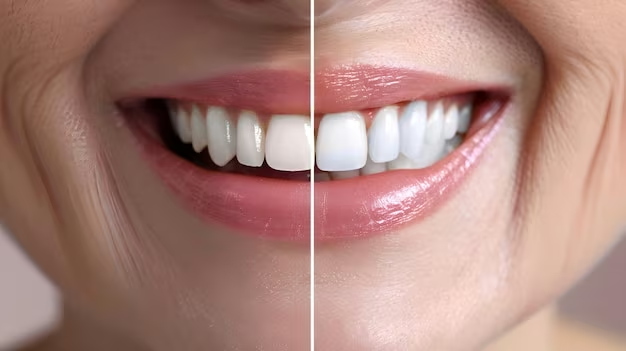
Porcelain veneers typically last 10 to 15 years, and often longer with good care, while composite veneers typically last 4 to 8 years. The material you choose sets the ceiling on lifespan, but oral hygiene, grinding habits, and the quality of the original placement decide whether you reach it. At Sola Dental Spa in Staten Island, we walk every veneer patient through what actually determines how long their smile holds up.
What determines how long veneers last?
Three factors consistently separate veneers that last a decade or more from those that need replacement in five years: the material chosen, how well the patient maintains oral hygiene, and the quality of the original placement.
Oral hygiene is the most controllable factor. Patients who brush twice daily, floss, and attend biannual cleanings protect both the veneer bond and the underlying tooth structure. Habits like tooth grinding, nail biting, or chewing ice put stress on the veneer that no material is designed to withstand indefinitely.
How long does each type of veneer last?
Porcelain veneers
Porcelain veneers are custom-fabricated from high-strength ceramic and bonded to the front surface of prepared teeth. They typically last 10 to 15 years, and many patients get 15 to 20 years with consistent care. Porcelain is highly stain-resistant and mimics the light-reflecting quality of natural enamel, which is why it is the standard choice for a lasting cosmetic result.
Composite veneers
Composite resin veneers are applied and sculpted directly onto the teeth, often in a single appointment. They cost less upfront but typically last 4 to 8 years and are more prone to staining and chipping over time. Composite is a reasonable choice for minor corrections, but it requires more frequent monitoring and eventual replacement compared to porcelain.
No-prep veneers
No-prep veneers require minimal or no enamel reduction before placement, preserving more of the natural tooth. Realistic lifespan estimates place them at 10 to 12 years under normal conditions, with some cases lasting longer.
| Veneer type | Typical lifespan | Typical cost per tooth |
|---|---|---|
| Porcelain | 10 to 15 years, often longer | $925 to $2,500 |
| Composite | 4 to 8 years | $250 to $1,500 |
| No-prep | 10 to 12 years | $800 to $2,000 |
What shortens veneer lifespan?
Bruxism, or nighttime tooth grinding, is one of the most common causes of early veneer damage. Patients who grind should discuss a custom night guard with their dentist before placement. Biting fingernails, opening packaging with your teeth, or habitually chewing hard foods also puts lateral stress on the bond between veneer and tooth.
The skill of the dentist and the quality of the ceramics lab both directly affect how long a veneer lasts. At Sola Dental Spa, veneer cases are planned with 3D digital imaging to ensure precise preparation and fit, since a well-fitted veneer holds up far longer than one placed with a loose margin.
"The veneers that last the longest are almost always the ones where we took the time upfront, on the bite, the margin, the shade match, rather than the ones placed fastest. Patients who wear a night guard if they grind and keep up with cleanings routinely get fifteen years or more out of porcelain."
Dr. Anne Gershkowitz, DDS, Founder, Sola Dental Spa
Signs your veneers may need attention
Veneers in decline typically show one or more of the following: visible chipping or cracking along the edge, discoloration that will not polish away, sensitivity when eating or drinking, or a change in how the veneer feels against the tongue. Any of these is worth a prompt evaluation. Veneers can be replaced multiple times as long as the underlying tooth structure stays healthy.
Maintaining your veneers day to day
Use a soft-bristled toothbrush and non-abrasive toothpaste, and avoid biting directly into hard foods like ice or hard candy with veneered teeth. If you grind at night, wear your night guard consistently rather than only on nights you remember to. These habits cost nothing extra and are the single biggest lever a patient controls after placement.
Frequently asked questions
Do porcelain veneers really last 20 years?
Some do. Reaching the upper end of the range depends on consistent oral hygiene, avoiding habits like grinding or chewing ice, and getting the veneers placed with a precise fit in the first place. It is not the norm, but it is achievable.
What shortens composite veneer lifespan the most?
Staining and chipping are the two biggest factors. Coffee, tea, red wine, and abrasive toothpaste all accelerate staining, while biting into hard foods increases the chance of a chip along the edge.
Do I need a night guard with veneers?
If you grind your teeth at night, yes. A custom night guard is one of the most effective ways to protect a veneer investment, since grinding puts sustained force on the bond that daily biting and chewing does not.
Can a single damaged veneer be replaced without redoing the others?
Usually, yes. A cracked or discolored veneer can often be replaced individually, though your dentist will check the shade match against the surrounding teeth to keep the smile looking uniform.
How often should veneers be checked?
At your regular six-month cleaning. Your dentist inspects the margins and bite relationship at each visit, which catches small issues before they become a reason for early replacement.
Source: American Dental Association, Dental Veneers
If you are exploring veneers, book a consultation with Sola Dental Spa in Staten Island, or browse real patient results in our smile gallery. Related reading: Veneers 101: Your Ultimate Guide to a Perfect Smile.