
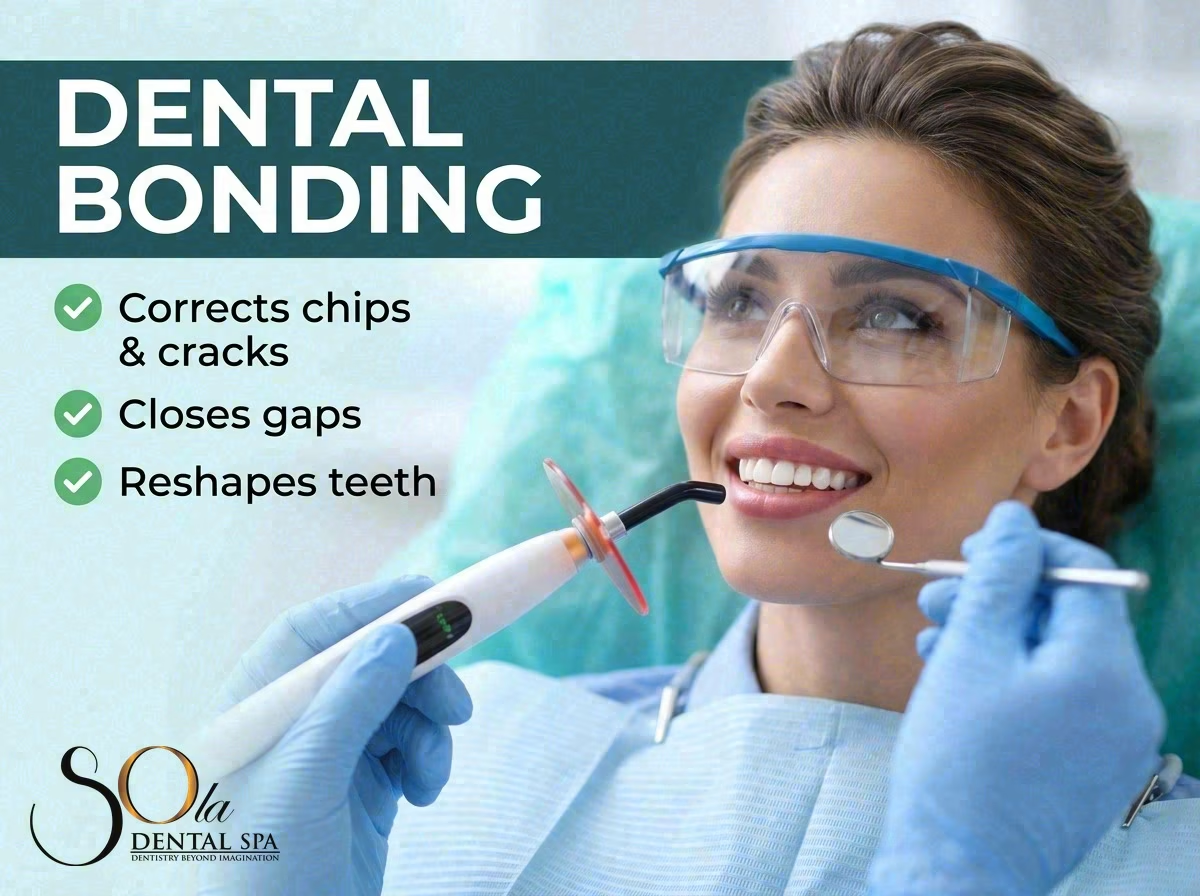
Dental bonding repairs chips, closes gaps, and covers minor discoloration in a single appointment, and it costs less than porcelain veneers, but it lasts only 3 to 10 years compared with 10 to 20 years for veneers. It is the most conservative cosmetic fix because no healthy enamel is removed. Patients at Sola Dental Spa in Staten Island often start here for small corrections and move to veneers only when the case calls for it.
What Bonding Actually Does
Bonding applies a tooth colored composite resin directly to the tooth, shapes it by hand, and cures it with a light. The resin is color matched to the surrounding teeth and can close gaps, rebuild a chipped edge, or change the shape of a tooth without lab fabrication or a second appointment.
The Advantages
- Minimal preparation. Healthy enamel is preserved because bonding does not require reshaping the tooth first.
- Lower cost. Bonding runs roughly $100 to $600 per tooth, well under the cost of porcelain alternatives.
- Fast turnaround. Most corrections are finished chairside, with no lab wait.
- Versatile. It repairs chips, closes small gaps, and adjusts color or shape on individual teeth.
The Limitations
- Shorter lifespan. Composite typically lasts 3 to 10 years, versus 10 to 20 years for porcelain veneers.
- Stains more easily. Composite absorbs pigment from coffee, tea, and red wine faster than porcelain does.
- Chips under pressure. High bite force areas wear and chip faster than low pressure areas.
- Limited scope. Bonding is not a substitute for veneers or crowns when the correction involves several teeth or a significant color change.
Bonding vs. Veneers
| Dental bonding | Porcelain veneers | |
|---|---|---|
| Enamel removal | None | A thin layer, front surface only |
| Typical lifespan | 3 to 10 years | 10 to 20 years |
| Stain resistance | Lower | Higher |
| Cost per tooth | $100 to $600 | Higher, varies by case |
| Best for | Small, localized corrections | Comprehensive smile redesign |
“Bonding is the right first conversation for a chipped edge or a small gap. It is not the right tool for someone who wants to change the color and shape of eight teeth at once, that is a veneer case, and being honest about which one you actually need saves patients money and disappointment.”
Dr. Anne Gershkowitz, DDS, Founder, Sola Dental Spa
Making It Last
A soft bristled brush and non abrasive toothpaste protect the resin surface. Limiting staining beverages, avoiding hard foods on bonded teeth, and wearing a night guard if you grind all extend the lifespan. Routine six month cleanings let your dentist check for sharp edges or a color mismatch before it becomes noticeable.
Frequently asked questions
How much does dental bonding cost?
Bonding typically runs $100 to $600 per tooth, depending on how much correction is needed.
Does bonding hurt?
Most bonding is done without anesthetic because it does not involve removing enamel. Patients generally describe it as painless.
Can bonding be redone?
Yes. When bonding wears down or stains, the old material can be removed and replaced without affecting the healthy tooth underneath.
When should I choose veneers instead of bonding?
If several teeth need a coordinated color and shape change, or you want a result that holds up for well over a decade, veneers are usually the better long term fit. See our veneers page for a full comparison.
Will bonding match my other teeth?
Yes. The composite resin is shaded to match the surrounding enamel before it is applied and cured.
Sources: ADA, Resin-Based Composites.