
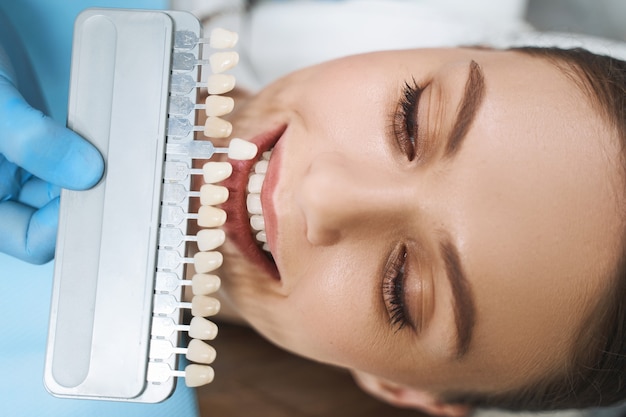
Process of Getting Porcelain Veneers

Part of our porcelain veneers guide → What are Porcelain Veneers and How are they Applied?

Initial Consultation Process

The porcelain veneer process begins with a 1-2 hour consultation, during which the cosmetic dentist examines your teeth and gums, takes X-rays and impressions, discusses veneer options, and creates a digital mock-up to preview the result. From this point, custom veneers are usually placed within 10-14 business days.

During the initial consultation, the dentist conducts a thorough exam of the oral cavity to assess overall dental health and identify any bite issues that need to be addressed before veneers are placed (Cleveland Clinic). The dentist explains the differences between traditional, ultra-thin, and no-prep veneers, and outlines any pre-veneer treatments such as cleanings, whitening, or gum therapy.

X-rays and dental impressions are taken at this visit so the lab can fabricate veneers that fit accurately at the gum line. A digital or wax mock-up may also be created so you can preview the proposed shape, length, and color before any tooth structure is altered.

Initial consultation for porcelain veneers procedure

AspectDuration
Initial Consultation1-2 hours
Lab Fabrication10-14 business days
Total Process Time (consult to bonded)Approximately 2-3 weeks

Preparation Phase

After the consultation, the preparation visit begins. Any underlying issues — decay, gum inflammation, or alignment concerns — are addressed first. The dentist then lightly reshapes the front surface of the teeth (typically removing about 0.5 mm of enamel) so the veneer sits flush at the gum line and looks natural in profile (Cleveland Clinic).

Final impressions are taken at this visit and sent to the dental lab. Most patients wear temporary veneers between visits to protect the prepared teeth and preview the new smile.

Throughout this stage, patients can ask any remaining questions about discomfort. For most people the procedure is well-tolerated with local anesthesia — see are porcelain veneers painful to apply for what to expect.

Crafting Custom Veneers at the Lab

Once impressions are sent to the dental laboratory, skilled ceramists fabricate each veneer to the dentist's specifications, typically taking 10 to 14 business days. Each veneer is custom shaped, sized, and shade-matched to blend with the surrounding teeth and gums.

Fabrication at the Dental Laboratory

Custom porcelain veneers are layered or pressed at a dental laboratory by trained ceramists working from your impressions, photographs, and the dentist's prescription. Lab time of about two weeks is consistent with industry guidance — Cleveland Clinic notes that fabrication typically takes about two to four weeks before the second appointment (Cleveland Clinic).

SpecificationDetails
ShapeCustomized based on the patient's smile design and dental alignment
SizeDesigned to complement the existing teeth and facial proportions
ColorShade-matched to natural enamel and the surrounding gum tone
ThicknessApproximately 0.5 mm for traditional veneers; ultra-thin variants can be thinner

Veneer Placement Visit

At the final visit, the dentist removes any temporary veneers, cleans the prepared teeth, and tries each finished veneer in place to confirm fit, shade, and shape. Once the patient and dentist approve the look, the veneers are bonded with dental cement and the bond is set with a curing light. Final polishing and bite adjustment complete the visit.

The full process — consultation through bonded veneers — usually takes two to three appointments spaced over about 10-14 business days.

Longevity and Maintenance

Porcelain veneers typically last 10 to 15 years with proper care, and many last longer before replacement is needed. Daily brushing, flossing, six-month cleanings, and a night guard for grinders are the four habits most associated with long veneer lifespan (Cleveland Clinic).

Lifespan of Veneers

The Cleveland Clinic reports that porcelain veneers commonly last 10 to 15 years with proper care, and some can endure longer before replacement is needed (Cleveland Clinic). Lifespan depends on a small set of patient-controlled factors:

FactorImpact on Lifespan
Daily oral hygienePositive — reduces gum recession at margins
Six-month dental check-upsPositive — catches small margin gaps before failure
Heavy bite force / bruxismNegative — chips and fractures veneer edges
Hard or sticky foodsNegative — concentrates stress at the bond line

For a deeper care plan, see how porcelain veneers are applied and cared for and lifespan of porcelain veneers.

Replacing Old Veneers

Porcelain veneers can be replaced multiple times if the underlying tooth structure remains healthy. The replacement procedure resembles the original — the old bonding is carefully removed, a new impression is taken, and a fresh veneer is bonded. Regular check-ups make it possible to catch issues early, before the underlying tooth is compromised.

Choosing the Right Dentist

The most important predictor of a good veneer outcome is the dentist's cosmetic training and case experience, not the technology used. Look for licensing, AACD membership or accreditation, a meaningful before-and-after portfolio of the dentist's own work, and a willingness to discuss conservative alternatives.

Importance of Expertise

Experience in cosmetic dentistry is the single biggest factor in a satisfying veneer result. A qualified dentist conducts a meticulous exam during the initial consultation, checks bite and gum health, and discusses options openly. The American Dental Association has cautioned the public against unlicensed "veneer technician" services that bypass a licensed dentist, noting that improperly placed veneers can lead to infection, nerve damage, and tooth loss (ADA).

If you're worried about poor outcomes, see what to do if porcelain veneers go wrong.

The dentist you trust is the one who will tell you what does not need to be done. Honesty about conservative options, transparency about cost, and willingness to slow down for questions matter more than any single piece of technology.

— Dr. Anne Gershkowitz, DDS, founder of Sola Dental Spa, Staten Island, NY

Artistic Skills in Smile Design

Beyond technical skill, a cosmetic dentist's artistic sense — color matching, shape proportion, and lip-line awareness — drives whether a smile looks designed or natural. Membership in groups such as the American Academy of Cosmetic Dentistry, whose accreditation involves examinations and clinical case review, signals an ongoing commitment to those standards (AACD).

Veneers vs. Dental Bonding

Porcelain veneers and dental bonding both improve the look of front teeth, but they're different procedures: veneers are lab-fabricated ceramic shells bonded over the front surface, while bonding is a tooth-colored resin shaped onto the tooth in a single visit. Veneers last longer and resist stain better; bonding costs less and is more conservative.

Veneers vs. Dental Bonding Comparison

FeaturePorcelain VeneersDental Bonding
Enamel RemovalLight reduction (about 0.5 mm)Minimal to none
InvasivenessMore invasive; irreversibleLess invasive; often reversible
Procedure TimeTwo to three visits over 10-14 daysTypically completed in one visit
Lifespan10-15 years with proper care3-10 years; more touch-ups
Stain ResistanceHighly resistant to stainingMore prone to surface staining
AestheticsNatural translucency, lab-shadedGood initial look; less depth
Cost (per tooth)$925-$2,500$300-$600

Porcelain veneers require some enamel reduction, making them an irreversible choice, but they offer a long-lasting and stain-resistant result. Dental bonding is quicker and more conservative, but typically requires more frequent touch-ups.

Costs and Durability Comparison

Cleveland Clinic places the cost of porcelain veneers at approximately $925 to $2,500 per tooth, while bonding generally falls in the lower hundreds per tooth (Cleveland Clinic). When evaluating long-term value, factor in lifespan and replacement frequency rather than just upfront cost.

Treatment TypeAverage Cost (per tooth)Typical Lifespan
Porcelain Veneers$925 - $2,50010-15 years
Dental Bonding$300 - $6003-10 years

For more detail, see lifespan of porcelain veneers and benefits of porcelain veneers over composite veneers.

Variations in Veneer Types

Most porcelain veneers fall into two categories: traditional veneers, which require light enamel reduction (about 0.5 mm), and no-prep veneers, which are thinner and require little to no tooth reshaping. Both are bonded the same way; the right choice depends on your enamel, the existing shape of your teeth, and your aesthetic goals.

Non-Prep Veneers Overview

Non-prep veneers are a minimally invasive alternative to traditional porcelain veneers, requiring little or no enamel reduction. This preserves more natural tooth structure, often resulting in less sensitivity and a faster recovery. Ultra-thin porcelain veneers — sometimes as thin as a contact lens — can address cracks, mild discoloration, and small chips while leaving the underlying tooth largely untouched.

Material Options and Costs

The cost of non-prep veneers typically ranges from $800 to $2,500 per tooth, varying based on the dentist's experience, geographic location, and brand of veneer used. Traditional porcelain veneers fall within roughly $925 to $2,500 per tooth (Cleveland Clinic).

Veneer TypeCost Per ToothInvasivenessPreparation Required
Non-Prep Veneers$800 - $2,500Minimal to noneNone or very light polish
Traditional Porcelain Veneers$925 - $2,500ModerateLight enamel reduction (~0.5 mm)

Proper care matters for both types. Daily brushing, flossing, six-month cleanings, and a night guard for grinders all extend lifespan. Schedule a consultation at Sola Dental Spa to discuss which veneer type fits your smile goals and bite.

People Also Ask

How long does the porcelain veneer process take?

From initial consultation to bonded veneers, the porcelain veneer process typically takes 2 to 3 weeks. The lab needs about 10 to 14 business days to fabricate the custom veneers, and most patients have a brief preparation visit and a final placement visit (Cleveland Clinic).

How many visits do I need for porcelain veneers?

Most patients need two to three visits: a 1-2 hour consultation, a preparation visit where the teeth are lightly reshaped and final impressions are taken, and a placement visit where the finished veneers are bonded. Some practices combine the consultation and preparation into a single longer appointment.

Is the porcelain veneer process painful?

The procedure is generally well-tolerated. The dentist administers local anesthesia for the preparation visit, so most patients feel pressure but no sharp pain. Mild gum tenderness or temperature sensitivity for a few days afterward is normal and resolves on its own.

Can I see what my veneers will look like before they're placed?

Yes. Most cosmetic dentists offer a digital smile preview, a wax-up mock-up, or temporary veneers worn between visits so you can preview the final shape, length, and color. Adjustments are easier to make at this stage than after the final veneers are bonded.

How are porcelain veneers different from dental bonding?

Porcelain veneers are lab-fabricated ceramic shells bonded to the front of the teeth and typically last 10 to 15 years; dental bonding is a tooth-colored resin sculpted directly onto the tooth in one visit and typically lasts 3 to 10 years. Veneers cost more but resist stains and chipping better.

Is local anesthesia required for veneers?

Local anesthesia is typically used for the preparation visit because a thin layer of enamel is reshaped. The final bonding visit usually does not require anesthesia. Patients with sensitive teeth or anxiety can discuss additional comfort options with their dentist.

References

Recent articles