
The difference between a dental clinic and a private practice comes down to ownership: corporate clinics are run by larger business entities and staffed by rotating providers, while a private practice is owned by the dentist who actually treats you. Sola Dental Spa is a private practice in Staten Island founded by Dr. Anne Gershkowitz, DDS, so we will name our bias upfront, but the structural differences are factual and worth understanding before you choose where to be treated. Ownership shapes how much time you get, whether you see the same doctor twice, and who decides what treatment is recommended. You can see how a private practice structures its care on the Sola Dental Spa services page.
Corporate clinics optimize for volume: more patients, standardized protocols, and providers who may change between visits. Private practices optimize for continuity: one doctor who knows your history, controls the treatment philosophy, and answers directly for outcomes. Neither label guarantees quality, so evaluate the specific dentist either way.
“When you own the practice, every treatment plan has your name on it for the next twenty years. I have patients whose teeth I have watched for over a decade, and that history changes decisions. I can tell you whether a crack has moved since 2019 because I was the one looking at it in 2019. That continuity is the quiet advantage no corporate schedule can replicate.”
Dr. Anne Gershkowitz, DDS, Founder, Sola Dental Spa
A new patient from Eltingville transferred to us after three visits to a chain clinic near the mall, each with a different dentist. The third provider proposed replacing two crowns the first had just placed. Nobody was necessarily wrong, but nobody owned the plan either. Her records told three short stories instead of one long one. That is the pattern we hear most often from patients arriving from volume driven settings.
Who actually owns each type of office?
Corporate dental organizations are owned by companies or investment groups that operate many locations under shared management. A private practice is owned by one dentist or a small group of dentists who practice in it.
Ownership matters because it decides who sets the incentives. In a corporate structure, clinical staff work within production targets, scheduling templates, and supply decisions made centrally. In a private practice, the owner dentist sets the pace of the schedule, chooses the laboratories and materials, and decides how long an appointment should be. Neither model makes an individual dentist good or bad, but the private model puts clinical and business authority in the same hands, and that alignment is visible in the details patients notice: appointment length, follow up, and whether the doctor remembers your case without reading the chart.
How does the patient experience differ?
The biggest experienced differences are continuity of provider, time per appointment, and atmosphere. Clinics tend to feel procedural; private practices are built around a relationship.
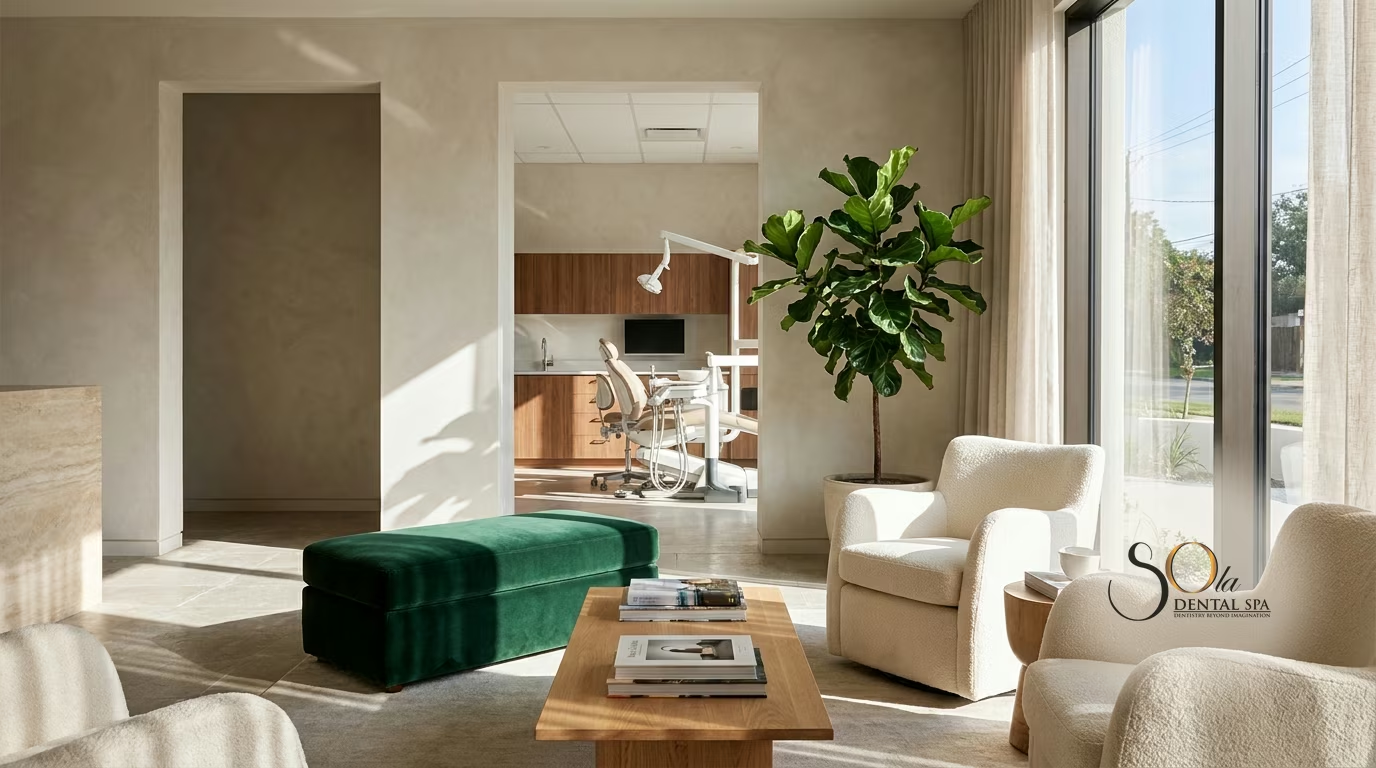
In many corporate settings, the dentist you see depends on staffing that day. Continuity of care suffers when each visit starts from zero, because subtle judgment calls, like watching a small area of decay rather than drilling it, require knowing what it looked like last year. Private practices are structured so the same doctor follows your case over years. At Sola Dental Spa we schedule longer appointments than a volume model allows, and the office is designed to feel closer to a spa than a processing line, with aromatherapy, heated neck pillows, and noise canceling headphones during treatment. Our guide to what to expect at a first visit shows how that time gets used.
Does continuity of care affect treatment quality?
Yes. Dentistry is longitudinal: many findings are only meaningful compared against your own history, and a stable doctor patient relationship is what makes conservative dentistry possible.
A single X-ray shows a moment; a series shows a direction. Decisions about watching versus treating, or rebuilding versus replacing, depend on trend data and on trust in both directions. The American Dental Association recommends choosing a dentist you can build an ongoing relationship with, and its Find-a-Dentist directory exists for exactly that reason. Continuity also compounds in cosmetic work: a dentist who designed your veneers is the best person to maintain them a decade later.
What should you ask before choosing either one?
Ask who will treat you at the next visit, who reviews your imaging, how long appointments run, and who is accountable if something needs to be redone.
Good answers exist in both models, and some corporate offices are staffed by excellent clinicians. The questions simply expose the structure. If the answer to “who will I see next time” is “whoever is scheduled,” you have learned something useful. If you are evaluating a practice for cosmetic work specifically, our piece on choosing the right dentist for a smile makeover covers portfolio and credential questions in depth.
| Factor | Corporate clinic | Private practice |
|---|---|---|
| Ownership | Company or investor group | The dentist treating you |
| Provider continuity | May rotate between visits | Same doctor over years |
| Scheduling model | Volume based templates | Set by the owner dentist |
| Treatment philosophy | Standardized protocols | Doctor’s own clinical judgment |
Frequently asked questions
Is a private practice always better than a clinic?
No. There are skilled dentists in both settings. The private model structurally favors continuity and time, but you should evaluate the individual dentist, their credentials, and their work either way.
Why do chain clinics often quote lower prices?
Volume models negotiate supply and laboratory costs centrally and build schedules for throughput. The quote is one line of the story; ask what laboratory is used, what materials, and who does the work before comparing numbers alone.
Will I always see Dr. Gershkowitz at Sola Dental Spa?
Yes, your care is led by the same doctor across visits. That is the point of the model. Specialist procedures are handled alongside her by the practice’s periodontist, Dr. Daniel Nejat, DMD, under the same roof on Richmond Avenue.
How do I check any dentist’s background in Staten Island?
Look up their license with the New York State Office of the Professions, review their education and memberships, and use the American Dental Association’s Find-a-Dentist directory as a starting point.
Does a spa style office mean the dentistry is secondary?
No. The spa amenities exist because relaxed patients accept care they would otherwise defer. The clinical work is held to the same standard you would demand anywhere; the environment just makes it easier to show up.