
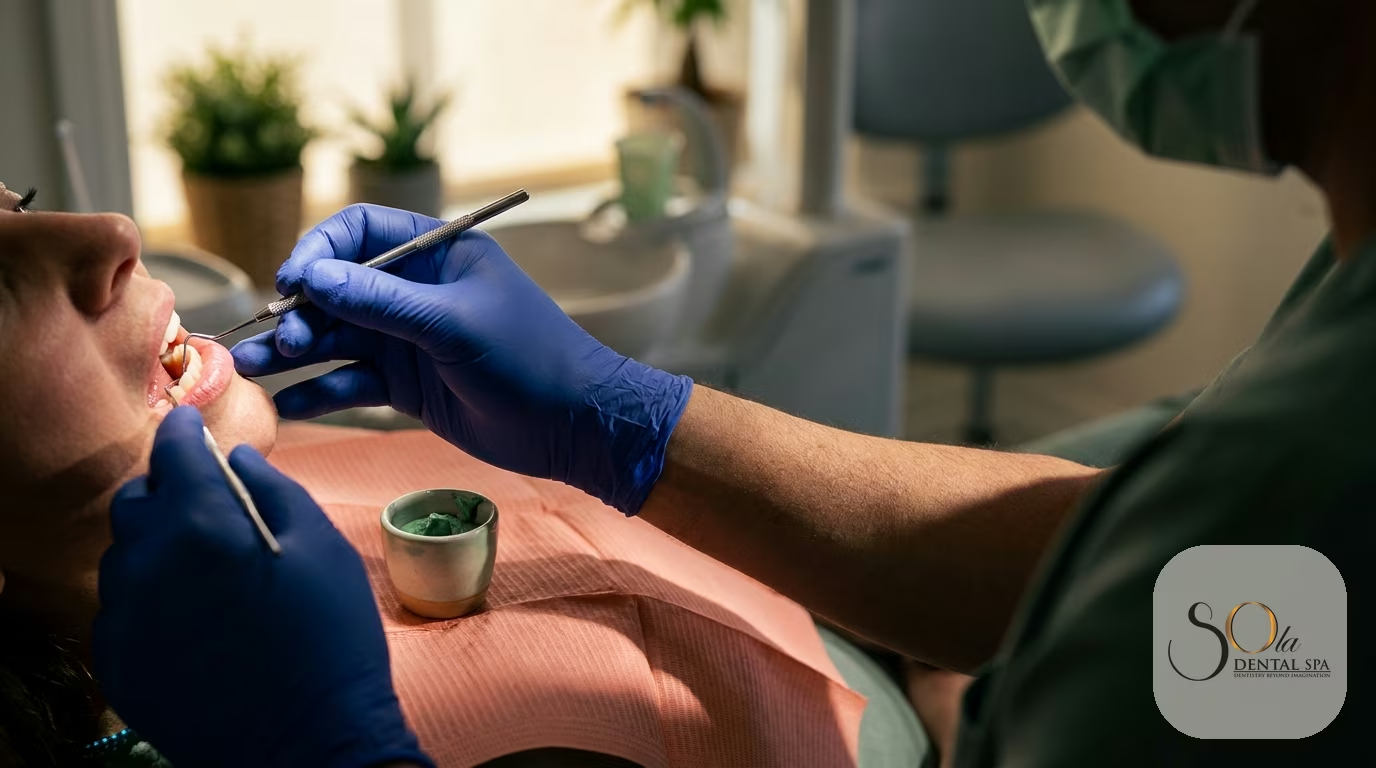
Dentists treat gingivitis with a thorough professional cleaning that removes hardened plaque and tartar, followed by a daily home routine of brushing and flossing that keeps new plaque from taking hold. At Sola Dental Spa in Staten Island, gum health is overseen by Dr. Daniel Nejat, DMD, a board-certified periodontist, and gingivitis is one of the most reliably reversible conditions he treats, provided patients act on it early. The treatment itself is straightforward. The discipline afterward is what makes it last. You can see how periodontal exams fit into the full range of care we provide.
Treatment starts with a review of your dental history and a clinical exam that measures gum pocket depth and checks for bleeding and inflammation. A professional cleaning removes plaque and tartar, and in some cases scaling and root planing goes deeper. Daily brushing and flossing afterward is what keeps gingivitis from returning.
“Gingivitis is one of the few dental conditions where I can promise a full recovery if a patient meets me halfway. I clean what has hardened below the gumline, and their daily brushing and flossing keeps new plaque from ever reaching that point again. It genuinely is a team effort.”
Dr. Daniel Nejat, DMD, Board-Certified Periodontist (Diplomate, American Board of Periodontology), Sola Dental Spa
A patient from Tottenville came in with gums that bled every time she brushed, embarrassed that she had ignored it for months. Her exam showed textbook gingivitis, redness and swelling with no bone loss. A single cleaning combined with a short lesson on flossing technique was enough. At her follow-up six weeks later, her gums were calm and pink, and the bleeding had stopped entirely.
How do dentists diagnose gingivitis?
Diagnosis starts with a review of your dental and medical history, then a clinical exam checking for redness, swelling, and bleeding, plus measuring the depth of the space between gum and tooth to rule out more advanced disease.
The exam is quick and mostly painless. A dentist or hygienist gently probes around each tooth to measure pocket depth in millimeters, since shallow pockets point to healthy gums or early gingivitis while deeper pockets suggest periodontitis has begun. X-rays may be added if bone loss needs to be ruled out. According to the American Academy of Periodontology, gingivitis is the mildest form of periodontal disease, causing gums to become red, swollen, and prone to bleeding, usually with little or no discomfort, which is exactly why the exam matters more than how your gums feel.
What does gingivitis treatment actually involve?
A professional cleaning removes the plaque and tartar that a toothbrush cannot, restoring the gums to health. Because gingivitis has not yet damaged bone, this stage is reversible with cleaning and consistent home care, unlike more advanced gum disease.
The core treatment is a professional cleaning, sometimes called scaling, that clears plaque and hardened tartar from the tooth surface and just below the gumline. The American Dental Association confirms that at the gingivitis stage, the disease is still reversible and can usually be eliminated by a professional cleaning followed by daily brushing and flossing. No prescription or surgery is typically needed at this stage, which is part of why catching it early matters so much.
What happens if gingivitis is left untreated?
Untreated gingivitis can advance to periodontitis, where plaque spreads below the gumline and begins to break down the bone and tissue that hold teeth in place. That stage is manageable but no longer reversible.
The line between the two stages is the one that matters most clinically. Gingivitis affects only the gum tissue, so a cleaning and better home care can fully resolve it. Periodontitis has already cost some bone, and that bone does not return on its own. For a closer look at what that more advanced stage requires, see our guide to surgical options for severe gum disease. Staying at the gingivitis stage, or returning to it quickly, is always the goal.
| Stage | What is affected | Reversible |
|---|---|---|
| Gingivitis | Gum tissue only | Yes, with cleaning and home care |
| Periodontitis | Gum tissue, bone, and ligament | No, but manageable with ongoing care |
Frequently asked questions
Does treating gingivitis hurt?
Most patients feel mild pressure during the cleaning rather than pain. Gums that are already inflamed can feel a bit tender for a day afterward, but the process itself is quick and well tolerated by the vast majority of people.
How many visits does gingivitis treatment take?
Often just one cleaning appointment, followed by a follow-up visit in several weeks to confirm the gums have healed. More visits may be needed if tartar buildup is extensive or if pocket depths suggest early periodontitis rather than gingivitis alone.
Can gingivitis come back after treatment?
Yes, if daily brushing and flossing lapse. Gingivitis is caused by plaque, and plaque reforms constantly, so the cleaning resolves the current inflammation but does not make your gums immune to it happening again.
Is gingivitis the same as periodontitis?
No. Gingivitis is the mild, reversible stage affecting only gum tissue. Periodontitis is the advanced stage where bone and ligament support has been damaged. Prompt treatment at the gingivitis stage is what keeps it from ever becoming periodontitis.
How often should Staten Island patients be checked for gingivitis?
A checkup and cleaning every six months catches gingivitis early for most people. If you already have bleeding, swelling, or gum sensitivity, do not wait for that appointment. Call sooner so treatment can start while the stage is still fully reversible.